

Khopra Ridge Trek: The Empty Annapurna Alternative
A quieter seven-day alternative to Poon Hill: community-owned lodges, a 4,660 m sacred lake, and closer views of Dhaulagiri and Annapurna South.
NepGem team · Local guides and trip planners
· 10 min read

Co-authored with a NepGem licensed trekking guide (licence no. on file) · Last verified: September 2026
Khopra Ridge sits above the Annapurna foothills, three extra trekking days west of the crowds filling Poon Hill at dawn. From community-run lodges at Khopra Danda (3,660 m) you get a close-up wall of Dhaulagiri, Annapurna South and Hiunchuli, plus a full-day side trip to Khayer Lake, a sacred glacial lake at 4,660 m most Annapurna trekkers have never heard of. The trek runs seven days from Pokhara and back, uses lodges owned and run by the villages themselves, and rarely sees more than a handful of other parties on the trail.
If seven days is more than you have, start with the shorter options first to see where Khopra fits against Poon Hill, Mardi Himal and the rest of the sub-week routes. For the full multi-week alternative on the same massif, the classic Annapurna Circuit circles Annapurna from a different side entirely.
Poon Hill's view without Poon Hill's crowd
Khopra Ridge exists because Poon Hill got too popular for the view it offers. Poon Hill's 3,210 m viewpoint delivers a sunrise panorama of Dhaulagiri and the Annapurna range in under three hours' walk from Ghorepani, which is why several hundred trekkers can be standing on the same platform on a clear peak-season morning. Khopra Danda sits higher and closer to the peaks, reachable only by people willing to commit three extra days — which filters out most of the region's trekker traffic.
The view itself is measurably different, not just quieter. From Poon Hill you see Dhaulagiri and Annapurna South as a distant skyline; from Khopra Danda, roughly 450 m higher and considerably closer to the range front, the same peaks fill more of the horizon, and Hiunchuli and the south face of Annapurna South become close-up subjects rather than background scenery.
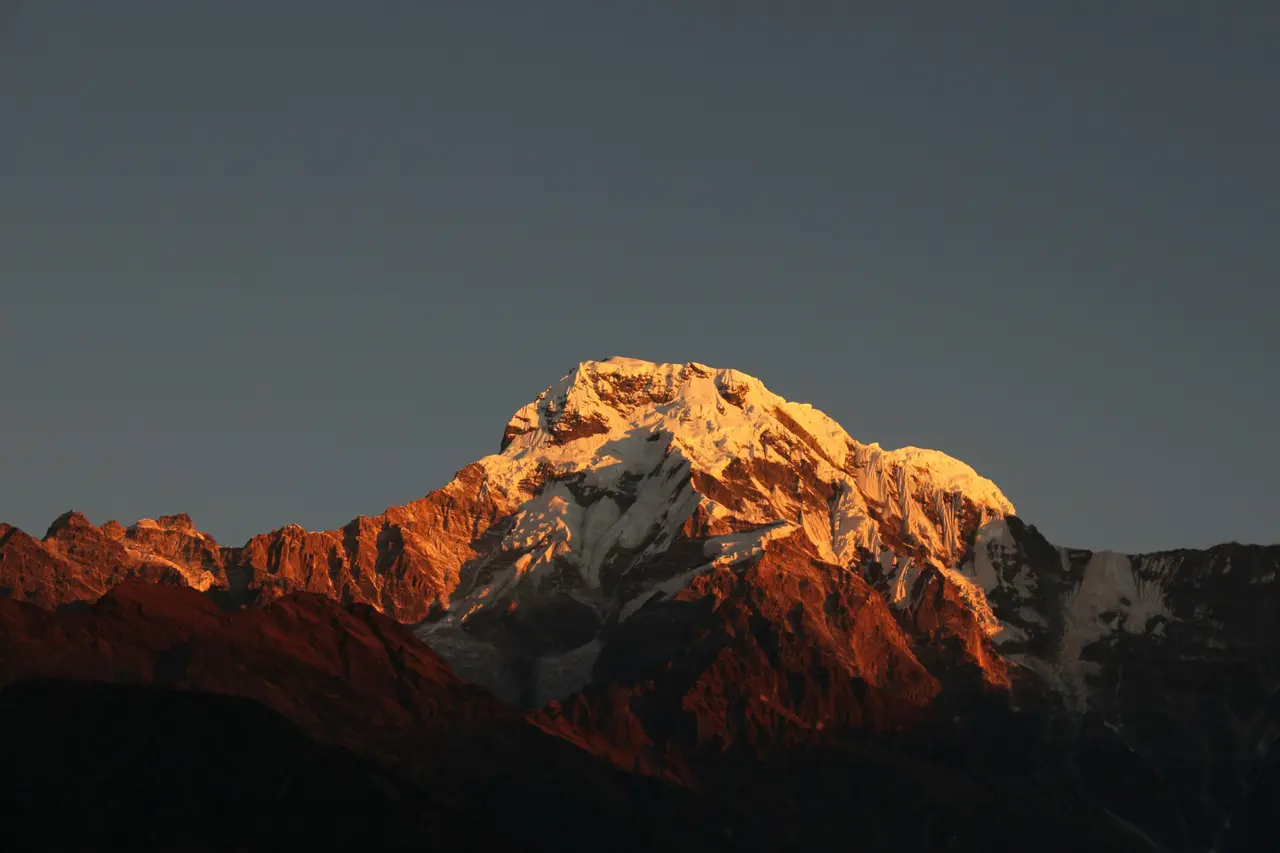
Trekkers who have done both routes describe Khopra's outlook as the more dramatic of the two, at the cost of three extra days and lodges noticeably more basic than the guesthouses along the main Ghorepani trail.
What Khopra does not offer is Poon Hill's convenience. There is no pre-dawn 45-minute climb from a busy lodge town; reaching a Khopra Danda viewpoint means several consecutive days at altitude first. It suits trekkers who have already done Poon Hill or Ghorepani, want a quieter multi-day trek with a genuine high-altitude payoff, and are comfortable with basic community lodge standards. It does not suit anyone fitting a taste of the Annapurna foothills into a two- or three-day window; for that, Poon Hill remains the faster answer.
Day-by-day: 7 days
The standard itinerary runs seven days from Pokhara and back, with one full day held at Khopra Danda for the Khayer Lake side trip. Most guides start with a short drive to Kimche or Syauli Bazaar, skipping the least interesting stretch out of Nayapul.
| Day | Route | Altitude | Walking time |
|---|---|---|---|
| 1 | Pokhara/Nayapul → Kimche → Ghandruk | 1,940 m | 4–5 hrs |
| 2 | Ghandruk → Tadapani | 2,630 m | 5–6 hrs |
| 3 | Tadapani → Isharu → Dobato (Bayeli Kharka) | 3,420 m | 6–7 hrs |
| 4 | Dobato → Chistibung → Khopra Danda | 3,660 m | 5–6 hrs |
| 5 | Khopra Danda → Khayer Lake → Khopra Danda | 4,660 m, back to 3,660 m | 6–7 hrs round trip |
| 6 | Khopra Danda → Swanta → Ghorepani or Tatopani | 2,270–2,860 m | 6–7 hrs |
| 7 | Ghorepani/Tatopani → Nayapul → Pokhara | — | 4–6 hrs plus drive |
Day 1 climbs steadily from the roadhead through terraced farmland to Ghandruk, a large Gurung village and one of the better-developed lodge towns in the Annapurna Conservation Area. Day 2's climb to Tadapani passes through rhododendron forest, spectacular in the March–April flowering season, gaining nearly 700 m.
Day 3 is the longest and hardest day: a sustained climb from Tadapani through Isharu to Dobato, also written Bayeli Kharka on some maps, through forest that thins as the trail gains the ridge above 3,000 m. Trekkers struggling with the pace should treat Dobato as a natural place to slow down, since both following days sit above 3,400 m.
Day 4 is comparatively short, dropping through Chistibung — a seasonal shelter point that is little more than a cluster of lodges in a high meadow — before the final climb onto Khopra Danda itself.
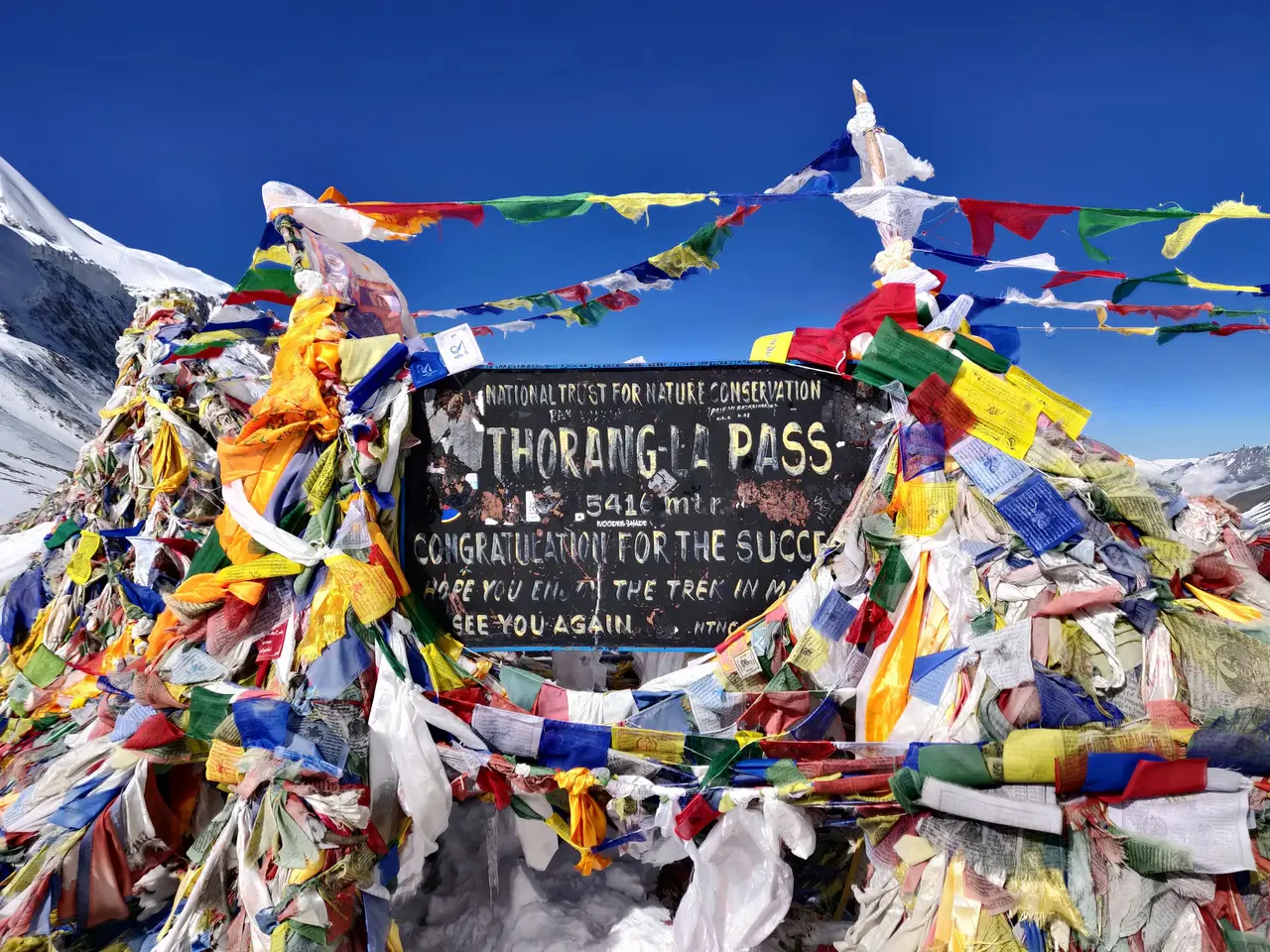
This is the night most trekkers remember: clear-weather evenings put Dhaulagiri directly ahead and Annapurna South and Hiunchuli close enough that binoculars feel almost unnecessary.
Day 5 is the reason for the extra three days over Poon Hill: an out-and-back climb to Khayer Lake, covered below. Days 6 and 7 descend, either back towards Ghorepani, rejoining the Poon Hill network, or down to Tatopani for a soak in its hot springs before the drive to Pokhara. Both options lose roughly 1,400–1,800 m of net altitude over two days, harder on the knees than it sounds after five days of climbing. This plan assumes reasonable fitness and a buffer day if anyone struggles above 3,400 m; most guides quote one rather than sell the bare seven-day minimum.
Khayer Lake, 4,660 m
Khayer Lake sits at 4,660 m in a high basin above Khopra Danda, and it is the single reason to add three days to a Poon Hill-style itinerary. Hindu and Buddhist pilgrims consider it sacred, comparable in local significance, if not in fame, to Gosainkunda further east; a small shrine sits at the water's edge, and local tradition holds the lake never fully freezes — a belief worth respecting rather than testing on the ice.
The round trip from Khopra Danda takes six to seven hours over roughly 12–14 km, almost all of it above 4,000 m on open, exposed terrain with no lodges along the way. Trekkers do it as a day trip, leaving their main baggage at the lodge and carrying only water, snacks, a warm layer and rain protection, then returning to sleep at the lower 3,660 m altitude the same night. Gaining and shedding roughly 1,000 m within a single day is, if anything, reasonable acclimatisation practice rather than a shortcut around one.
The lake's setting is what makes the detour worthwhile beyond its religious significance: a wide, treeless amphitheatre with Dhaulagiri's southern flank filling one side of the view, and none of the built infrastructure surrounding better-known high-altitude lakes elsewhere in Nepal. Weather closes in on this basin quickly, and the trail is easy to lose in low cloud, so the day is only worth attempting with a guide who knows the route, or in genuinely settled conditions. Anyone carrying altitude symptoms from earlier days should skip the lake rather than push a 4,660 m day trip on a body that has not settled at 3,660 m.
Community lodges: how the money works
The lodges on Khopra Danda are not privately owned guesthouses competing for trekkers; they were built, and are still run, as a community enterprise, developed with support from Nepal's National Trust for Nature Conservation alongside the villages of Ghandruk, Chistibung, Swanta and others whose land the route crosses. That structure changes where a trekker's money goes.
On most Annapurna trails, each lodge is an individual family business, and a trekker's choice of where to stay picks a winner in local competition. On the Khopra route, lodge revenue is pooled and reinvested at community level, funding trail maintenance, shared water systems and school support in villages that otherwise see little of the tourism income flowing through nearby Ghandruk and Ghorepani. This is a genuinely different economic model, not a marketing label.
The trade-off is standardisation rather than choice. Where a well-trodden route offers a dozen competing lodges per village, Khopra's community lodges offer one option per stop, at a broadly fixed rate that does not move with demand. Rooms are basic twin-share with shared bathrooms higher up, and the menu is simpler, reflecting how much further everything has to be carried in.
The honest answer on whether that trade-off is worth it: the lodges are adequate rather than comfortable, better-run than "basic" suggests, and staying in them is one of the more direct ways a trekker's spending reaches the communities whose land and trail maintenance make the route possible at all. That is a genuine responsible-travel argument specific to this route, not one that applies to any teahouse trek in Nepal.
Cost
A seven-day Khopra Ridge trek costs roughly USD 450–500 for a solo trekker booking a guide independently, made up of costs that split across a group and costs that do not.
| Cost item | Splits across group? | Approx. cost |
|---|---|---|
| Guide (7 days, ~USD 30/day) | Shared | USD 210 |
| Shared jeep, Pokhara–Nayapul return | Shared | USD 70 |
| ACAP entry permit | Per person | USD 23 (NPR 3,000) |
| Community lodge + meals, 6 nights (~USD 25/night) | Per person | USD 150 |
The shared pool — guide fee and jeep charter — costs the same USD 280 whether one person books it or eight do. Split six ways, it drops to under USD 47 per person, while the per-person costs (permit and lodge-and-meals package, roughly USD 173 together) stay fixed. A solo trekker pays close to USD 455 for the same seven days a six-person group pays about USD 220 each.
Khopra Ridge Trek: price by group sizePorter hire adds roughly USD 140 for the trip (about USD 20/day) if you would rather not carry your own pack above 3,000 m. Community lodge rates are set collectively rather than by individual bargaining, so there is little scope to negotiate a lower room rate; treat the figures above as a 2026-season planning band and verify the current tariff before you book, since it is reviewed periodically by the managing committee rather than published on a single national fee schedule.
FAQ
Is Khopra Ridge better than Poon Hill? Khopra Ridge offers closer, more dramatic views of Annapurna South and Dhaulagiri than Poon Hill, with a fraction of the trekker traffic, but it needs roughly three additional trekking days and more basic lodge standards. Trekkers with limited time, or a preference for well-developed guesthouse infrastructure, are usually better served by Poon Hill itself.
How high is Khayer Lake? Khayer Lake sits at 4,660 m in a high, treeless basin above the Khopra Danda lodges, reached by a six-to-seven-hour round-trip day hike. It is considered sacred by both Hindu and Buddhist pilgrims and sits roughly 1,000 m above the community lodges where trekkers sleep before and after the side trip.
Are there lodges on Khopra Ridge? Yes. The route is served by community-run lodges built and managed collectively by the villages along the trail, rather than by individually owned family guesthouses. Standards are basic but adequate, with simpler menus and fewer competing options per stop than on the main Annapurna trails.
Do you need a guide? A guide is not always a strict legal requirement outside restricted areas, but Khopra Ridge is recommended with one regardless: the ridge sections and the Khayer Lake basin are exposed, poorly marked in cloud, and far enough from other trekking traffic that a navigation mistake or a medical problem is slower to resolve without local knowledge on hand.
Trek Khopra with a group that's already booked
Khopra Ridge rewards company as much as any Annapurna route, and its main practical obstacle — the shared guide and jeep costs above, dropping from roughly USD 280 to under USD 47 a head once six people join — is exactly what a group departure solves. Arrive solo, and NepGem places you on a fixed departure date alongside trekkers who have already committed, so the price on the departure page falls as seats fill rather than staying flat the way an agency's package quote does. Every guide leading a Khopra departure carries the same licence, altitude record and review history you can check before you commit a deposit. If seven days doesn't suit your dates, the same shared-cost logic applies to a longer route on the same massif, such as Annapurna Base Camp.

