

Tamang Heritage Trail: Culture Over Altitude
A homestay trek through Tamang villages below Langtang, with hot springs, Tibetan-border ridges and 3,165 m max — and almost no other trekkers on the trail.
NepGem team · Local guides and trip planners
· 11 min read

Co-authored with a NepGem licensed trekking guide (licence no. on file) · Last verified: September 2026
The Tamang Heritage Trail is a six-day homestay trek through Tamang villages on the ridges west of the Langtang valley, reaching a top altitude of just 3,165 metres at Nagthali, low enough that altitude sickness is unlikely and high enough for genuine Himalayan and Tibetan-border views. Where Langtang Valley walks you up a glacial valley toward its peaks, the Tamang Heritage Trail walks you sideways along its flank through villages that most Langtang trekkers never see, and where the destination is the villages themselves rather than a base camp or a pass. This guide covers the day-by-day route from Syabrubesi to Briddim, how the homestay system actually works and where the money goes, Tamang culture and its Tibetan roots, combining it with Langtang Valley, and current costs.
A trek where the villages are the destination
Most Nepal treks build toward a single high point: a base camp, a pass, a summit viewpoint. The Tamang Heritage Trail inverts that structure. Its route was specifically developed to route trekking income toward Tamang villages along the Nepal–Tibet border ridges that the main Langtang trail bypasses, and the itinerary is built around overnight stops in Gatlang, Tatopani and Briddim rather than around a single scenic climax. The trail sits entirely within Rasuwa district, the same district as Langtang Valley, on ridgelines and terraced hillsides that were traditional Tamang trade and grazing routes toward Tibet long before trekking tourism existed.
That framing changes what the trek rewards. There is no dramatic base-camp arrival to build toward, and trekkers expecting an Everest Base Camp-style climax will be looking for the wrong thing. What the trail delivers instead is a closer, slower look at stone and timber Tamang architecture, working village life, a genuine hot spring, and Tibetan Buddhist prayer flags and mani walls on ridgelines with long views toward Langtang Lirung (7,227 m) and the peaks of the Ganesh Himal, all with a fraction of the trekker traffic on the main Langtang trail below.
Part of that lower traffic likely traces back to the 2015 Gorkha earthquake, which triggered the landslide that destroyed Langtang village itself on the main valley trail. Langtang Valley's route has rebuilt and drawn most of Rasuwa's trekking demand back to it in the years since, while the ridge villages on the Tamang Heritage side, set away from the valley floor, never saw the same marketing attention or trekker numbers return, leaving a route that is fully open, well signed and genuinely welcoming, but still quiet a decade later.
Day-by-day: 6 days Syabrubesi → Gatlang → Tatopani → Briddim
| Day | Route | Altitude | Time |
|---|---|---|---|
| 1 | Kathmandu → Syabrubesi (drive) | 1,410 m | 6–7 hrs drive |
| 2 | Syabrubesi → Gatlang | 1,410 m → 2,238 m | 6–7 hrs |
| 3 | Gatlang → Chilime → Tatopani | 2,238 m → 2,607 m | 5–6 hrs |
| 4 | Tatopani → Nagthali → Thuman | 2,607 m → 3,165 m → 2,338 m | 6 hrs |
| 5 | Thuman → Briddim | 2,338 m → 2,229 m | 5 hrs |
| 6 | Briddim → Syabrubesi → Kathmandu | 2,229 m → 1,410 m + drive | 3 hrs + drive |
Day 1 is the same rough, scenic road from Kathmandu to Syabrubesi that opens the Langtang Valley trek, following the Trishuli river valley before climbing into Rasuwa district. Day 2 leaves the main Langtang trail immediately, climbing steeply through forest and terraced fields to Gatlang, a large Tamang village of closely packed stone houses with carved wooden window frames, built around an old Buddhist gompa. Day 3 continues past the Chilime hydropower project to Tatopani (not to be confused with the Tatopani on the Annapurna Circuit), where a natural hot spring sits beside the trail.
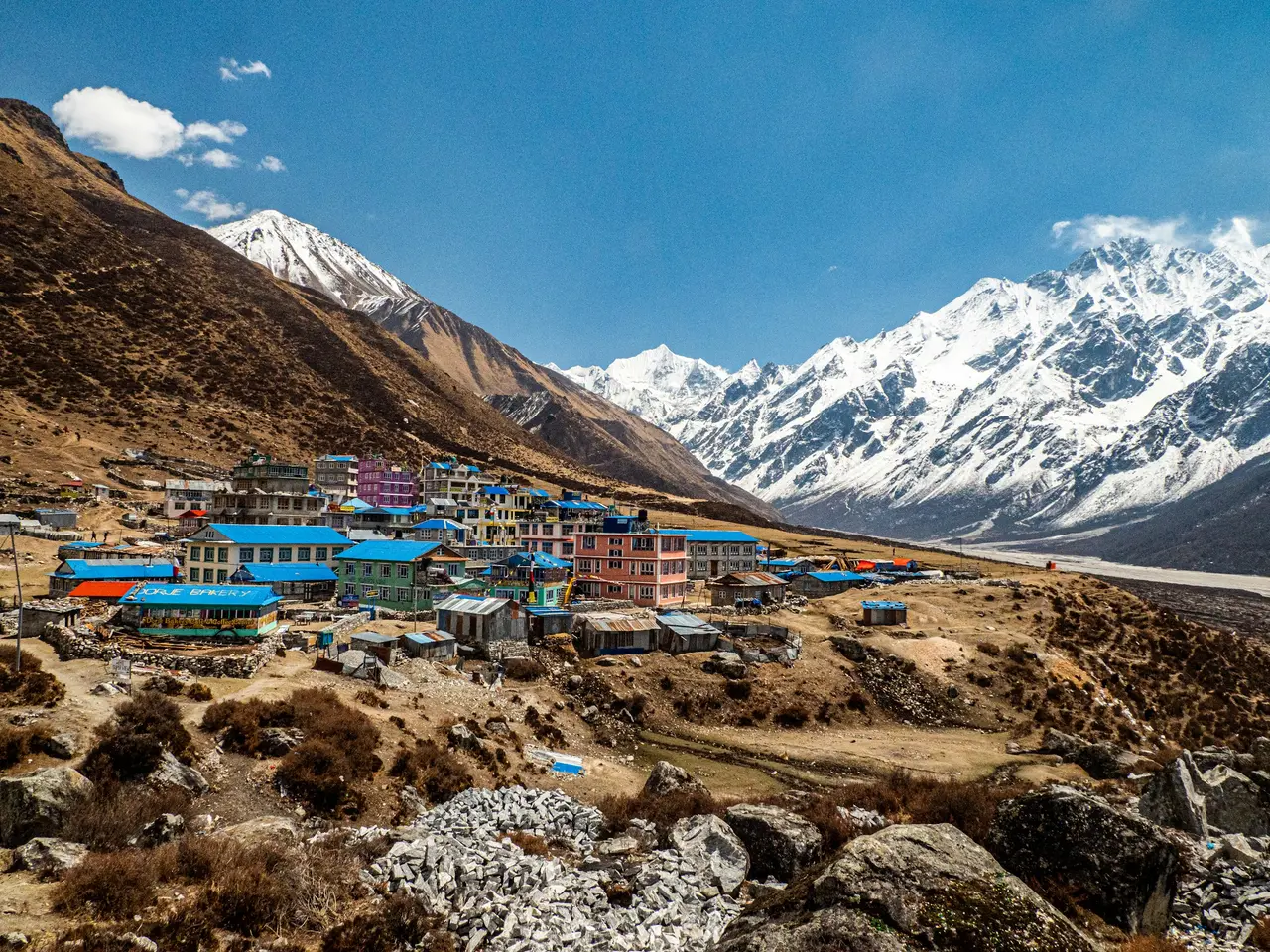
Day 4 is the trek's high point, both literally and scenically: a climb to Nagthali (3,165 m), a ridge with a small monastery and clear views toward Ganesh Himal and the Tibetan border peaks, before descending to Thuman, another substantial Tamang village. Day 5 traverses to Briddim, the trek's best-known homestay village, and day 6 descends back to Syabrubesi to rejoin the road to Kathmandu.
Homestays: how they actually work
A Tamang Heritage homestay means overnighting in a private family home rather than a purpose-built lodge, with the household providing a room, bedding, and meals cooked in their own kitchen, usually on a wood or gas stove built into the main living space. The payment structure is the trek's genuine differentiator: money paid for a homestay night goes largely to that specific household, not to an intermediary lodge owner or agency, which is a meaningfully different economic model from the teahouse system on Langtang, Everest or Annapurna routes, where lodge ownership is often concentrated among a smaller number of families with the capital to build larger guesthouses.
Expect basic, shared conditions rather than private-lodge comfort: a shared or squat toilet, no attached bathroom, bucket-heated water for washing where available at all, and sleeping in a family's spare room rather than a dedicated guest wing. Bring a warm sleeping bag rated for temperatures below freezing even outside winter, a headlamp for after dark, and small gifts or purchases (locally made textiles, or simply buying tea and snacks directly from the household) that channel a bit more of your spending to the family hosting you. Basic etiquette matters more here than on a commercial trekking route: ask before photographing family members or the inside of the home, remove shoes where the household does, and treat the space as someone's actual home, because it is. A guide with existing relationships in these specific villages, who can introduce you properly to a host family rather than simply pointing you at a door, is the difference between an homestay that feels transactional and one that feels like what it is meant to be.
Tamang culture, Tibetan roots
The Tamang are one of Nepal's larger ethnic groups, with a historical and linguistic connection to Tibet that is visibly stronger in these Rasuwa border villages than in the more Kathmandu-integrated Tamang communities further south. Tamang Buddhism blends Tibetan Vajrayana practice with local animist and shamanic traditions, visible on the trail in prayer flags strung across ridgelines, mani walls of carved stone inscribed with the mantra "om mani padme hum" that trekkers pass on the correct (left) side, and small village gompas maintained by local lamas rather than large monastic institutions.
Village life along the route still runs substantially on subsistence agriculture and livestock, particularly yak and chauri (yak-cattle hybrid) herding at the higher villages like Nagthali and Thuman, alongside barley, potato and vegetable terraces lower down. Many households also maintain seasonal patterns tied to older trans-border trade with Tibet, though formal trade has narrowed considerably over recent decades. Tamang communities across Nepal, including these villages, observe major national festivals such as Tihar alongside their own Buddhist calendar, and visiting during a local festival, where a guide can arrange it respectfully, is one of the more genuine cultural experiences available on any Nepal trekking route; see the Nepal festival calendar for how these dates line up with a trekking season.
Language is another visible marker of the border connection: many older residents of Gatlang, Thuman and Nagthali speak Tamang as a first language, with Nepali as a learned second language rather than the reverse, which is less common in more southerly Tamang settlements closer to Kathmandu. Traditional dress, particularly among older women, still appears at festivals and in daily village life in a way it rarely does on busier trekking routes where tourism has shifted local dress norms toward what visitors expect to photograph. A guide who can translate a genuine conversation with a village elder, rather than only route directions, adds a dimension to this trek that self-guided trekkers on the same trail typically miss entirely.
Combining with Langtang Valley
The Tamang Heritage Trail and Langtang Valley share the same trailhead at Syabrubesi and the same road access from Kathmandu, which makes combining them a matter of extra days rather than extra logistics. The standard combination walks the Tamang Heritage loop first, descends back to Syabrubesi, then continues up the main Langtang valley toward Kyanjin Gompa (roughly 3,870 m) and back, adding around five to six days to the trip.
This combination suits trekkers who have the time and want both experiences: the cultural, village-focused low route and the higher, more classically scenic glacial valley. It does not particularly suit a first-time trekker with only a week available, since splitting limited days between two different trail systems dilutes both rather than doing either well. For a trekker choosing only one, the honest guidance is that Langtang Valley delivers more conventional high-mountain scenery, while the Tamang Heritage Trail delivers a cultural depth and near-total absence of other trekkers that Langtang, rebuilt and popular again since the 2015 earthquake, no longer offers. Read the full Langtang Valley trek guide for that route's itinerary before deciding how to split your available days.
Cost
The Tamang Heritage Trail requires the Langtang National Park entry permit and a TIMS card, the same as Langtang Valley, since the route sits within the same protected area. As of the 2026 season, the Langtang National Park entry fee is NPR 3,000 (about USD 23) for foreign nationals, and the TIMS card costs NPR 2,000 (about USD 15) — verify current rates before you travel.
Homestay nights are priced per person per night, typically covering the room and three meals, rather than split as a shared group cost, since the household is paid individually for each guest regardless of group size:
| Cost component | Type | Approx. amount |
|---|---|---|
| Guide day rate (6 days) | Shared | USD 168 |
| Jeep, Kathmandu–Syabrubesi return | Shared | USD 90 |
| Permit processing (admin) | Shared | USD 20 |
| Langtang NP + TIMS permits | Per person | USD 38 |
| Homestay, 5 nights (room + meals) | Per person | USD 100 |
Solo, that totals roughly USD 416 all-in. On a group departure, the roughly USD 280 shared pool splits across the group, bringing the per-person total down as more people join, while homestay payments stay the same per person since each traveller is paying their own host family directly regardless of group size.
Tamang Heritage Trail: price by group sizeFAQ
How high does the Tamang Heritage Trail go? The trail's highest point is Nagthali at 3,165 metres, low enough that altitude sickness is unlikely for most trekkers, unlike the 3,870 metre Kyanjin Gompa on the neighbouring Langtang Valley route. This makes it a comparatively gentle trek in altitude terms despite its steep daily terrain.
Are homestays comfortable? Homestays are basic rather than comfortable in a hotel sense: a shared room in a family home, shared or squat toilets, and simple, home-cooked meals. They are clean and welcoming in the villages this trek visits, but bring a warm sleeping bag and adjust expectations away from private-lodge standards.
Do you need a guide? Yes, both practically and increasingly as a legal requirement inside Langtang National Park since April 2023. A guide with existing relationships in Gatlang, Tatopani, Thuman and Briddim also makes the difference between a homestay that feels arranged and one that feels genuinely welcoming.
Can you combine it with Langtang? Yes. Both routes share the Syabrubesi trailhead, and the standard combination walks the Tamang Heritage loop first before continuing up the main Langtang valley toward Kyanjin Gompa, adding roughly five to six days to a trip that would otherwise be six days alone.
Hire the guide who knows these villages, not just the route
A homestay trek lives or dies on relationships a guidebook cannot give you: which household in Gatlang has a spare room this week, how to introduce yourself properly in Thuman, which family in Briddim will welcome you rather than simply accept a booking. NepGem's guide profiles for this route show licence number, altitude record, languages spoken and reviews before you pay, but for the Tamang Heritage Trail specifically, ask one more direct question: which of these specific villages has the guide actually stayed in, and do they have a standing relationship with a host family there. A guide who answers with specific names and villages, not a general "yes, homestays are easy to arrange," is the one who will make this trek feel like the cultural exchange it is supposed to be rather than a village tour with a room attached.

