

Island Peak (Imja Tse) Climb: 6,189 m, Honestly Assessed
यो कथा अहिलेलाई अङ्ग्रेजीमा मात्र उपलब्ध छ।
A summit-day breakdown, the named technical sections, real prerequisites and an 18-day itinerary for Nepal's most popular 6,000 m climb.
NepGem टोली · स्थानीय गाइड र यात्रा योजनाकार
· १४ मिनेट पढाइ

Co-authored with an NMA-licensed climbing guide (licence no. on file) · Last verified: September 2026
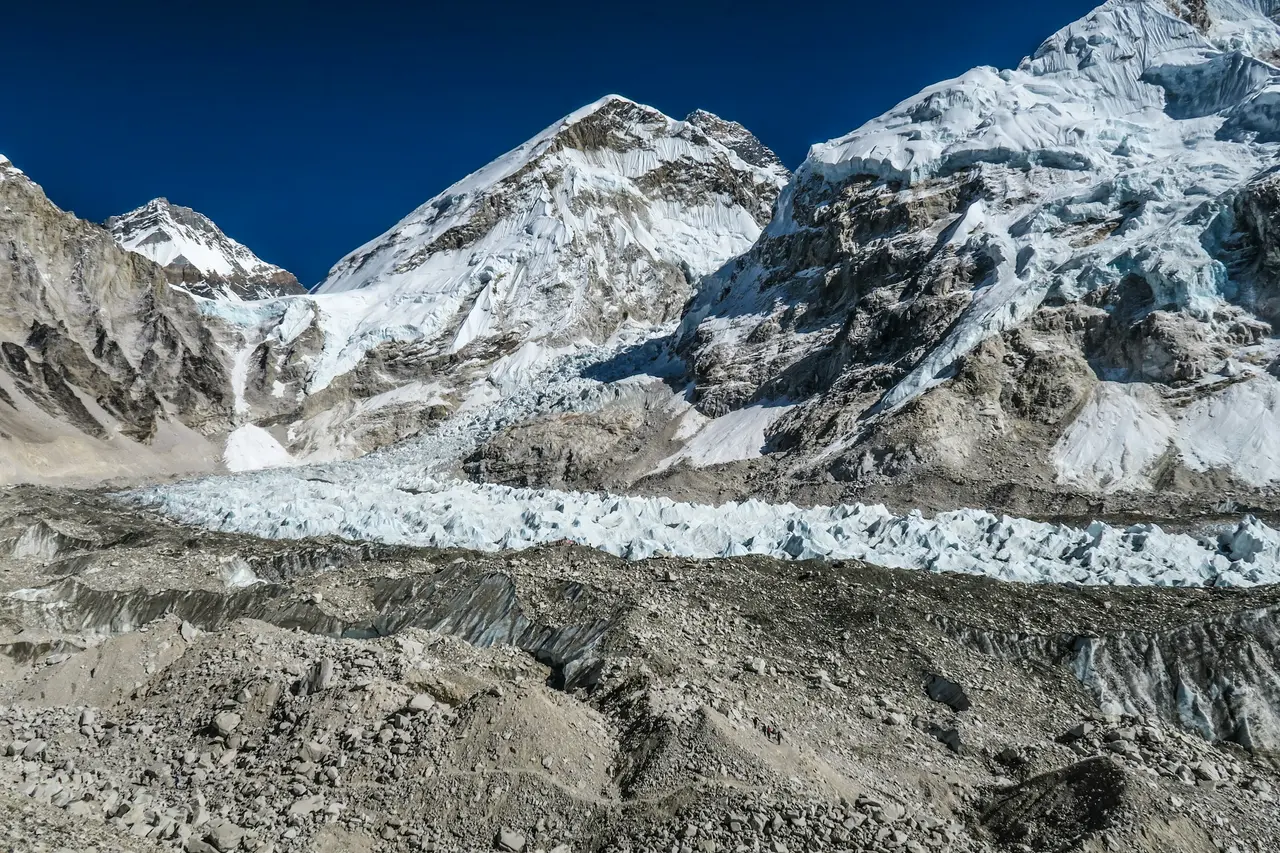
Island Peak (Imja Tse), at 6,189 m, is the most popular of Nepal's NMA-classified trekking peaks, and it carries an Alpine PD+ grade: non-technical walking up to a high base camp, then genuine glacier travel, a 45–50° fixed-rope headwall, and a narrow, exposed summit ridge above 6,000 m. It is not a walk-up, and treating it as an extension of the Everest Base Camp trek is the single most common reason people struggle on summit day. If you are still choosing between Nepal's climbing peaks, compare Island Peak against the full trekking-peak list before committing to this one specifically.
What follows is the summit day hour by hour, the technical sections most brochures gloss over, the skills you genuinely need before you book, an 18-day itinerary, a gear list, and an honest cost breakdown.
 [PHOTO]
The summit day, hour by hour
Summit day starts at 12:30–1:00 am and runs 10–14 hours round trip from base camp at roughly 5,087 m, climbing about 1,000 m to the 6,189 m summit and back. It is the longest, coldest and most technically demanding day of the trip, and every earlier day exists only to get you fit and acclimatised enough to survive it well.
You wake at base camp in temperatures of -15°C to -25°C, eat something you can stomach at that hour, check crampons, harness and headlamp batteries by torchlight, and set off by 1:00 am. The first stretch, to roughly 2:30 am, is a scramble up a loose rock-and-scree gully to the glacier snout at around 5,700–5,800 m — steep underfoot, occasionally aided by an old fixed line, but not yet technical climbing. At the glacier edge you put on crampons, rope up in teams of two to four, and cross roughly an hour and a half of crevassed ice, weaving between visible crevasses and, in most seasons, over at least one aluminium ladder.
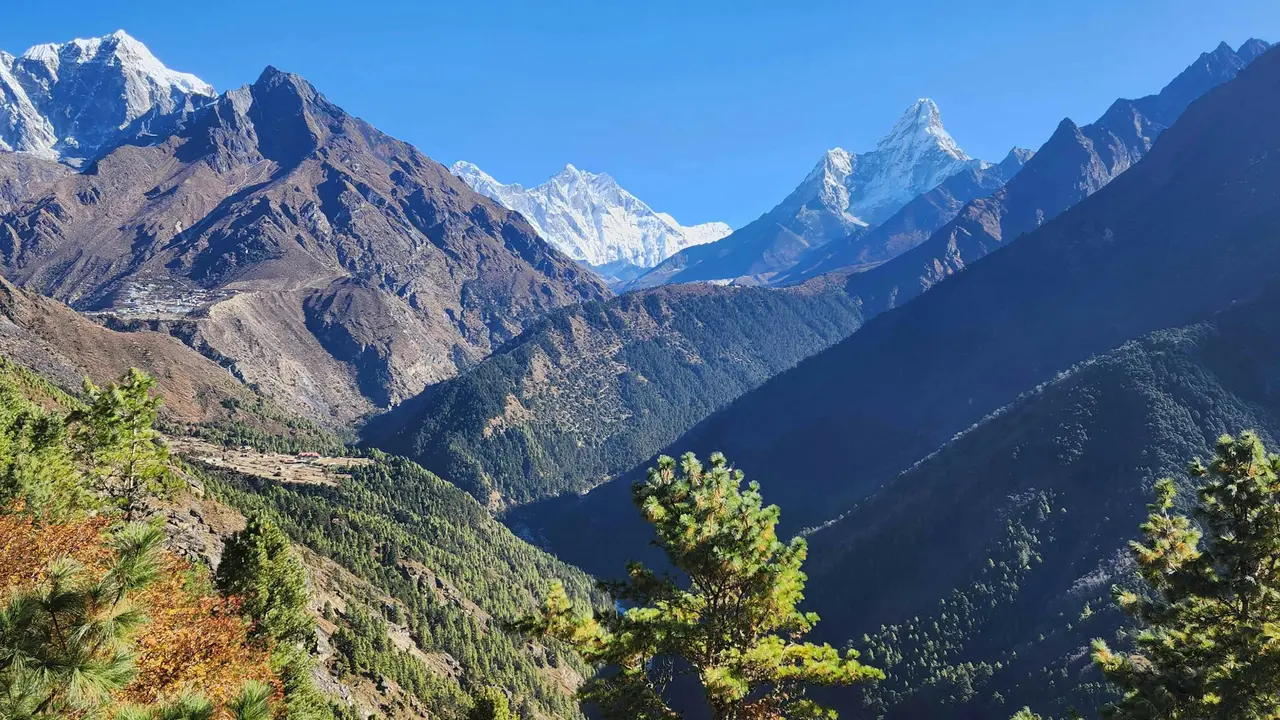
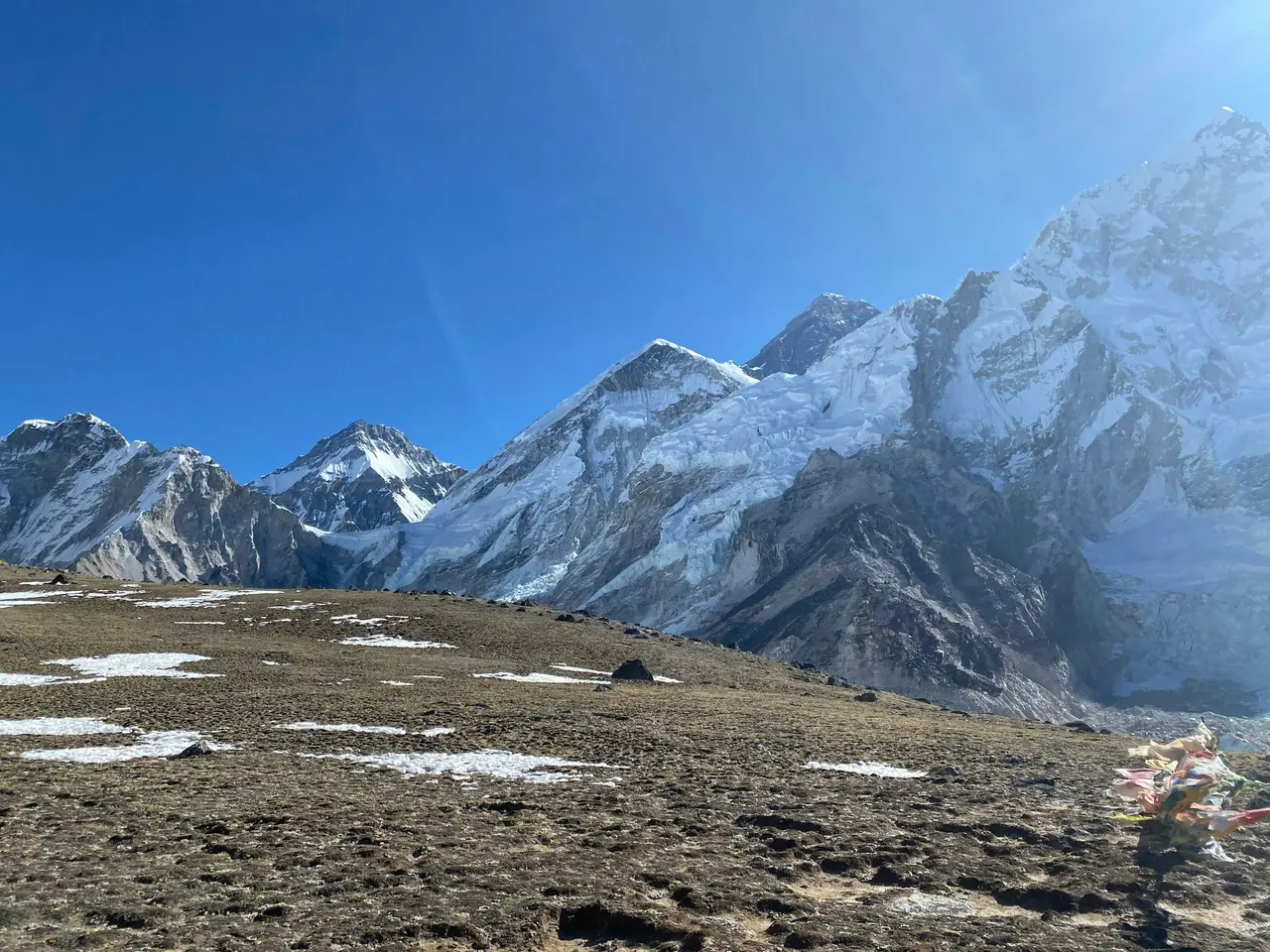
By around 4:30 am you reach the base of the headwall: a 100 m fixed rope pitch at 45–50°, ascended on a jumar rather than free-climbed, taking most climbers 45 minutes to over an hour depending on fitness and any queue ahead of you. Clearing the headwall by 6:00–6:30 am puts you on the narrow, corniced summit ridge for the final approach — exposed on both sides, walked one at a time clipped to a fixed line where one is rigged, with the Lhotse south face filling the sky to the east. Most parties reach the 6,189 m summit between 7:00 and 8:30 am, spend fifteen to twenty minutes there, and begin descending immediately.
 [GEN]
Descent reverses the route: an abseil or controlled down-climb of the headwall, a second roped glacier crossing as the ice softens in the morning sun, and the gully back to base camp, typically arriving by early-to-mid afternoon. A competent guide sets a hard turnaround time, often 9:00–10:00 am regardless of how close the group is to the summit, because afternoon cloud buildup and softening snow bridges over crevasses make the descent measurably more dangerous later in the day. Anyone who tells you a turnaround time is optional has not led this route enough times.
The technical sections, named
Four sections of the route carry real technical demands, and knowing them by name lets you judge your own readiness against something specific rather than a vague difficulty rating.
The gully. From base camp to the glacier snout, loose rock and scree at a steep angle, occasionally icy before dawn. This is exposed scrambling, not climbing, but a slip here in the dark has consequences, and it sets the tone for a day where nothing is casual.
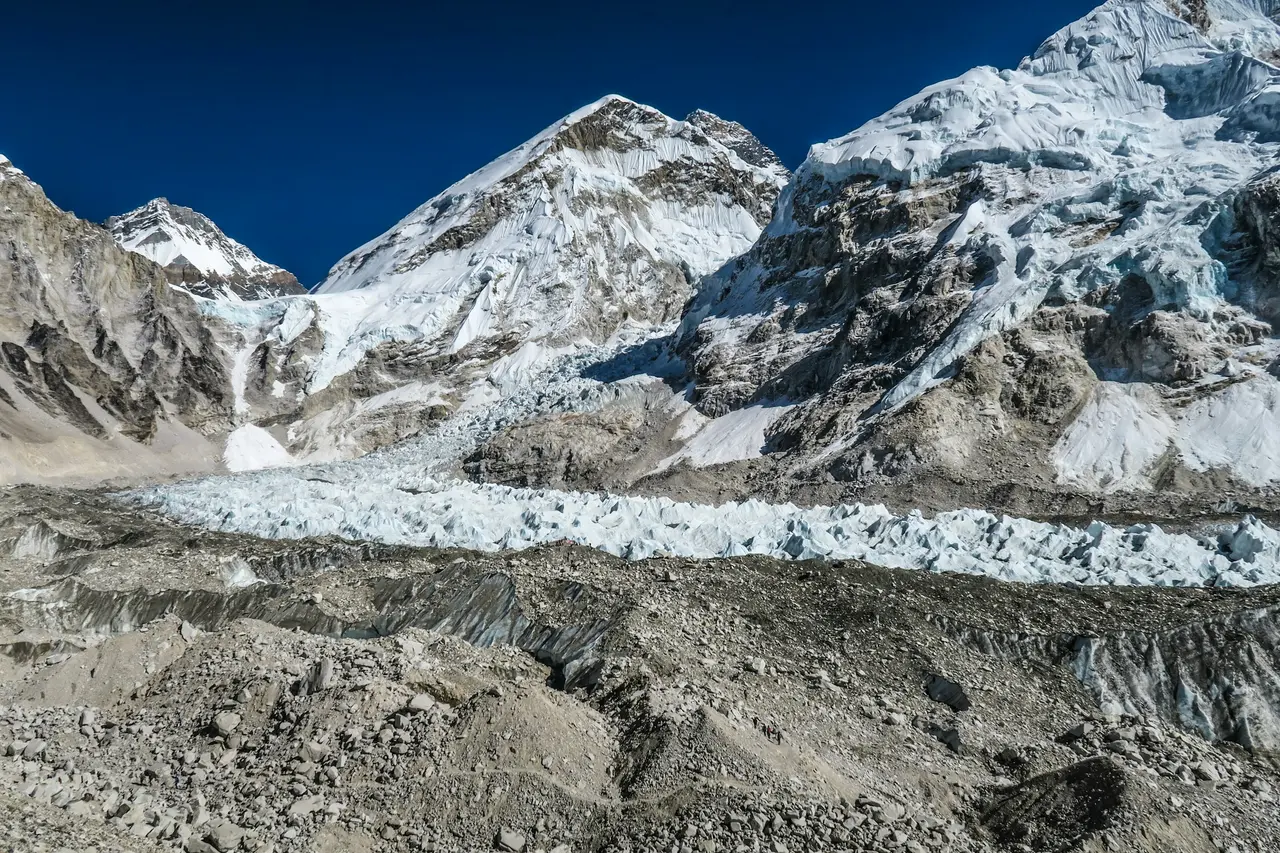
The glacier crossing. Genuinely crevassed terrain requiring roped travel, with route-finding done by the lead guide or climbing Sherpa probing ahead. Most seasons include at least one aluminium ladder across an open crevasse. This is where rope-team discipline — even spacing, appropriate tension, no wandering — actually matters, not just in theory.
 [PHOTO]
The headwall. The defining pitch of the climb: a fixed rope running roughly 100 m up a 45–50° slope of snow or hard ice, steepening to 55–60° at the very top in low-snow years. You ascend on a mechanical ascender (jumar), sliding it up the rope as you climb rather than climbing the ice itself, but the leg and calf work at that angle and altitude is real, and this single-file pitch is where queues form during the busy October–November window.
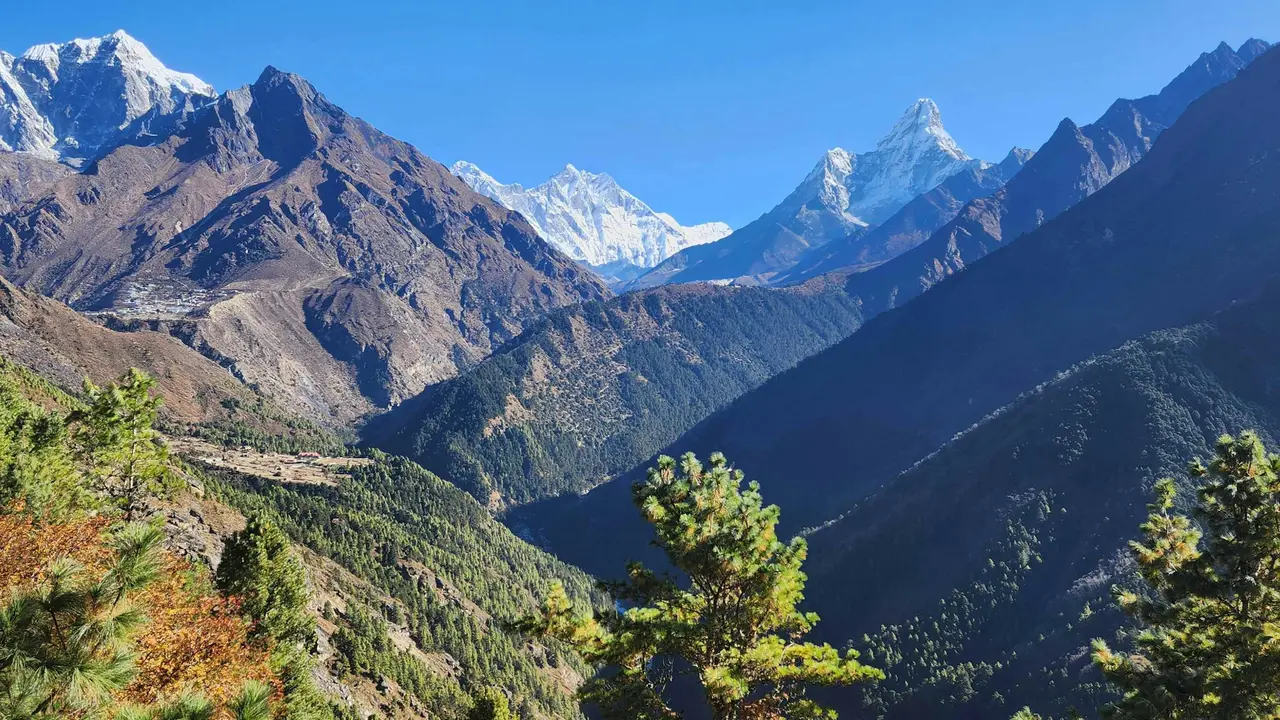
The summit ridge. Short but narrow and corniced, with real exposure down both the western face into the Imja valley and, less obviously but just as seriously, back over the route you have just climbed. Parties move one at a time, clipped to a fixed line where the guiding team has rigged one.
 [PHOTO]
Skills you must already have
Guided ascents with fixed ropes and a jumar mean you do not need to lead ice or set your own protection, but four things are non-negotiable before you stand at the bottom of that headwall.
You need working, practised competence with an ascender on a loaded rope, not a five-minute demonstration at base camp the night before. You need crampon technique on 40–50° snow and ice — front-pointing, weight over your feet, ice-axe placement — ideally rehearsed on a prior climb or a dedicated ice-climbing or mountaineering skills course rather than learned for the first time on summit night. You need the aerobic and muscular capacity for 10–14 hours of continuous effort above 5,000 m on broken sleep in severe cold, which is a different fitness demand from trekking fitness even for strong hikers. And you need rope-team discipline: consistent pace, appropriate rope tension, and the self-awareness to say so when you are struggling rather than pushing silently until you become the reason the whole team turns back.
Guides run a gear and skills refresher at base camp — crampon fitting, a short jumar practice on a fixed line, ice-axe self-arrest review — and it genuinely helps. It is a top-up, not a substitute for turning up with zero prior mountain experience and hoping the refresher covers it. Climbers who arrive having never worn crampons before regularly find summit night is the wrong place to learn, and a guide who is honest with you will say so before you have paid for the permit, not on the glacier at 3 am.
The 18-day itinerary with EBC acclimatisation
Nearly every Island Peak itinerary borrows the first ten days of the Everest Base Camp trek route for acclimatisation, then branches off towards Chukhung and the Imja valley rather than continuing to Everest Base Camp itself. This is deliberate: Island Peak's summit at 6,189 m demands a slower, more conservative acclimatisation profile than a straight EBC trek, and skipping days here is the single most preventable cause of failed summit attempts.
| Day | Route | Altitude |
|---|---|---|
| 1 | Kathmandu – fly to Lukla, trek to Phakding | 2,840 m → 2,610 m |
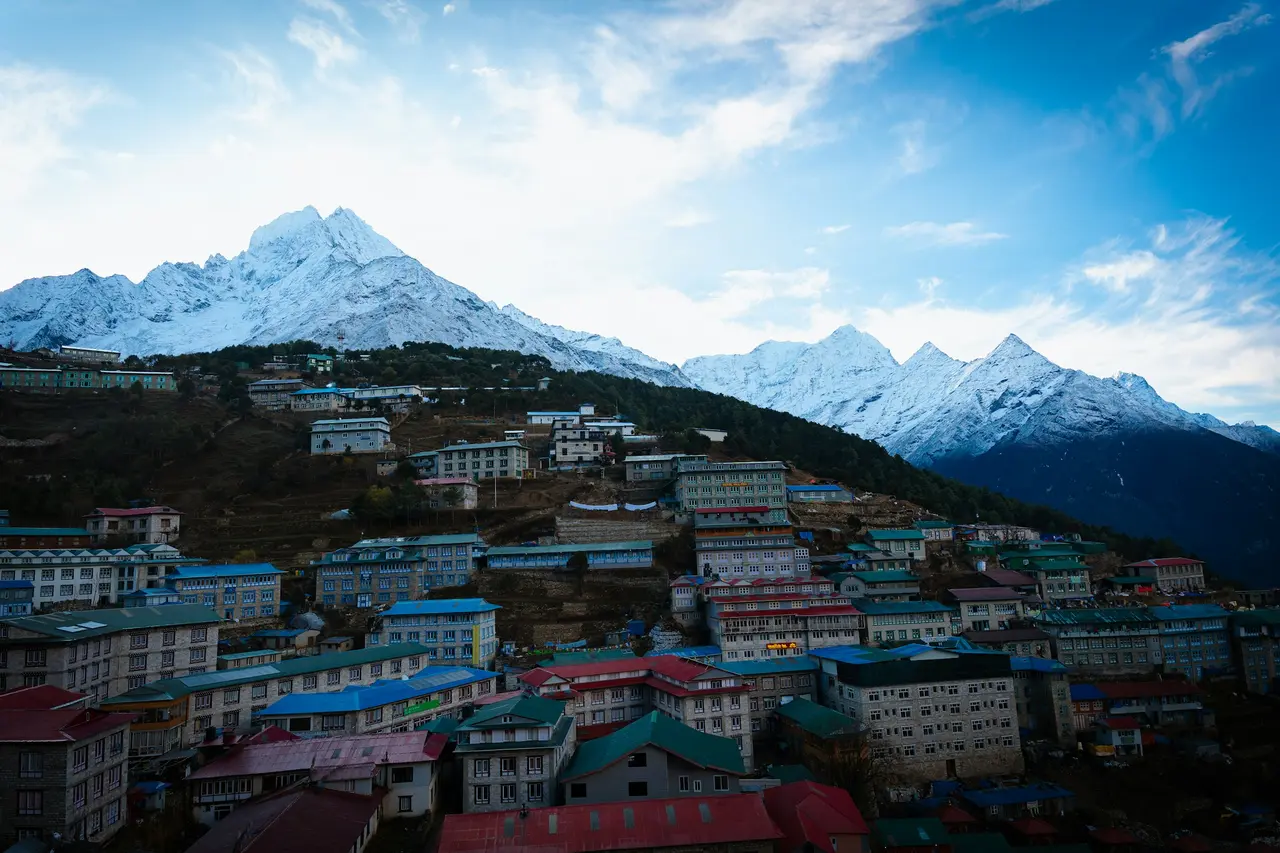
| 2 | Phakding – Namche Bazaar | 3,440 m |
| 3 | Namche: acclimatisation day, side hike | 3,440 m |
| 4 | Namche – Tengboche | 3,860 m |
| 5 | Tengboche – Dingboche | 4,410 m |
| 6 | Dingboche: acclimatisation day, Nangkartshang | 4,410 m |
| 7 | Dingboche – Chukhung | 4,730 m |
| 8 | Chukhung: acclimatisation day, Chukhung Ri (5,550 m) | 4,730 m |
| 9 | Chukhung – Island Peak Base Camp | 5,087 m |
| 10 | Base camp: rest, gear check, jumar and crampon refresher | 5,087 m |
| 11 | Summit day: base camp – summit (6,189 m) – base camp | 5,087–6,189 m |
| 12 | Contingency day (weather or a second attempt) | 5,087 m |
| 13 | Base camp – Chukhung – Pangboche | 3,930 m |
| 14 | Pangboche – Namche Bazaar | 3,440 m |
| 15 | Namche – Lukla | 2,840 m |
| 16 | Buffer day for flight delay | — |
| 17 | Fly Lukla – Kathmandu | — |
| 18 | Departure or extension day | — |
Days 3, 6 and 8 are not padding. Each one lets your body build red blood cell capacity before you climb higher, and cutting any of them to compress the trip is the most common false economy in Island Peak booking. Day 12 exists for the same reason: weather at 6,000 m in the Khumbu is not fully predictable even with modern forecasting, and a trip with no contingency day either misses the summit outright when the first attempt is weathered off, or pushes a marginal group up anyway because there is no slack left in the schedule. Day 16 covers the well-documented unreliability of Lukla flights in poor visibility; building it in avoids missing an international connection over a one-day delay that is entirely normal for this airstrip.
 [PHOTO]
Gear: the climbing delta over a trek list
Everything on a standard Everest-region trekking packing list still applies — layered clothing, a four-season sleeping bag, a good headlamp, trekking poles. Island Peak adds a specific technical kit list on top of that, and this is the delta that a generic Nepal trek gear guide will not cover.
You need: crampons rated for general mountaineering (not lightweight hiking crampons), an ice axe, a climbing harness, a mechanical ascender (jumar), a descender or belay device, a locking carabiner plus two to three additional screwgates, a couple of tape slings, a climbing helmet, and mountaineering boots rated for the cold and rigid enough to take crampons securely — plastic double boots or a warm B2/B3 leather boot, not a standard trekking boot. For summit night specifically you need a genuinely warm system: a down suit or a heavyweight down jacket paired with insulated down or synthetic trousers, expedition-weight mitts (not just gloves), and a spare set of headlamp batteries kept warm in an inner pocket, since cold drains lithium batteries fast at altitude.
Most of the technical items above can be rented in Kathmandu or Namche rather than bought outright, which matters if this is a one-off climb rather than the start of a mountaineering habit. Rental quality varies significantly between shops, so inspect crampon points, harness stitching and rope condition yourself before you leave the rental counter, and do this at least a day before you need the gear, not the morning you fly to Lukla.
 [PHOTO]
Success rates and why people turn back
Guided Island Peak attempts in good conditions, with fixed ropes already rigged by the climbing team, commonly succeed at rates well above those of unguided attempts, but a meaningful share of climbers still turn back, and the reasons cluster around three causes rather than bad luck.
Altitude is the biggest one. Even with a properly staged 18-day itinerary, individual acclimatisation varies, and persistent headache, nausea or poor sleep at Chukhung or base camp is a legitimate reason for a guide to hold a client back from summit night — see the fuller picture in altitude sickness on Nepal treks. Cold and exhaustion are the second cause: ten to fourteen hours at -20°C or colder, much of it stationary while queuing or clipping into a fixed line, saps energy and dexterity faster than moving continuously would, and cold fingers fumbling a carabiner gate cost real time on the headwall. The third is congestion itself. In the peak windows of late October and early November, dozens of climbers can be on the fixed ropes on the same clear morning, and a slow queue at the base of the headwall can push a team past its safe turnaround time before they have even started climbing it, forcing a rational guide to call the attempt off regardless of how the client feels.
None of these are reasons to avoid the climb. They are reasons to book a guide who will genuinely say no on a bad morning, to build in the contingency day from the itinerary above, and to choose shoulder dates within the season where the crowding is lower, rather than assuming a bought permit guarantees a summit. A second, well-timed attempt on the contingency day succeeds more often than people expect, provided the group has not already used up its acclimatisation window pushing too hard on the first try.
Cost
An Island Peak climb typically runs USD 1,800–3,000 per person through a guided operator, and the government royalty is a small fraction of that. As of the 2026 season, the Nepal Mountaineering Association's trekking-peak permit for a Group A peak like Island Peak is priced by season and team size — verify the current fee schedule before you book, since NMA royalties are revised periodically and vary by season (spring, autumn, winter/summer).
| Cost item | Approximate range (USD) |
|---|---|
| NMA trekking-peak royalty | Verify current NMA fee schedule |
| Guide and climbing Sherpa fee (shared across group) | 600–1,200 |
| EBC-route trekking costs (lodging, food, permits) | 500–800 |
| Domestic flights (Kathmandu–Lukla return) | 350–400 |
| Technical gear rental | 100–200 |
| Rescue and evacuation insurance | 150–300 |
The guide and climbing Sherpa fee is the one line in this table that genuinely drops per person as a group fills, because it is a fixed cost split across however many climbers are on the departure.
Island Peak climb: price by group sizeWhere an operator quotes an unusually low all-in price, check specifically what it excludes: technical gear rental, a dedicated climbing Sherpa (as opposed to a trekking guide alone), and rescue insurance are the three items most often stripped out to make a headline number look better than the trip it actually buys.
FAQ
How hard is Island Peak? Island Peak is graded Alpine PD+: non-technical walking to a high base camp, followed by genuine glacier travel and a 45–50° fixed-rope headwall at around 6,100 m. It is a real climb with objective hazard, not a difficult trek, and it should not be booked as one.
Can a beginner climb Island Peak? A fit beginner can succeed with a guided team, prior crampon and jumar practice, and a properly staged itinerary, but total first-time mountaineers without any preparation fail more often. A short mountaineering skills course beforehand meaningfully improves your odds and your safety margin.
Do you need a rope for Island Peak? Yes. The glacier crossing and the summit ridge both require roped or fixed-line travel, and the headwall is climbed on a fixed rope using a mechanical ascender. Unroped travel on any of these sections is not a safe option regardless of experience.
How long is Island Peak summit day? Summit day runs 10–14 hours round trip from base camp, starting around 1:00 am and typically returning by early-to-mid afternoon. The exact duration depends on fitness, weather, and how much queuing there is at the headwall that morning.
How much does Island Peak cost? A guided Island Peak climb typically costs USD 1,800–3,000 per person, covering the NMA permit, guide and climbing Sherpa fees, the Everest-region trekking portion, flights, gear rental and insurance. The guide fee itself drops per person as a group departure fills.
Hire the guide who has actually stood on that headwall
Island Peak's risk sits almost entirely in the judgement of the person leading you: whether they call a rest day at Chukhung when you need one, whether they set a turnaround time and hold it, and whether they can read a queue at the headwall and decide to wait a day rather than push a tired group into it. NepGem's guide profiles show the licence number, documented altitude record and past-client reviews of every climbing guide before you pay a deposit, so you are checking a specific person's summit history on this specific peak, not trusting a brochure's promise. You can hire that guide directly for private dates, or join a departure that already has climbers booked so the guide and climbing-Sherpa fee splits across the group instead of landing on you alone. Either way, you see who is actually taking you up the headwall before you commit.


