

Mera Peak: Nepal's Highest Trekking Peak at 6,476 m
यो कथा अहिलेलाई अङ्ग्रेजीमा मात्र उपलब्ध छ।
Mera Peak is the highest trekking peak in Nepal but one of the least technical — here is why altitude, not climbing skill, decides who summits.
NepGem टोली · स्थानीय गाइड र यात्रा योजनाकार
· १३ मिनेट पढाइ

Co-authored with an NMA-licensed climbing guide (licence no. on file) · Last verified: September 2026
Mera Peak, at 6,476 m, is the highest of Nepal's NMA-classified trekking peaks and also one of the least technical: the standard route involves a long, straightforward snow slope rather than sustained steep ice or rock, which makes altitude, not climbing skill, the thing that actually decides who reaches the top. That combination makes it a genuinely different proposition from Island Peak, and confusing the two — assuming "less technical" means "easier" — is how underprepared climbers end up turning back a few hundred metres short of a 6,476 m summit. If you have not yet compared Nepal's trekking peaks against each other, start with the full peak-climbing overview before deciding Mera is the right one for you.
This guide covers why Mera's paradox is real, the remote Hinku valley approach that makes up half the trip, a 17-day itinerary, the short technical step below the true summit, how Mera actually compares to Island Peak, gear, and an honest cost breakdown.
 [GEN]
Highest, but not hardest
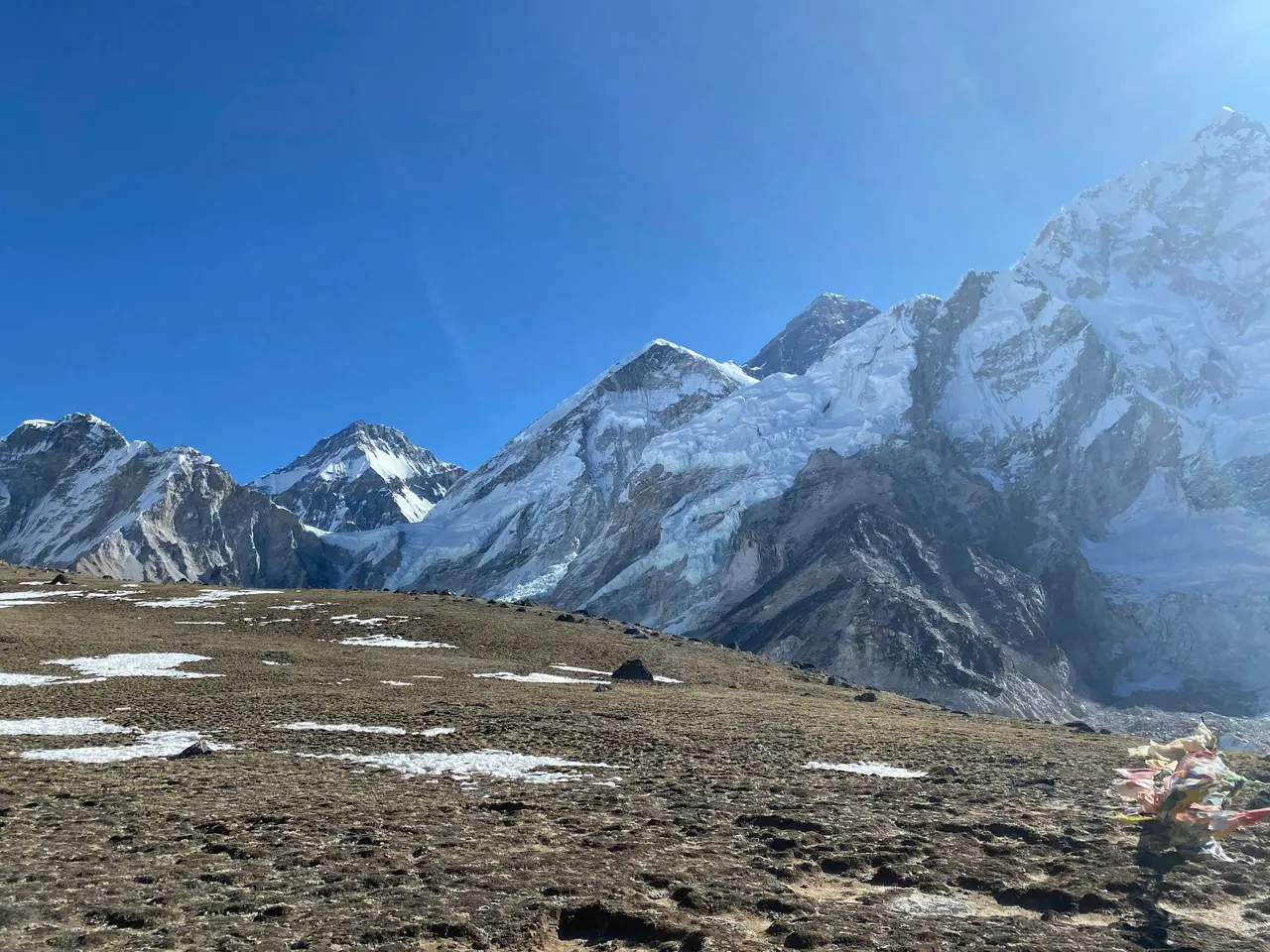
Mera Peak's paradox is straightforward once stated plainly: at 6,476 m it stands nearly 300 m higher than Island Peak, yet its standard North Face / Mera La route is graded a more modest Alpine PD, mostly a long, glaciated snow-plod at a moderate angle rather than the steep fixed-rope pitches that define Island Peak's headwall. There is no equivalent 45–50° wall to climb, and the crevasse hazard, while real, is generally less complex than on the Imja glacier. That makes Mera a sound choice as a first 6,000 m peak for a climber who is fit and comfortable on snow but has not yet built confidence with steep fixed-rope work on an ascender.
The trade-off is altitude exposure. Because the technical demand is lower, operators are sometimes tempted to compress the itinerary, and 6,476 m is high enough that a compressed schedule produces real altitude sickness rates regardless of how gentle the terrain underfoot is. The mountain does not care that the slope is easy; your body still has to adapt to roughly the same barometric pressure it would face on a harder peak. Treat Mera as "the high one" rather than "the easy one," and plan the itinerary accordingly. A prior mountaineering skills course in Nepal will not fix a compressed schedule, but it does mean crampon and rope-team technique are one less thing your body has to learn while it is also adapting to thin air.
The Hinku valley approach
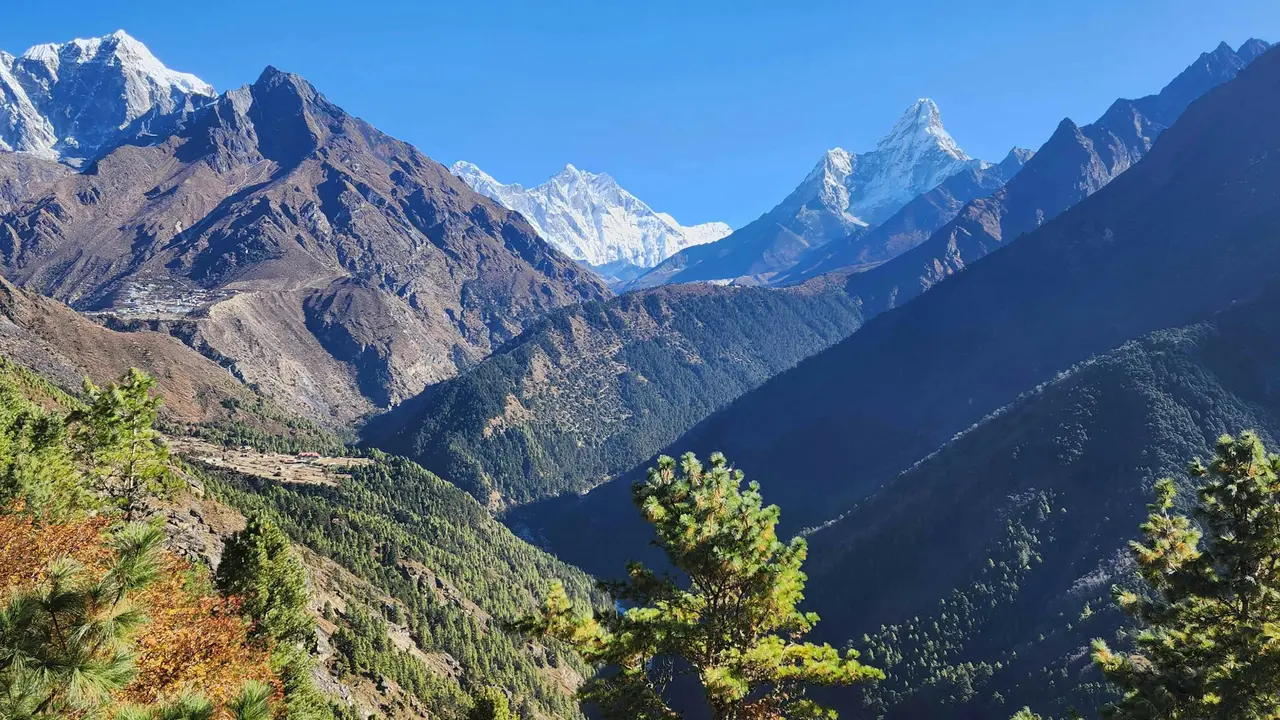
The approach to Mera Peak runs up the remote Hinku valley rather than the well-trodden Khumbu trail used for Everest Base Camp and Island Peak, and this approach is genuinely half the experience of the trip, not a logistics footnote. Lodges are sparse and basic compared with Namche or Dingboche, several nights are spent in tented camps rather than teahouses, and the trail crosses the Zatrwa La (around 4,600 m) early on, a demanding pass in its own right before the climbing even starts.
This remoteness cuts both ways. It means far fewer people on the trail, genuinely quiet forest and rhododendron sections through Panggom and Chetra Khola lower down, and a stronger sense of being somewhere un-crowded compared with the Khumbu's high season. It also means fewer rescue and resupply options if something goes wrong, longer helicopter response times from a remote camp than from a teahouse village with a helipad, and an itinerary that depends more heavily on porters carrying tents, food and cooking gear rather than relying on lodges along the way. Budget for this: a Mera Peak trip typically carries a larger support team relative to the number of climbers than an Island Peak trip run mostly through teahouses, and that support cost is part of what you are paying for, not an inflated margin.
A handful of basic teahouses have opened at Kothe, Thangnak and Khare in recent years, so the trip is not fully tented from end to end, but standards there are simpler than the Khumbu: expect a shared dormitory-style room, a wood stove for warmth in the evening, and a limited, mostly dal bhat and noodle-based menu. Between Chutanga and Kothe, camping remains the norm on most itineraries, and a good operator carries enough tentage, kitchen gear and food to run independently of any lodge for several days if weather or trail conditions force a change of plan.
 [PHOTO]
Day-by-day: 17 days
A realistic Mera Peak itinerary runs 17 days from Kathmandu to Kathmandu, front-loaded with acclimatisation days because the approach itself gains altitude quickly through the Hinku valley.
| Day | Route | Altitude |
|---|---|---|
| 1 | Kathmandu – fly to Lukla, trek to Chutanga | 2,840 m → 3,020 m |
| 2 | Chutanga – Thuli Kharka, cross Zatrwa La | 4,600 m pass → 3,600 m |
| 3 | Thuli Kharka – Kothe | 3,600 m |
| 4 | Kothe – Thangnak | 4,350 m |
| 5 | Thangnak: acclimatisation day, short hike | 4,350 m |
| 6 | Thangnak – Khare | 5,045 m |
| 7 | Khare: acclimatisation and gear-check day | 5,045 m |
| 8 | Khare – Mera High Camp | 5,800 m |
| 9 | Summit day: High Camp – summit (6,476 m) – Khare | 5,800–6,476 m |
| 10 | Contingency day at Khare (weather or second attempt) | 5,045 m |
| 11 | Khare – Kothe | 3,600 m |
| 12 | Kothe – Thuli Kharka | 3,600 m |
| 13 | Thuli Kharka – cross Zatrwa La – Lukla | 2,840 m |
| 14 | Buffer day for flight delay | — |
| 15 | Fly Lukla – Kathmandu | — |
| 16 | Kathmandu: rest, gear return, contingency | — |
| 17 | Departure or extension day | — |
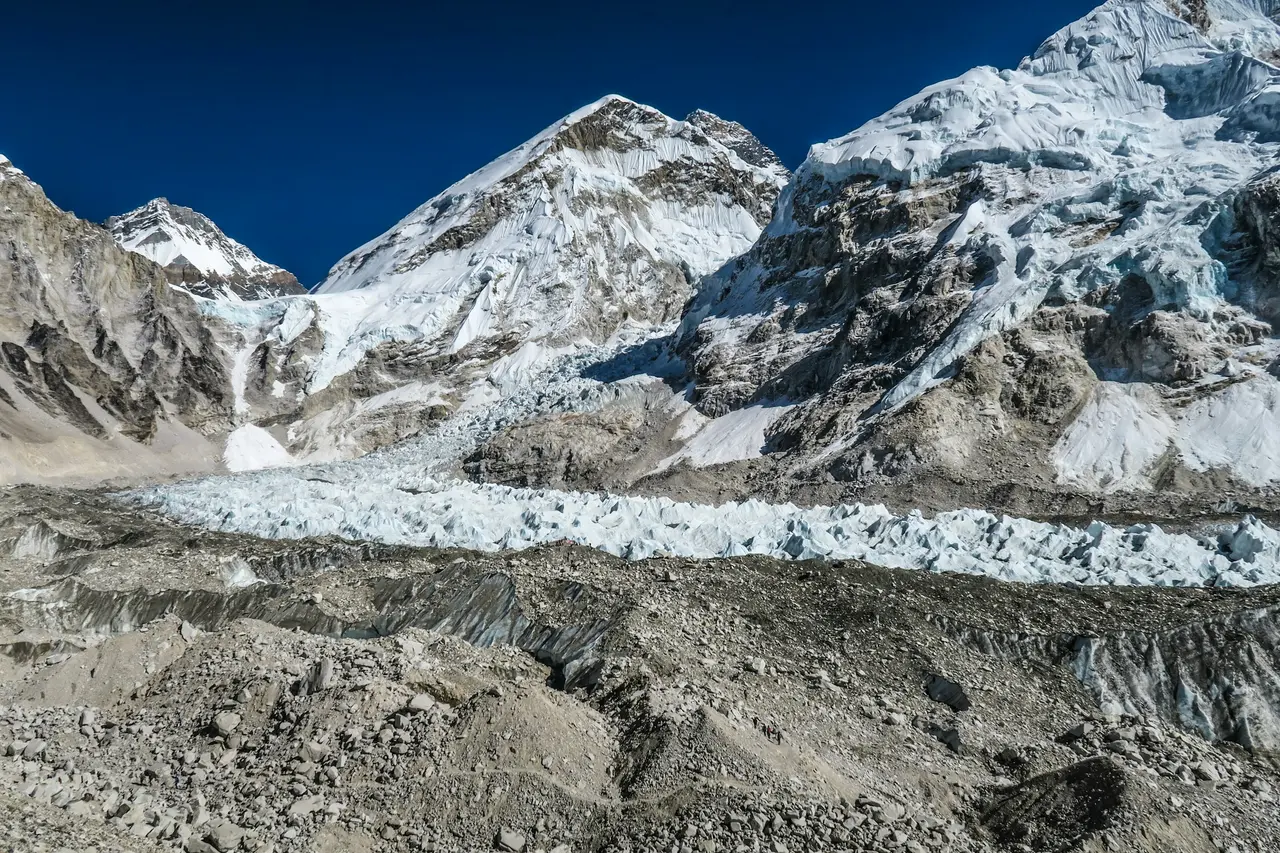
The two acclimatisation days at Thangnak and Khare are the itinerary's real backbone. Khare in particular sits at 5,045 m, already higher than Everest Base Camp itself, and most operators use the Khare rest day to run a crampon and ice-axe refresher on the nearby glacier rather than simply resting in camp. Day 10, the contingency day, matters more here than on many other climbs precisely because the summit push from High Camp is long and weather-dependent, and a group with no slack in the schedule is a group under pressure to go regardless of conditions.
 [PHOTO]
Summit day and the final snow slope
Summit day starts around 1:00–2:00 am from High Camp at 5,800 m and runs 8–12 hours round trip, climbing roughly 700 m of glaciated snow slope at a moderate, mostly non-technical angle. Most of the climb is a long, steady, roped walk on crampons across the Mera glacier, with the terrain rarely exceeding 30–35°, which is why parties without prior mountaineering experience can succeed here more often than on steeper peaks — provided their altitude tolerance holds.
The one genuinely technical step comes in the final approach to the true summit: a short, steeper snow or ice pitch, sometimes fixed with a rope in a given season, that separates the broad summit plateau (where many photographs are actually taken) from Mera's true high point. It is brief, typically no more than 15–20 m, but it is real climbing terrain at nearly 6,500 m and altitude-fogged legs make it feel harder than the grade suggests. A guide roping this section is standard practice and should not be treated as optional. Many exhausted parties settle for the lower plateau rather than pushing the extra 15 minutes to the true summit, and there is no shame in that call on a bad day, but it is worth knowing before you go that the two points are not the same, and only the true summit counts as a completed climb by most operators' own record-keeping.
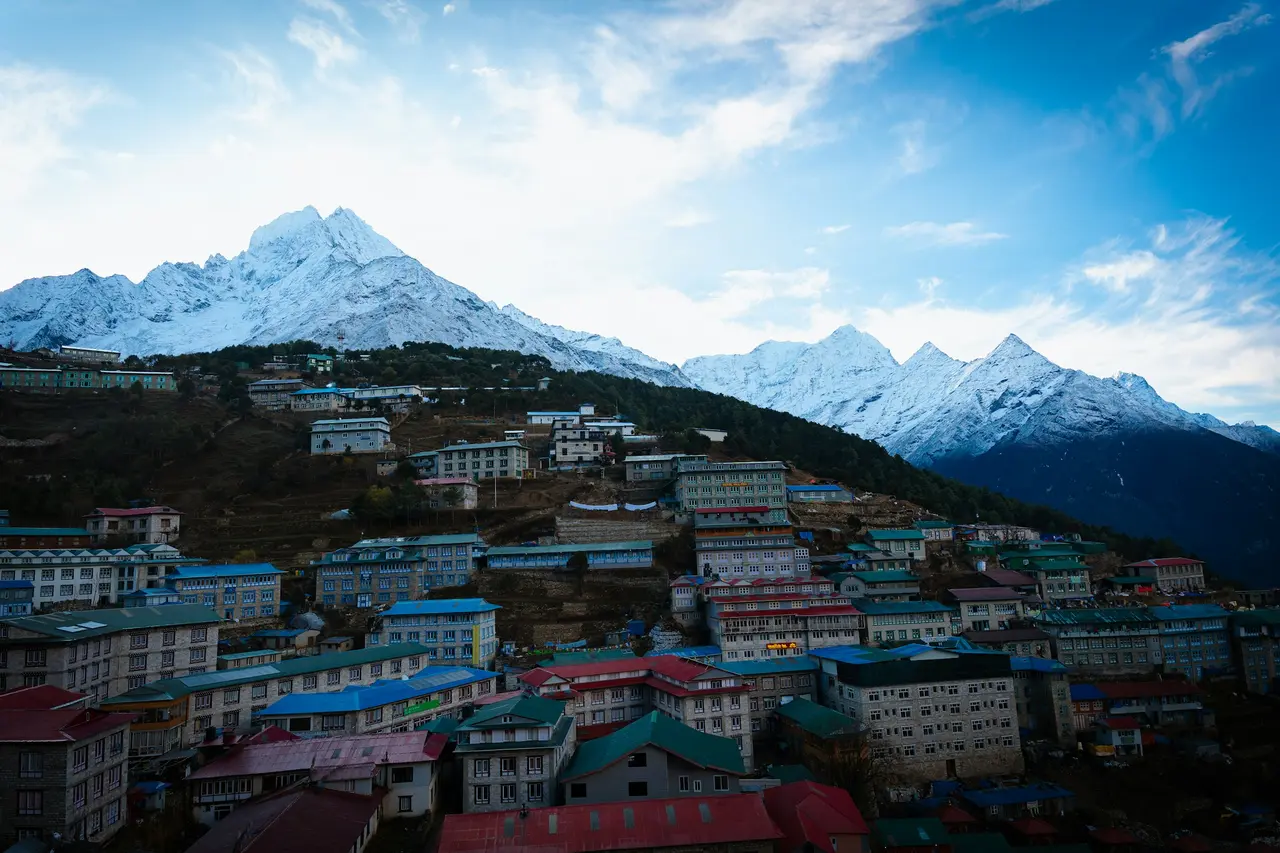
Weather on the summit slope changes fast even on a forecast-clear morning: wind picks up noticeably above the plateau, and a guide watching cloud building over Chamlang or the Hongu valley to the south may cut the summit stay to a couple of minutes rather than the fifteen or twenty you might get on a still day. On a genuinely clear, calm morning, the summit view is one of the best in Nepal for high peaks: five of the world's 8,000 m mountains — Everest, Lhotse, Makalu, Kangchenjunga and Cho Oyu — are visible from a single point, a panorama few other trekking peaks in the country can match.
 [GEN]
Mera vs. Island Peak
The comparison everyone searches for has a genuine answer, not a coin flip. Mera is higher (6,476 m vs. 6,189 m) and involves a longer, more remote approach through the Hinku valley, but its standard route is less technical: a long snow slope rather than a 45–50° fixed-rope headwall, with no equivalent of Island Peak's crevassed glacier crux or corniced summit ridge. Island Peak sits closer to the well-served Khumbu trail, with more lodges, shorter approach logistics, and a shorter, steeper, more technically demanding summit day.
| Mera Peak | Island Peak | |
|---|---|---|
| Summit altitude | 6,476 m | 6,189 m |
| Standard route grade | Alpine PD | Alpine PD+ |
| Crux difficulty | Short snow/ice step near summit | 100 m, 45–50° fixed-rope headwall |
| Approach | Remote Hinku valley, tented camps | Khumbu trail, teahouses throughout |
| Summit day length | 8–12 hours | 10–14 hours |
| Better first choice for | Climbers strong on altitude, less confident on steep fixed rope | Climbers wanting a shorter approach and don't mind technical exposure |
Neither is objectively "the beginner peak." Mera asks more of your acclimatisation and cold tolerance over a longer, more isolated trip; Island Peak asks more of your technical nerve on a single demanding pitch. Climbers who have struggled with altitude before but handle steep terrain confidently often do better on Island Peak; climbers who acclimatise well but are new to fixed-rope climbing often do better starting on Mera. Some experienced climbers do both in a single season, using Mera as an altitude-building step before returning to attempt Island Peak, or the reverse, on the reasoning that Island Peak's shorter approach and easier logistics make a good technical warm-up before committing to Mera's longer, more remote trip.
Gear
Mera's gear list overlaps heavily with Island Peak's, with one meaningful difference: because the technical crux is short and the bulk of the climb is a sustained snow walk, warmth and comfort over many hours matter more than technical hardware variety. You still need crampons, an ice axe, a harness, a helmet, and a warm mountaineering boot rated for the cold, but you can generally get away with a lighter rack of carabiners and slings than an Island Peak headwall demands, since most of the route does not involve clipping into a fixed line continuously.
What you cannot skimp on is insulation and eye protection for a long, exposed snow slope at altitude: a genuinely warm down suit or jacket-and-trouser combination, glacier glasses or goggles rated for high-altitude UV and snow glare, and good sunscreen, since several hours on an open snowfield above 5,800 m produces serious sunburn and snow-blindness risk faster than most climbers expect. Footwear matters more on Mera than the terrain difficulty implies: a full day of front-pointing is unlikely, but eight to twelve hours of continuous crampon wear in deep cold at 6,000 m demands a genuinely insulated, rigid mountaineering boot, not a lighter three-season boot pressed into service for the trip.
Because the approach involves several nights of camping rather than teahouse lodging, a warm four-season sleeping bag rated well below the coldest night you expect, and a sleeping mat with a decent insulation rating, matter more here than on a fully teahouse-based climb like Island Peak, where a slightly lighter bag can be topped up with lodge blankets.
Cost
A guided Mera Peak climb typically costs USD 2,000–3,200 per person, running somewhat higher than Island Peak on average because of the longer, more remote Hinku valley approach and its heavier reliance on tented camps and a larger support team. As of the 2026 season, Mera sits in the NMA's Group A trekking-peak category alongside Island Peak, with a seasonal royalty fee — verify the current NMA fee schedule before booking, since rates are revised periodically.
| Cost item | Approximate range (USD) |
|---|---|
| NMA trekking-peak royalty | Verify current NMA fee schedule |
| Guide, climbing Sherpa and camp crew fee (shared) | 800–1,400 |
| Trekking costs (camping fees, food, porters) | 700–1,000 |
| Domestic flights (Kathmandu–Lukla return) | 350–400 |
| Technical gear rental | 100–200 |
| Rescue and evacuation insurance | 150–300 |
As with any group climb, the guide and crew fee is the line that moves with group size rather than staying fixed per person. On Mera specifically, also check how many camp staff and porters a quoted price actually includes for the tented section of the route; a thin support team on the Hinku valley approach is a common way operators shave costs, and it is precisely the section of the trip where a shortage of porters or cooking staff is hardest to fix on the fly, since there is no lodge to fall back on if the kitchen tent falls behind schedule.
Mera Peak climb: price by group sizeFAQ
Is Mera Peak harder than Island Peak? No, not technically — Mera's standard route is a longer snow slope without Island Peak's steep fixed-rope headwall. Mera is higher and tests altitude tolerance and stamina more; Island Peak tests climbing skill and nerve on a specific technical pitch.
Do you need climbing experience for Mera Peak? Not extensive prior climbing experience, since the route is mostly a roped snow walk, but you do need crampon competence, general mountaineering fitness, and comfort with a short technical step near the true summit. A skills refresher at Khare helps but is not a substitute for basic preparation.
How high is Mera Peak? Mera Peak stands at 6,476 m, making it the highest of Nepal's NMA-classified trekking peaks. It is nearly 300 m higher than Island Peak, which is one reason altitude, rather than technical difficulty, is the main obstacle to summiting.
What's the success rate on Mera Peak? Guided attempts with a properly staged 17-day itinerary and a contingency day succeed at a good rate in clear weather, but altitude sickness from compressed schedules and weather windows at High Camp are the two most common reasons climbers turn back before the summit.
Hire the guide, not the operator packaging the trip
Mera's real risk is not a hard pitch, it is a shortened itinerary sold as a bargain, so the guide's judgement about acclimatisation days matters as much here as technical skill matters on Island Peak. NepGem's climbing guide profiles show licence numbers, documented altitude records on Mera and other trekking peaks, and past-client reviews before you pay, so you can check whether a specific guide has actually led this route with the rest days intact rather than trusting a brochure's itinerary. Hire that guide directly for private dates, or join a departure where the guide, camp crew and shared logistics costs split across a group instead of falling on one traveller.


