

Climbing Everest: What It Costs and What It Asks
The USD 11,000 government permit is the small number. Here is the full expedition cost stack, the new experience rules, and the honest risk picture.
NepGem team · Local guides and trip planners
· 17 min read

Co-authored with an NMA-licensed climbing guide (licence no. on file) · Last verified: September 2026
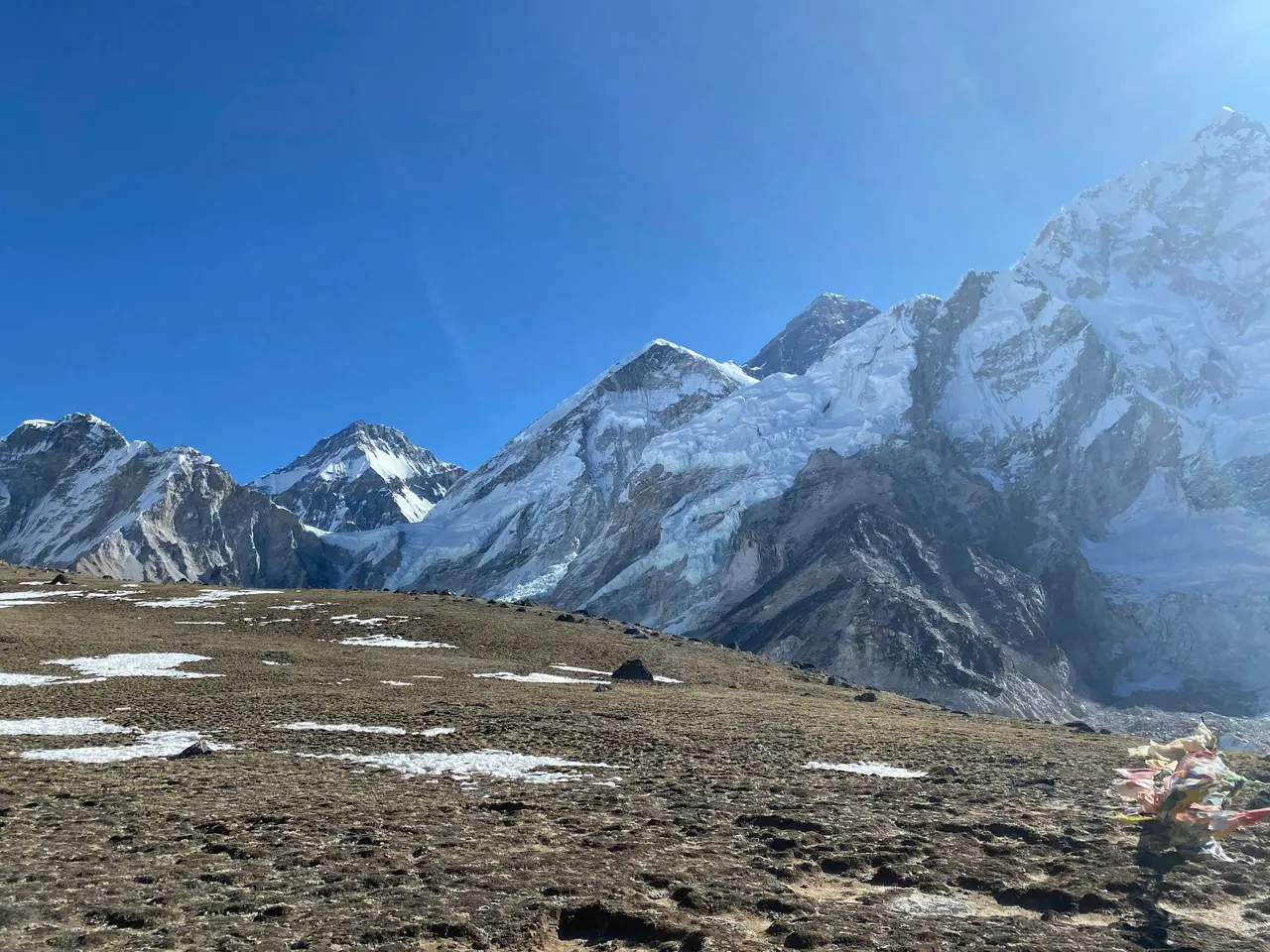
Climbing Everest costs roughly USD 35,000–100,000 per person depending on operator tier, and the government permit, around USD 11,000 of that, is the smallest single line in the full budget. That gap between the headline permit fee and the real cost of the expedition is where most first-time enquiries go wrong: people price the mountain by the number they see in a news headline, then discover the guiding, oxygen, Sherpa support and logistics stacked on top of it cost several times more. If you have not yet decided whether Everest is the right first major objective, work through Nepal's full range of climbable peaks before committing years of preparation and tens of thousands of dollars to this specific mountain.
This guide breaks down the eleven things inside the total cost, the royalty and permit fees, what actually differs between a USD 35,000 and a USD 200,000 operator, the experience requirements Nepal has introduced and what serious operators demand regardless, the arithmetic of oxygen bottles, the labour and risk carried by Sherpa and high-altitude workers, the queue and timing risks that kill people, the honest fatality numbers, and what to climb first.
 [PHOTO]
The total, and the eleven things inside it
An Everest expedition's total cost is built from eleven separable line items, and seeing them laid out separately is the fastest way to understand why quotes vary by a factor of five or six between operators.
| # | Cost item | Typical range (USD) |
|---|---|---|
| 1 | Government royalty/permit | ~11,000 (verify current figure) |
| 2 | Liaison officer fee | 2,000–2,500 |
| 3 | Garbage and rope-fixing deposits | 4,000–5,000 (largely refundable) |
| 4 | Guide and Sherpa support (ratio-dependent) | 8,000–40,000 |
| 5 | Supplementary oxygen (bottles, mask, regulator) | 3,000–6,000 |
| 6 | Base camp services (tents, cook staff, food, communications) | 3,000–8,000 |
| 7 | Khumbu Icefall route fee (SPCC/Icefall Doctors) | 600–800 |
| 8 | Domestic flights and Kathmandu logistics | 500–1,000 |
| 9 | Insurance (high-altitude rescue and medical) | 500–1,500 |
| 10 | Personal climbing gear (down suit, boots, technical kit) | 6,000–10,000 (one-off, reusable) |
| 11 | Contingency (extra rotations, delayed flights, weather days) | 2,000–5,000+ |
At the budget end, an operator quoting close to USD 35,000 is generally covering items 1–3, 7 and 8 directly and providing a lean version of items 4–6, often with a shared Sherpa-to-climber ratio and basic base camp comfort. At the premium end, a USD 100,000-plus quote typically covers a near 1:1 or better Sherpa ratio, a generous oxygen allowance, a full-service base camp with a dedicated cook and comfortable dining tent, and often a Western guide alongside the Nepali climbing team. Item 10, personal gear, is worth noting separately because it is a one-off cost that carries into future expeditions rather than a per-trip fee, and cutting corners here to save money on a single climb is a common and dangerous false economy.
The royalty and permit fees
The core government royalty for climbing Everest from Nepal, historically around USD 11,000 per foreign climber in the standard spring season, is only one part of a wider fee structure that also includes a mandatory liaison officer, garbage-management and environmental deposits, and route-development charges collected separately by the Sagarmatha Pollution Control Committee for maintaining the Khumbu Icefall route each season. Verify the current figures before publishing or booking: Nepal's government has announced periodic changes to Everest royalty rates in recent years, including proposals tied to season and nationality, and the exact number in effect for your specific climbing season should be confirmed directly with Nepal's Department of Tourism or a registered expedition operator rather than assumed from a prior year's figure.
The liaison officer fee, typically USD 2,000–2,500, funds a government representative assigned to every expedition, whose role on paper includes monitoring compliance with permit conditions; in practice, the level of on-the-ground involvement varies significantly by expedition and has been a long-running point of debate within Nepal's mountaineering community. Garbage and rope-fixing deposits, usually in the USD 4,000–5,000 range, are substantially refundable on proof that the expedition has carried its waste back down and complied with environmental rules, which is part of why waste management on Everest has visibly improved compared with earlier decades, even though it remains an ongoing challenge given the volume of expeditions each season.
Operator tiers: USD 35k to USD 200k
The five-to-six-fold price range between the cheapest and most expensive Everest operators reflects real, measurable differences in what you get, not simply brand markup, and understanding these differences is the single most useful thing a first-time Everest climber can do before choosing an operator.
Sherpa ratio is the biggest driver. A budget operator might run one climbing Sherpa supporting two or three clients; a premium operator often runs close to one Sherpa per client, sometimes better on technical sections. This ratio directly affects how much personal attention, rope assistance and emergency response capacity is available to you above Base Camp.
Oxygen litres and bottle allowance vary meaningfully. Budget operators typically allocate a set number of bottles calculated for a standard summit push with limited margin for delay; premium operators build in a larger reserve, higher flow rates during sleep and climbing, and contingency bottles cached at multiple camps in case of a slower-than-planned summit day.
Weather forecasting quality differs sharply. Premium operators typically subscribe to specialist high-altitude forecasting services and have a dedicated team member interpreting data daily to time the summit push; budget operators may rely on more generic forecasts or share a forecasting subscription across multiple expedition groups, which can mean less tailored timing advice precisely when timing matters most.
High-camp food and comfort differences sound minor until you are living them: a premium operator's South Col camp may offer freshly prepared hot meals and a dedicated cook managing food at altitude, where a budget operation runs on freeze-dried meals and self-catering, which matters more than it sounds when appetite loss at extreme altitude is already a serious problem.
Western guide presence, common at the premium end and less common at the budget end, adds a second layer of decision-making experience alongside the Nepali climbing team, particularly valued by climbers wanting an additional experienced voice in weather and turnaround decisions, though many highly experienced Nepali-led teams operate without one and perform excellently.
None of these differences guarantee a summit or guarantee safety, and a well-run budget operator with an honest, experienced Sherpa team can outperform a poorly managed premium one. But treating all Everest quotes as interchangeable and choosing purely on price is choosing blind on exactly the factors most linked to outcomes on summit night.
Experience requirements
Nepal's government has moved on formal experience requirements for Everest climbers, and the current rule environment is worth stating precisely rather than assumed from older reporting. Verify the current requirement before booking, since Nepal has proposed and in some periods implemented rules requiring climbers to have summited at least one Nepali peak above 7,000 m before attempting Everest, alongside medical fitness certification, though enforcement and the exact threshold have shifted between announcements and implementation over recent years.
Separately from whatever the government mandates in a given season, serious expedition operators impose their own experience bar regardless of the legal minimum, because it is in their direct interest not to take underprepared climbers onto a route where their inexperience endangers themselves, their rope team and the Sherpa staff supporting them. Reputable operators typically expect: at least one successful summit of a 6,000 m-plus peak such as Island Peak or Mera Peak, demonstrating competent use of crampons, an ascender and fixed-rope travel under real conditions; ideally a prior 7,000 m or 8,000 m experience such as Manaslu or Cho Oyu, showing the climber's body has been tested at extreme altitude before; comfort using supplementary oxygen, including recognising and communicating early symptoms of hypoxia while wearing a mask; and demonstrated physical conditioning for multi-week expedition life, not just summit-day fitness.
A climber who has never worn crampons and turns up expecting an Everest guide service to teach them from scratch on the mountain is, in the plain assessment of experienced operators, a liability to everyone on the route, not merely a slower client. The honest recommendation, covered in more detail in the final section below, is to build a genuine climbing record on progressively harder peaks over several seasons rather than treating Everest as an achievable first serious climb.
Oxygen, and the arithmetic of bottles
Supplementary oxygen use above roughly 7,500–8,000 m is now near-universal among guided Everest climbers, and the arithmetic behind how many bottles a climber needs is a genuine cost and logistics factor, not an afterthought. A standard oxygen bottle used at a moderate flow rate lasts roughly 5–7 hours of active climbing, and a typical summit push from the South Col (around 7,900 m) to the summit (8,848.86 m) and back takes 15–20 hours, which means most climbers use two to three bottles for the summit day itself, plus additional bottles for sleeping and lower-camp use on the days immediately before and after.
A well-supplied climber typically carries a total allocation of five to seven bottles across the final rotation and summit push, at a per-bottle cost that, combined with mask and regulator rental, is why oxygen alone commonly adds USD 3,000–6,000 to an expedition budget. Under-provisioning oxygen to save money is one of the more dangerous cost-cutting decisions an operator can make, since running out of oxygen high on the mountain, particularly above the South Col, sharply increases the risk of frostbite, impaired judgement and death; several documented Everest fatalities have involved oxygen running out or equipment failing at a critical point.
Climbing without supplementary oxygen at all is possible and has been done by a small number of exceptionally experienced, elite climbers, but it multiplies both the physiological risk and the required experience level enormously, and it is not a realistic or advisable choice for the great majority of guided Everest climbers regardless of budget.
The people who make it possible
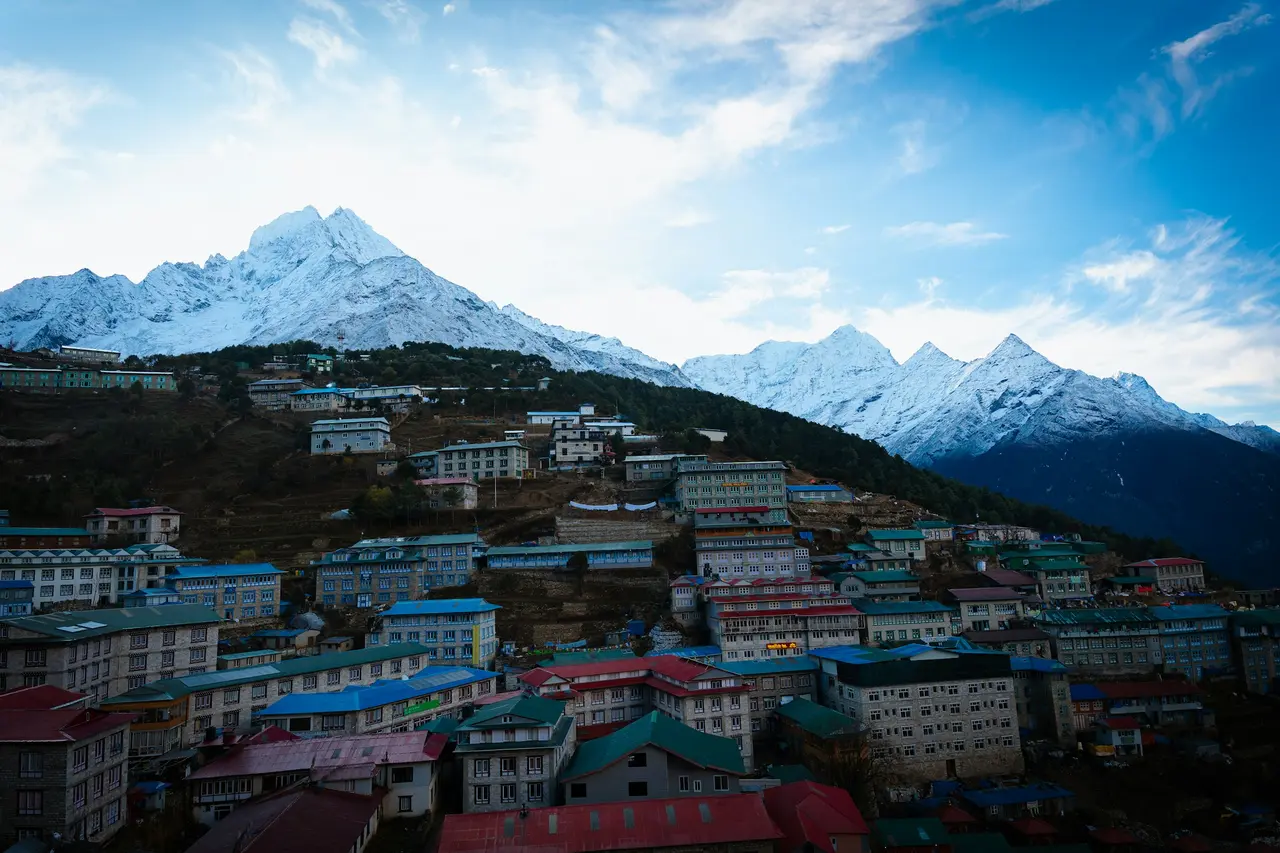
Sherpa and other high-altitude workers carry the physical and risk burden of an Everest expedition to a degree that the cost breakdown above does not fully convey, and this section is the article's ethical spine, not an optional add-on. Climbing Sherpas fix ropes through the Khumbu Icefall at the start of each season, ferry oxygen bottles, tents and food to the high camps multiple times before a client ever sets foot there, and frequently summit multiple times in a single season supporting different client rotations, each ascent carrying the same objective risk a client faces once.
Pay for climbing Sherpas varies by role and experience, with senior, highly experienced climbing Sherpas commanding meaningfully higher rates than base-camp support staff, but even at the upper end, the pay a Sherpa receives for carrying the operational and physical risk of the expedition is a fraction of what the client pays for the experience. Life and accident insurance for high-altitude workers has improved over the past decade following sustained advocacy after high-fatality incidents, including the 2014 Khumbu Icefall avalanche that killed 16 Nepali workers, but coverage levels and enforcement still vary between operators, and a client booking an expedition has a direct, practical way to check this: ask the operator explicitly what insurance cover, in what amount, is provided to every Sherpa and porter on the team, not just the lead guide.
Choosing an operator that pays fairly and insures properly is not a peripheral ethical preference bolted onto a climbing decision; it is a decision that materially affects the safety net available to the people whose skill and risk-taking make your own summit attempt possible. If a quoted price seems unusually low relative to the cost stack in the first section of this article, the difference is disproportionately likely to be coming out of Sherpa pay, insurance or oxygen provisioning rather than genuine operational efficiency.
Concrete questions worth asking an operator before you book, and expecting a specific answer to rather than a general reassurance: what accident and life insurance cover, in what amount, does every climbing Sherpa and base camp worker carry, not just the lead guide; how many rotations through the Khumbu Icefall does a climbing Sherpa typically make in a season supporting your team specifically; and what happens, financially and medically, to a worker's family if they are killed or permanently injured supporting your climb. An operator who answers these plainly, with real numbers, is telling you something different from one who deflects to "we take care of our staff" without specifics. This is not an abstract courtesy question; it is asking the same due-diligence question about the people carrying the operational risk that you would reasonably ask about your own insurance cover before signing a contract.
 [PHOTO]
The queue, the Hillary Step, and why timing kills
Summit-day photographs of a long queue of climbers strung along Everest's upper ridge, widely circulated after the 2019 season in particular, capture a real and continuing hazard: a narrow weather window, combined with a large number of permitted climbers converging on the same one or two clear days, produces bottlenecks at fixed points including the section historically known as the Hillary Step, just below the summit on the South Col route.
Time lost in a queue above 8,000 m, inside what mountaineers call the death zone, is not a minor inconvenience. Every additional hour spent stationary at extreme altitude burns through a fixed, limited oxygen supply, increases cold-injury risk in stationary hands and feet, and extends total exposure time in an environment the human body cannot sustain indefinitely regardless of supplementary oxygen. Climbers who summit on schedule but are delayed by a queue on the descent have died from exhaustion and oxygen depletion within sight of easier ground below, a pattern documented across multiple seasons' fatality reports.
Reducing this risk is mostly about timing and operator quality rather than personal fitness alone: a well-forecast, well-coordinated operator times its summit push to avoid the single most crowded date each season where every operator's weather window aligns, sometimes accepting a slightly less "perfect" forecast day in exchange for a much shorter queue. This is exactly the kind of judgement call that separates an experienced operator's guide team from one prioritising a marketable "we all summited on the best day" narrative over the safety of spreading client groups across the available window.
Risk, in numbers
Stated plainly and without melodrama: climbing Everest carries a genuine, well-documented fatality risk, historically cited in various studies at roughly 1% of summit attempts resulting in death across the mountain's climbing history, though the rate has fluctuated considerably by season, route and era, generally trending down over recent decades as fixed-rope infrastructure, weather forecasting and oxygen systems have improved. The most commonly cited causes of death on Everest, in rough order of frequency across published incident analyses, are: avalanche and icefall collapse (concentrated in the Khumbu Icefall and on the Lhotse Face), exhaustion and altitude-related illness including high-altitude pulmonary and cerebral oedema, falls from fixed lines or unroped sections, and exposure or frostbite complications following a delayed descent.
The 2014 Khumbu Icefall avalanche, which killed 16 Nepali workers on 18 April, remains the single worst incident in the mountain's climbing history in terms of workers killed in one event, and it directly reshaped safety practices, insurance requirements and the timing of Icefall transit that operators use today. The 2015 Gorkha earthquake on 25 April triggered a separate, catastrophic avalanche that struck Base Camp itself, a reminder that risk on Everest is not confined to the technical climbing route above camp.
These numbers should inform your decision, not frighten you away from an honest assessment of it. A well-prepared climber, on a well-run expedition, with genuine prior high-altitude experience, faces meaningfully lower personal risk than the aggregate historical statistic suggests, because that statistic includes underprepared climbers, poorly resourced expeditions and the worst historical incidents. Equally, no operator tier or budget removes the underlying objective hazard of the Khumbu Icefall, extreme altitude and unpredictable Himalayan weather.
What to climb first
Everest should be a later step in a climbing progression, not a first serious mountain, and the honest sequence most experienced operators and guides recommend runs through several intermediate peaks over multiple seasons rather than straight from trekking to the world's highest mountain. Start with a genuine trekking peak such as Island Peak or Mera Peak to build fundamental skills: crampon technique, fixed-rope ascent with a jumar, rope-team discipline and a realistic sense of your own altitude tolerance under real conditions rather than a gym-based guess.
From there, a 7,000 m or 8,000 m peak with a comparatively accessible standard route, such as Manaslu or Cho Oyu, both among Nepal's eight-thousanders, is the conventional next step, since it introduces supplementary oxygen use, multi-week expedition logistics and extreme-altitude physiology without the added technical demand of a route like Ama Dablam or the crowding and cost pressures specific to Everest. Climbers who skip this step and go straight from a trekking peak to Everest are, in effect, testing how their body handles extreme altitude and long-duration oxygen use for the first time on the world's highest and most consequential mountain, with the least room in the schedule and the biggest financial stakes to absorb a bad first data point. Only after that kind of record does an Everest attempt sit on a foundation of tested, rather than assumed, capability. For a look at the alternative technical routes on the mountain beyond the standard South Col line, see Everest's climbing routes compared, and for the history behind why this mountain draws climbers despite everything above, the first ascent in 1953 and the 2014 Khumbu Icefall avalanche are worth reading before you commit to following in that line. If you would rather stand at Everest Base Camp and understand exactly how tall the mountain actually is without the expedition risk and cost above, that trek remains one of the most rewarding walks in the world on its own terms.
FAQ
How much does it cost to climb Everest? Roughly USD 35,000–100,000 depending on operator tier, with the government permit around USD 11,000 of that total. The remaining cost covers Sherpa support, oxygen, base camp services, insurance and personal climbing gear, which together dwarf the permit fee itself.
Do you need experience to climb Everest? Yes. Nepal has moved on formal minimum-summit requirements in recent seasons, so verify the current legal rule, but serious operators independently require prior 6,000 m and ideally 7,000-8,000 m summits regardless of the legal minimum, plus demonstrated crampon, fixed-rope and oxygen-mask competence.
How many people die on Everest each year? Fatality rates vary by season, but historical studies commonly cite roughly 1% of summit attempts ending in death across the mountain's full climbing history, with avalanche, exhaustion, altitude illness and falls as the leading causes. Rates have generally trended down as infrastructure and forecasting have improved.
How long does an Everest expedition take? Around 60 days from arrival in Kathmandu to descent, covering the trek to Base Camp, several acclimatisation rotations through Camps 1 to 4, a wait for a suitable weather window, the summit push itself, and the descent and return.
Can you climb Everest without oxygen? Yes, a small number of exceptionally experienced elite climbers have summited without supplementary oxygen, but it multiplies physiological risk enormously and is not a realistic or advisable choice for the great majority of guided climbers, regardless of budget or fitness level.
Hire the guide who tells you the truth about your own readiness
The honest version of an Everest conversation starts with someone willing to tell you that you are not ready yet, not with someone happy to take a deposit regardless. NepGem's climbing guide profiles show licence numbers, documented altitude records including prior expedition-peak experience, and past-client reviews before you commit to a multi-year, tens-of-thousands-of-dollar climbing plan, so you can check whether a specific guide has actually led climbers through the progression this article describes, from a first trekking peak to Everest itself. Hire that guide to plan the honest sequence, whether your next step is a season on Island Peak, a Manaslu attempt, or, when your record genuinely supports it, Everest.


