

Mountain Biking and Motorbiking Nepal's Mountain Roads
The Annapurna Circuit, Upper Mustang and the Kathmandu valley rim by pedal or throttle — six routes, real rental and licence rules, and honest costs.
NepGem team · Local guides and trip planners
· 12 min read

Nepal's road-building boom of the last two decades turned several of its classic trekking trails into rideable gravel roads, and that same change that frustrated purist trekkers created one of the world's more serious mountain-bike and motorbike touring destinations. This guide covers what actually changed on the ground, six routes worth riding, the real difference between doing this on a pedal bike versus a motorbike, the rental and licensing rules that catch most first-time riders out, the permit rules bikers wrongly assume don't apply to them, the altitude and mechanical realities of riding above 3,500 m, and honest costs for a guided multi-day tour.
 [PHOTO]
What the new roads changed
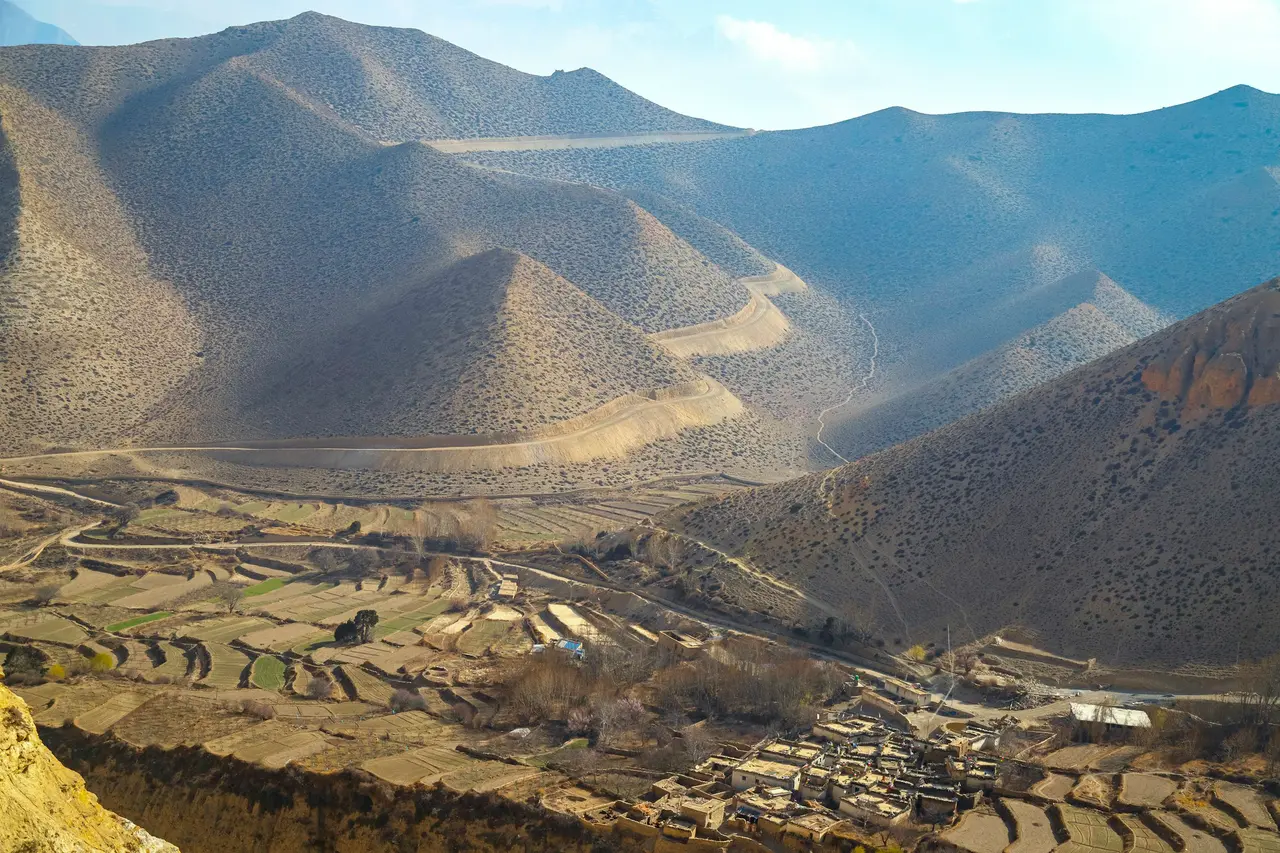
The same roads that hurt the classic trekking experience on routes like the Annapurna Circuit — replacing quiet trail with dust, jeep traffic and the noise of engines — built the infrastructure that makes long-distance biking and motorbiking through the high Himalaya possible at all. Twenty years ago, reaching Manang or Lo Manthang meant walking for the better part of a week regardless of how you wanted to spend your holiday; today a graded gravel road reaches both, carrying jeeps, motorbikes and increasingly mountain bikers over terrain that used to require porters and pack animals.
This is not an unambiguous improvement, and honest treatment of it means saying so plainly rather than picking a side. Trekkers lost genuine solitude and, on some stretches, a trail worth walking for its own sake. Riders gained a route that did not exist in a usable form before, connecting villages that road access has also brought real economic benefit to, whatever the cost to the trekking experience. Both things are true at once, and choosing to ride rather than walk these particular stretches is a reasonable response to that trade-off rather than a lesser one.
Six routes
Kathmandu valley rim. A loop of roughly 60–70 km around the hills ringing the Kathmandu valley, climbing to around 2,700 m at points like Chandragiri and Nagarkot, mixing paved sections, dirt roads and singletrack. Rideable in one long day by a fit rider or spread across two to three, and the same terrain covered on foot in the Kathmandu valley rim trek. Good for testing gear, brakes and altitude tolerance on a rented bike before committing to a bigger, more remote trip where a mechanical problem is far harder to fix.
Annapurna Circuit. The classic circuit's eastern side, Besisahar to Manang at 3,519 m, now runs almost entirely on a motorable gravel road, and the western side from Muktinath down through Jomsom is similarly rideable. Thorong La itself, at 5,416 m, remains a foot-and-mule pass with no road, so a full circuit by motorbike means riding to a road-head on each side and either trekking the pass on foot with the bike carried or arranged separately, or treating the two sides as separate out-and-back rides.
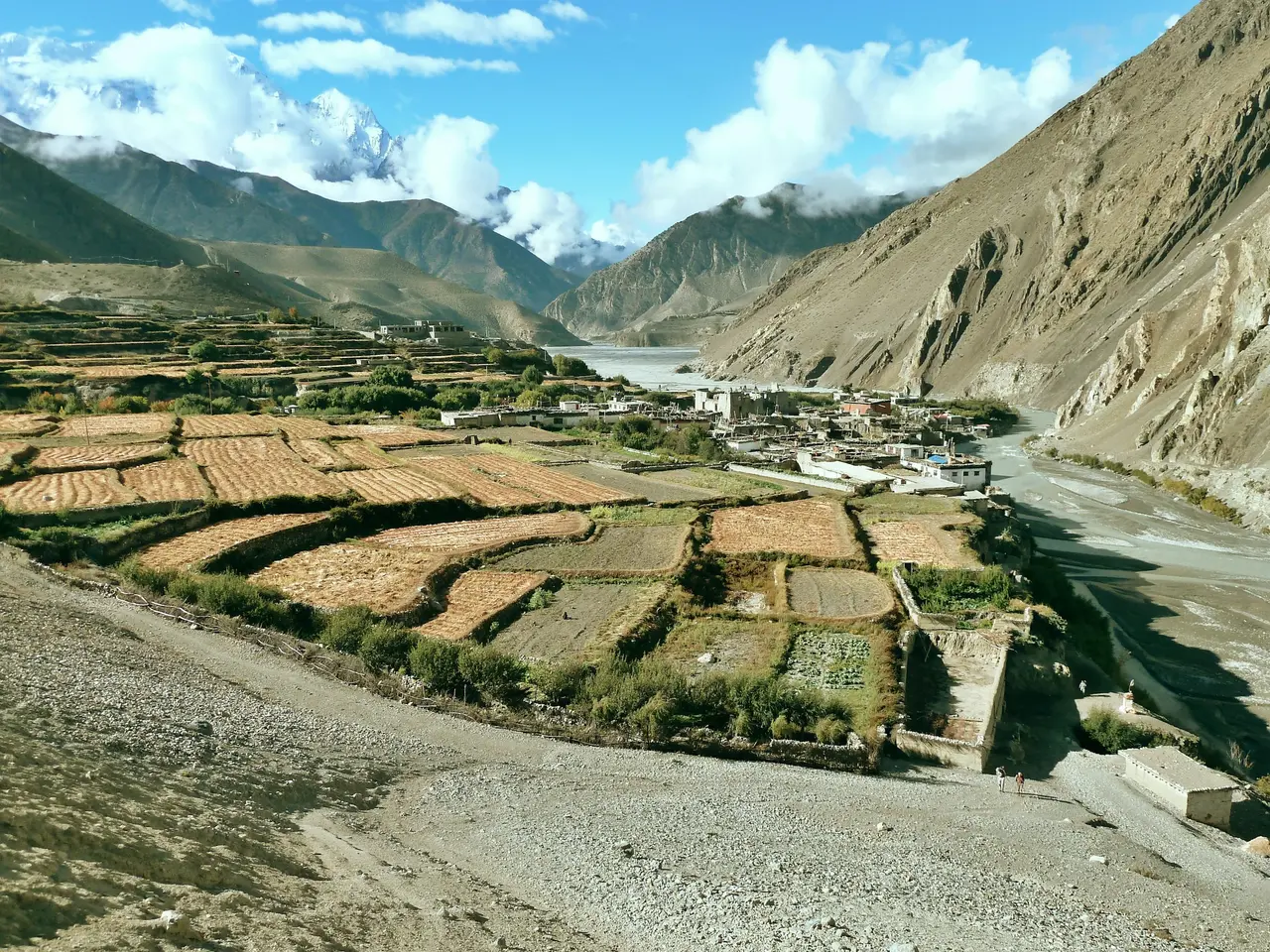
Upper Mustang and Lo Manthang. A restricted-area gravel road runs from Jomsom through Kagbeni, Chele and Charang to the walled city of Lo Manthang at roughly 3,840 m, the single most popular multi-day motorbike route in Nepal and a serious but achievable mountain-bike route for strong riders. Covered on foot in the Upper Mustang trek guide; by bike, most riders cover in four to six days what a trekking itinerary spreads across ten or more, trading the slower, quieter pace of walking for the ability to reach villages, side valleys and the border extension below in a single trip.
Mustang to the Tibet border. The road continues from Lo Manthang to Korala, at around 4,660 m on the China border, a popular extension for motorbikers wanting to touch the frontier itself. Crossing into Tibet is not open to casual travellers without separate, difficult-to-arrange permits, so this is a ride to the border checkpoint and back, not a through-route.
Kathmandu–Pokhara backroads. An alternative to the busy Prithvi Highway, routed through Gorkha, Bandipur and smaller hill villages, offering quieter riding and closer contact with rural Nepal than the direct tourist route, at the cost of a longer, rougher journey time.
The Terai–hill loop. A lower-altitude, flatter option through the Terai plains and lower hill roads, popular for multi-day motorbike loops that avoid high-altitude riding entirely, often combined with wildlife viewing in the lowland national parks.
Mountain bike vs. motorbike
A pedal bike demands genuine fitness and handles altitude very differently from a motorbike: your own aerobic capacity, not an engine's, has to do the climbing, and thin air above 3,500 m makes sustained pedalling noticeably harder than the same gradient at sea level. In exchange, a mountain bike needs no fuel, carries no licence requirement, breaks down in simpler and more fixable ways, and lets you stop, walk a rough section, or adjust pace without the mechanical overhead of a motor vehicle.
A motorbike covers far more ground per day, removes the physical toll of the climbing itself, and makes routes like the full Upper Mustang road achievable in days rather than the week or more a bike would need. The trade-offs are real: fuel planning becomes essential once you are more than a day from a reliable pump, road conditions of loose gravel, washouts and landslide debris are considerably more dangerous at speed than at pedalling pace, and a mechanical failure far from Jomsom or Pokhara is a genuinely bigger problem on a motorbike than a bicycle puncture is. Braking technique also differs meaningfully on these surfaces: heavy front braking on loose gravel that would be routine on tarmac is a common cause of single-vehicle motorbike crashes on Nepal's mountain roads, and riders coming from mostly paved-road experience at home should practise on an easier gravel stretch before committing to a steep, loaded descent.
A small but growing number of riders now use e-bikes to split the difference between the two, getting motor-assisted climbing without a licence requirement, though charging infrastructure above Jomsom remains sparse enough that this is currently a niche option rather than a mainstream one, and battery range in cold, high-altitude conditions is noticeably shorter than the manufacturer's flat-ground rating suggests.
Rentals, licences and paperwork
This is the section most riders skip and later regret. Legally riding a motorbike in Nepal requires your home driving licence for the correct vehicle category plus an International Driving Permit (IDP) obtained before you travel, since Nepal does not issue IDPs to foreign visitors on arrival. Rental shops, especially in Kathmandu's Thamel and Pokhara's Lakeside, rarely enforce this strictly at the counter, but a police checkpoint or an accident afterward is a different matter, and riding without a valid IDP can void any insurance cover that might otherwise apply.
Rental engine sizes commonly range from 150cc scooters to 500cc Royal Enfields, with the 411cc Himalayan the most popular choice for the rougher mountain routes. Deposit practices vary and matter more than they appear to: some shops hold your passport as security, which is genuinely risky if a dispute arises later, since getting it back can become a negotiation. A cash deposit plus a passport photocopy is the safer arrangement, and it is worth asking for in writing before you hand anything over. Most rental agreements make you fully liable for damage or theft, with minimal or no third-party liability included, and separately, check your own travel insurance wording specifically for motorbike or scooter exclusions above a stated engine size or without a licence, since this is one of the most commonly excluded activities in standard policies. In an accident, foreign riders are often expected to settle costs directly and in cash with the other party or local police before a passport or vehicle is released, rather than through a formal claims process — an uncomfortable reality worth knowing in advance rather than discovering at the roadside.
Permits for bikers
The same conservation-area and restricted-area permits that apply to trekkers apply to bikers on the same routes, and this genuinely surprises people who assume paying for vehicle access or fuel substitutes for permit paperwork. Riding through the Annapurna Conservation Area requires the standard entry permit regardless of whether you are walking or riding, and Upper Mustang's restricted-area status means the same licensed-guide and minimum-two-traveller rule applies to a group of motorbikers as it does to trekkers, checked at the same posts along the route. The full national permit landscape explains how these fees and rules are structured; bikers should expect to budget and paper their trip exactly as a trekker would for the same ground.
Checkpoint staff on these roads are used to jeeps and motorbikes by now, but they check the same documents they check for anyone on foot, and arriving without them causes exactly the same delay or turnaround it would for a trekker. Carry printed or physical permit copies rather than relying solely on a phone screen, since several checkpoints along these routes have unreliable signal and staff may want a stamped paper copy for their own records regardless of what you can show them digitally.
Altitude and mechanical reality
Older carburettor-based motorbikes run rich at altitude because a carburettor cannot automatically compensate for thinner air the way a fuel-injected engine can, leading to power loss, fouled spark plugs and harder starting above roughly 3,000 m; a mechanic in Kathmandu or Pokhara can re-jet a carburettor for high-altitude riding before you leave, which is worth doing rather than discovering the problem at 3,800 m. Fuel stations thin out fast past Jomsom, with only a handful of pumps serving the entire Upper Mustang road, so carrying a jerry can of extra fuel is standard practice rather than excessive caution on this specific route.
The nearest mechanic for a serious mechanical failure above Kagbeni or Charang can be most of a day's ride back toward Jomsom or Pokhara, so a basic tool kit, spare inner tubes or a tubeless repair kit, and a spare clutch or brake cable are worth carrying regardless of how reliable your rental bike looked at pickup. Cold overnight temperatures at altitude also make engines harder to start in the morning and can affect tyre pressure noticeably; check and adjust pressure at the start of each riding day rather than assuming yesterday's setting still holds.
 [PHOTO]
Cost
A guided multi-day motorbike tour to Upper Mustang, roughly seven days including acclimatisation, typically costs USD 900–1,400 per person, and a self-organised trip on a rented bike without a guide or support vehicle can run meaningfully cheaper but carries more of the licensing, mechanical and permit risk described above onto you directly.
| Cost item | Approximate range (USD) |
|---|---|
| Guide and support jeep (shared across group) | 900–1,200 for a 7-day trip |
| Motorbike rental (7 days) | 250–320 |
| Fuel | 80–120 |
| Restricted-area and conservation permits | 500–540 |
| Lodging and food (7 days) | 150–200 |
The guide and support jeep, which carries fuel, luggage and a mechanic-capable driver, is the one line here that behaves like a trekking guide fee: fixed regardless of group size, and split across however many riders join the trip.
Upper Mustang motorbike tour: price by group sizeSolo, that shared pool alone adds roughly USD 1,050 on top of your individual costs; split across a group of eight it falls to around USD 130 per person, which is why almost nobody who values the support vehicle and guide books this route entirely alone once they see the actual numbers.
FAQ
Can you ride the Annapurna Circuit on a motorbike? Yes — the road now runs most of the circuit on both the Besisahar-Manang side and the Muktinath-Jomsom side, though Thorong La itself at 5,416 m remains a foot-and-mule pass with no road. A full loop by motorbike means treating the two road-heads as separate rides rather than one continuous route.
Do you need a licence to rent a motorbike in Nepal? Yes, plus an International Driving Permit obtained in your home country before travel, since Nepal does not issue IDPs on arrival. Rental shops often do not enforce this strictly, but riding without one can void insurance cover and cause problems at police checkpoints or after an accident.
Do bikers need trekking permits? Yes, the same conservation-area entry permits and restricted-area permits apply to bikers as to trekkers on the same routes, including Upper Mustang's licensed-guide and minimum-group-size rule. Checkpoints check the same documents regardless of whether you arrive on foot or on a motorbike.
Where can you rent bikes in Nepal? Kathmandu's Thamel district and Pokhara's Lakeside area are the two main rental hubs, offering both mountain bikes and motorbikes ranging from small scooters to 400cc-plus machines suited to mountain roads. Inspect the specific bike, its tyres and its paperwork before committing, since quality varies considerably between neighbouring shops.
What a guided Mustang ride costs once your group fills
Every number above assumes you are paying for a support jeep and guide alone, but almost nobody actually rides Upper Mustang solo once they see what a shared departure does to the price. On a NepGem group departure, that fixed guide-and-jeep pool splits across however many riders book the same dates, moving the total from roughly USD 2,135 solo toward closer to USD 1,215 once the group fills toward eight — the same fixed-cost math that drops trekking prices, applied to a support vehicle instead of a porter and cook crew. If you would rather fix your own dates than wait for a departure to fill, hiring a guide directly gets you someone who knows the current fuel and mechanic situation on that specific road, not just a rental-shop recommendation, without paying an agency's markup on top.


