

Pokhara: Nepal's Second City and Every Trek's Doorstep
Pokhara is the launchpad for the Annapurna treks and the most relaxed city in Nepal. What to do around the lake, where to stay, and how to get there.
NepGem team · Local guides and trip planners
· 15 min read

Pokhara is Nepal's second-largest city and the country's most relaxed one, sitting on the shore of Phewa Lake at 822 m with the Annapurna range rising directly behind it, close enough that Machhapuchhre's twin summit appears to hang over the lake itself on a clear morning. It is also, functionally, the trailhead for most of Nepal's Annapurna-region trekking: the Annapurna Circuit, Annapurna Base Camp, Mardi Himal and Poon Hill treks all begin within two hours of the city. That combination, a genuine destination in its own right plus the doorstep to some of Nepal's best trekking, is what makes Pokhara worth its own dedicated stop rather than a one-night stopover on the way to the hills. Where Kathmandu asks something of every visitor, traffic, noise, a certain amount of navigating dense old streets, Pokhara asks almost nothing: its tourist core is flat, walkable, laid out along a single lakeshore, and built explicitly for travellers arriving tired from a trek or about to start one.
Pokhara in 60 seconds
Pokhara sits in a wide valley at 822 m, roughly 200 km west of Kathmandu, built around Phewa Lake with the Annapurna massif, including Machhapuchhre (6,993 m, unclimbed and considered sacred, closed to summit attempts) and Annapurna South, visible from the lakeshore on clear days. The city's tourist infrastructure concentrates almost entirely along Lakeside, the strip of hotels, restaurants and trekking agencies running along the lake's eastern shore, with Damside a quieter continuation to the south. Pokhara's altitude and lake setting give it a noticeably milder, more humid climate than Kathmandu, and its position beneath the Annapurna range means it also catches significantly more rainfall in monsoon season, since the mountains force incoming moisture upward directly above the city. Most visitors give Pokhara two to four days, either side of an Annapurna trek or as a standalone break from Kathmandu's traffic and density, and the honest verdict on that time investment is straightforward: it is worth it, and the mountain views alone justify a trip here even without a trek attached. Unlike Kathmandu, where sights are scattered across a sprawling, traffic-heavy valley, almost everything worth doing in Pokhara sits within a compact, walkable or short-taxi-ride radius of Lakeside, which is part of why it consistently rates as the easier, less exhausting of Nepal's two major cities to actually enjoy rather than simply pass through.
Phewa lake and Lakeside
Phewa Lake is Pokhara's centre of gravity, a natural freshwater lake roughly 4 km long framed by forested hills on its southern shore and the Lakeside tourist strip on its eastern edge, and simply walking or cycling its shoreline path is worth a half-day on its own. Wooden boats, rowed rather than motorised on most of the lake, are available for hire by the hour at rates typically in the range of USD 3–6 depending on boat size and season, and rowing out towards the small Tal Barahi Temple on its own island in the middle of the lake is one of the more genuinely peaceful things to do in a city built partly around adrenaline sports. Lakeside itself runs roughly 2 km along the shore, split loosely into a livelier northern section closer to the main junction, with more bars, live-music venues and trekking-gear shops, and a calmer southern section blending into Damside, with a higher proportion of quieter guesthouses and family-run restaurants.
Early morning at Phewa Lake, before the boat rental stalls open and the shoreline path fills with joggers, is when the Annapurna reflection photograph everyone associates with Pokhara actually happens, and it requires nothing more than being on the shore by sunrise on a clear day, no tour or fee involved. The lake also supports a small local fishing community, and watching hand-cast nets go out at dawn from the quieter southern shore is a genuinely different, less curated version of the same lake most visitors only see from a café table.
Cycling the lake's full perimeter, roughly 10–12 km depending on the exact route taken around the southern forested side, is a popular half-day alternative to walking, with bicycle rental widely available along Lakeside at low daily rates; the southern side has less pavement and more genuine trail, which makes a mountain bike or hybrid a better choice than a basic city bike if you plan to complete the full loop rather than an out-and-back stretch. Kayaking is also available by the hour from several operators on the northern shore, offering a lower, closer-to-the-water vantage point on the same Annapurna reflection than the standard rowing boats provide.
Sarangkot sunrise
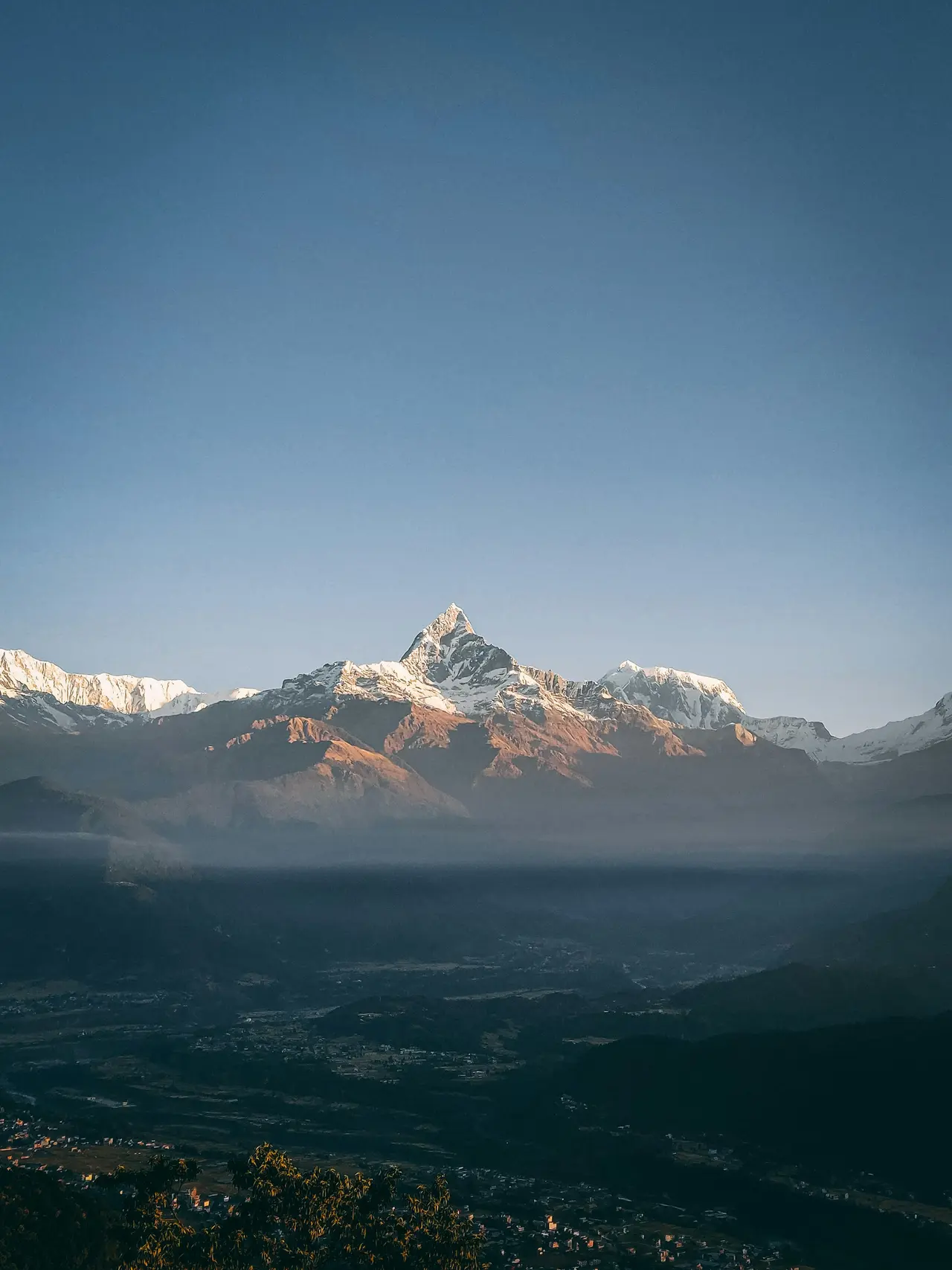
Sarangkot, a hilltop viewpoint at roughly 1,600 m above Pokhara, is the city's most famous sunrise spot, and the honest verdict is that it earns its reputation on maybe six mornings in ten. On a clear day, the view is genuinely one of the best easily accessible mountain panoramas in Nepal: the full Annapurna range plus Dhaulagiri, without a single step of trekking required, reachable by a 25–35 minute taxi ride from Lakeside timed to arrive 20–30 minutes before sunrise. On a hazy or cloud-bound morning, which happens often enough to plan around rather than dismiss as bad luck, the same trip returns a grey wall of cloud and a car park full of disappointed tourists, and there is no way to know in advance which morning you will get beyond checking the previous evening's visibility and asking your guesthouse for a local read on conditions.
The practical case for going anyway holds regardless: the drive up is inexpensive when shared between several people, the view when it works is worth several ordinary mornings, and Sarangkot also functions as a genuine short trek destination in daylight for travellers who want the same viewpoint without the pre-dawn wake-up, reachable via a two- to three-hour walk up from Lakeside through terraced farmland and small villages. Paragliding pilots also launch from Sarangkot later in the morning once the sunrise crowd has left, which is worth knowing if you are choosing between an early sunrise trip and a mid-morning flight; doing both in one outing is possible with enough advance planning around timing. Visibility is generally most reliable in the post-monsoon months of October and November and again in the pre-monsoon window of March and April, while winter mornings can bring their own fog layer over the lake even on an otherwise clear day, and monsoon season (June to early September) makes an early clear view the exception rather than the rule; checking with your guesthouse the evening before, rather than committing to a wake-up call on a fixed date regardless of conditions, meaningfully improves the odds.
The World Peace Pagoda walk
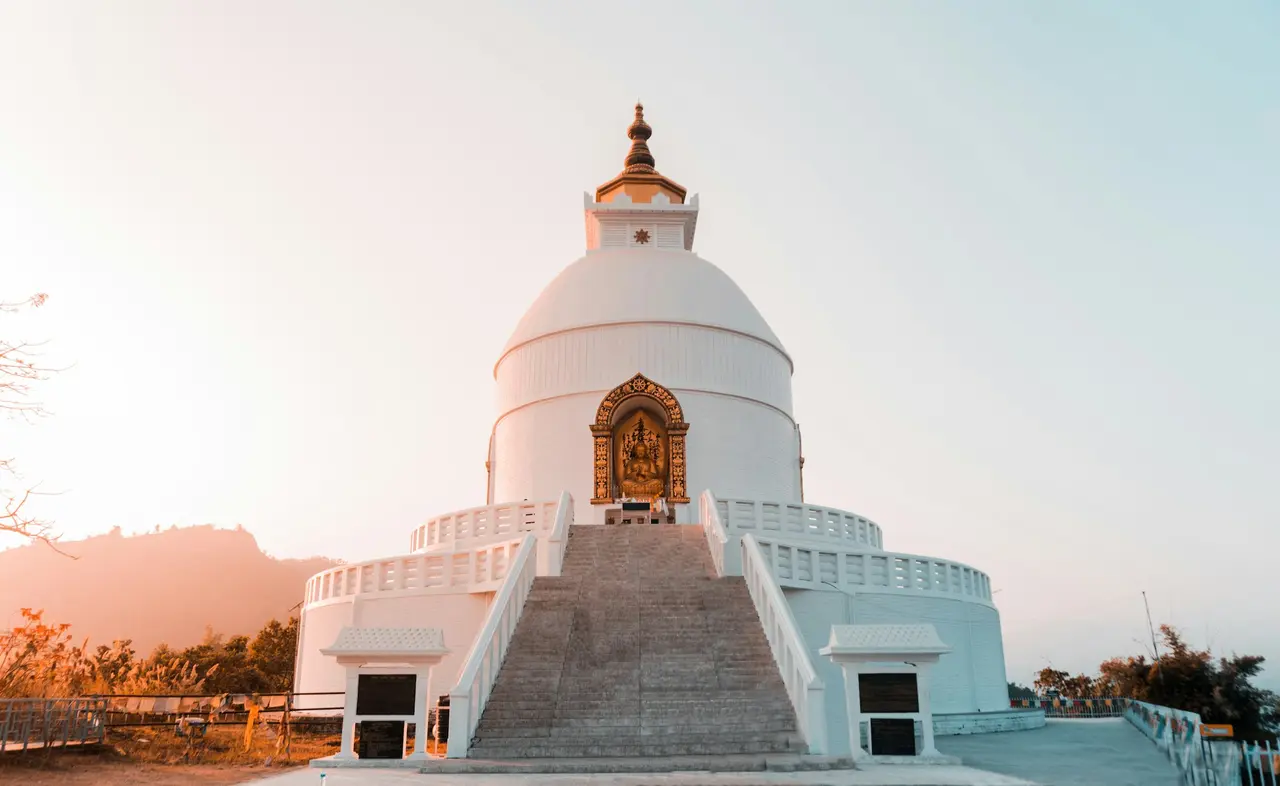
The World Peace Pagoda, a white stupa built by Japanese Buddhist monks on a ridge above the lake's southern shore, is reachable either by a short boat crossing followed by a 45–60 minute uphill walk, or a longer direct walk around the lake's southern edge, and it rewards the effort with one of Pokhara's better combined views: Phewa Lake, the city and the Annapurna range all visible from one spot without Sarangkot's early alarm or the possibility of being clouded out at dawn specifically, since a midday or afternoon visit gives more flexibility to simply wait out passing haze. The walk itself passes through genuine forest and small farming settlements rather than a paved tourist route, and the pagoda's structure, built in the 1970s as one of over 80 such peace pagodas worldwide, includes four gilded Buddha statues facing each cardinal direction. Afternoon light here, particularly in the hour before sunset, tends to be more reliably clear than Sarangkot's dawn window, making this a solid alternative or complement for visitors who want mountain views without depending on a single weather-sensitive morning. The pagoda grounds themselves are quiet and well maintained, with benches positioned to face the mountains rather than the stupa, a small deliberate detail that suggests the site was built as much for contemplation of the view as for religious observance, and it rarely sees the same volume of visitors as Sarangkot even at its busiest times of day.
Paragliding
Pokhara is one of the world's most accessible and highly rated paragliding destinations, largely because Sarangkot's launch site sits at a genuinely useful altitude above the lake with reliable thermal conditions for much of the year, and tandem flights require no experience or prior booking beyond arriving at a registered operator. A typical tandem flight runs 25–35 minutes airborne, launching from Sarangkot and landing on the lakeshore near Lakeside itself, giving a genuinely different aerial perspective on the same Annapurna panorama and lake you have likely already seen from the ground. Pricing for a standard tandem flight sits in a fairly consistent band across registered operators, and additional options like photo and video packages, higher-altitude flights, or acro (aerobatic) flights for more experienced thrill-seekers are typically priced as add-ons; treat any specific figure as needing an on-the-day check with a licensed operator rather than a fixed number carried from an old guide. The best flying conditions generally run from autumn through spring, with the pre-monsoon and monsoon months bringing more variable, occasionally grounded conditions due to cloud and rain; a full day's buffer before a onward flight or bus booking is sensible in case weather delays your flight by a day.
The caves, the falls and the museums
Pokhara's cluster of caves and waterfalls near the southern edge of the city are modest attractions individually but combine well into a half-day loop. Mahendra Cave, a limestone cave system with stalactite and stalagmite formations, and the nearby Bat Cave, home to a resident colony of horseshoe bats, both charge a modest entry fee and are easily combined in one visit; neither requires technical caving experience, though both involve some low-clearance sections and can be slippery underfoot. Devi's Fall (also called Patale Chhango), where the Pardi Khola river disappears into an underground channel after heavy rain, is a short stop rather than a destination in itself, more striking during and immediately after monsoon season when water volume is highest, and comparatively unremarkable in the dry season.
The International Mountain Museum, on the city's southern edge, deserves more attention than it typically gets in Pokhara itineraries: it is a genuinely excellent, well-curated museum covering Himalayan mountaineering history, ethnography of Nepal's mountain communities, and geology, with detailed exhibits on the region's major peaks and first-ascent history that pair naturally with planning an actual trek. Give it at least ninety minutes rather than the twenty-minute drive-by treatment it often receives, particularly if you are heading into the Annapurna or wider Himalayan region afterwards and want context before you go, including a useful primer for anyone trying to identify Himalayan peaks from a trail later in the trip.
Where to stay
Lakeside splits meaningfully into a northern and southern half, and the difference matters more than most first-time visitors expect. Lakeside north, closer to the main junction and the busiest restaurant and bar strip, offers the widest choice of budget and mid-range guesthouses and the shortest walk to nightlife, at the cost of noise that runs later than almost anywhere else in Pokhara. Lakeside south, blending into Damside along the lake's quieter southern stretch, trades a slightly longer walk to the liveliest bars for noticeably quieter nights and, in several cases, better unobstructed lake and mountain views from upper-floor rooms, since the built-up density thins out heading south. Damside itself, the continuation of the lakeshore past southern Lakeside, is quieter again, favoured by longer-stay visitors and those prioritising a genuine rest before or after a trek over proximity to the bar scene. As in Kathmandu, price bands shift with season, hazy weather bringing on unexpected walk-in discounts and October-November peak season pushing rates up considerably; any specific rate is worth checking fresh rather than assuming from an old source.
Getting there
Pokhara connects to Kathmandu by three genuinely different methods, and picking the right one matters more here than almost any other route in Nepal. Domestic flights take roughly 25 minutes and run multiple times daily from Kathmandu's domestic terminal, weather permitting; they are the fastest and most reliable option for travellers on a tight schedule, though flights can be delayed or cancelled in poor visibility, as with any Nepal domestic route, so a buffer day either side of a tight itinerary is sensible. Tourist buses, a step up from public buses with reserved seating and (in most cases) working air conditioning, cover the roughly 200 km route in six to eight hours depending on traffic and road conditions, departing from dedicated tourist bus parks in both cities, and represent the most popular middle-ground option for travellers with time but not unlimited time. Public buses are the cheapest option by a wide margin but run slower still and without the same comfort standard, generally worth it only for genuinely budget-constrained travel.
The road itself is worth an honest word: the Prithvi Highway runs through winding hill terrain via Muglin, a significant roadside settlement roughly at the route's midpoint where most buses stop for a food break, and the route is prone to landslide-related delays during and immediately after monsoon season, occasionally adding hours to an already long journey. Travelling by private jeep or car covers the same route in similar time to a tourist bus with more flexibility on stops but at a materially higher cost, and is mainly worth it for groups splitting the fare or travellers with heavy luggage headed directly to a trailhead rather than central Pokhara. Booking the tourist bus a day or two ahead through a Thamel travel desk or guesthouse is usually straightforward in normal season, though it is worth confirming the actual departure point, since several companies operating under similar-sounding names use different bus parks on either end of the route, a detail worth checking the evening before rather than discovering at departure time.
| Method | Time | Notes |
|---|---|---|
| Domestic flight | ~25 min | Fastest, weather-dependent |
| Tourist bus | 6–8 hrs | Most popular, dedicated bus parks |
| Public bus | 7–9+ hrs | Cheapest, least comfortable |
| Private jeep/car | 6–7 hrs | Flexible stops, higher cost |
Using Pokhara as a trek base
Every major Annapurna-region trek starts within roughly two hours of Pokhara, which is the practical reason the city exists as a tourist hub at all rather than a footnote on the way to the mountains. The Annapurna Circuit and Annapurna Base Camp treks both begin with a drive from Pokhara to their respective trailheads, typically one to four hours depending on the specific route and current road conditions; the shorter, increasingly popular Mardi Himal trek starts closer still, often under two hours from the city; and the classic Poon Hill short trek can begin and end within a single long day trip from Pokhara for travellers on the tightest schedules. This proximity is also why Pokhara functions well as a genuine rest stop between treks rather than just a starting line: travellers doing back-to-back Annapurna routes, or combining a trek with whitewater rafting on the nearby Seti or Trishuli rivers, routinely use Pokhara as the base they return to and re-supply from between adventures, rather than passing through once each way. That return trip also has a practical upside worth planning for: gear left behind in a Pokhara guesthouse's storage room while you trek, whether a duffel of city clothes or equipment rented for a different route, saves both weight on the trail and the awkwardness of carrying items you will not need again until you are back at lake level.
FAQ
Is Pokhara worth visiting? Yes. It is the base for every major Annapurna trek and the most relaxed city in Nepal, with genuine attractions of its own, Phewa Lake, paragliding, the International Mountain Museum, that justify a visit even without a trek attached. Most visitors rate it as highly as, or above, Kathmandu.
How long is the Kathmandu to Pokhara drive? Six to nine hours by road depending on traffic, weather and whether you take a tourist bus, public bus or private vehicle, or roughly 25 minutes by domestic flight when weather allows. Most travellers with limited time choose the flight; those with time to spare often prefer the scenic overland route.
Can you see Everest from Pokhara? No. Pokhara sits within view of the Annapurna range and Machhapuchhre, but Everest is roughly 150 km further east and is not visible from the city under any conditions. Everest views require either an EBC-region trek or a dedicated Everest scenic flight from Kathmandu.
How many days in Pokhara? Two to three days covers Phewa Lake, Sarangkot, the World Peace Pagoda and paragliding comfortably without rushing. Add a day if you plan to visit the caves, falls and International Mountain Museum properly, or if you are using Pokhara as a rest stop before or after an Annapurna trek.
Arrive solo, trek with a group
Pokhara's trailheads see a constant stream of solo travellers each with their own version of the same problem: flexible dates, no fixed trekking partner, and a genuine reluctance to pay a full private-guide rate alone or gamble on a random agency group assembled from whoever walked in that week. NepGem solves this from the departure page rather than a guesthouse noticeboard: join a curated departure that already has people booked on it, see exactly who else is going and the guide's licence, altitude record and reviews before you commit, and watch the per-person price actually drop as more people join the same dates, since the guide fee, jeep and shared permits split further across the group rather than staying fixed. Arrive in Pokhara solo and flexible; leave for the Annapurna trailhead with a group already assembled around you.


