

Paragliding in Pokhara: What It Actually Costs and Feels Like
A minute-by-minute account of the Sarangkot-to-Phewa Lake tandem flight, honest price bands including add-ons, the best months, and how to vet a pilot.
NepGem team · Local guides and trip planners
· 10 min read

A tandem paragliding flight from Sarangkot to Phewa Lake typically costs USD 70–110, lasts 25–40 minutes in the air, and needs no prior experience: a licensed tandem pilot flies while you sit in a harness clipped in front of them. It is the most popular single add-on for anyone finishing an Annapurna region trek or spending a few days in Pokhara, and one of the few adventure activities in Nepal that lives up to "world-class" without much qualification.
This article covers why the site works so well, what happens during the flight, honest pricing including the add-ons operators upsell, how to choose a pilot rather than a company name, the best months and times of day to fly, the cross-country scene, and the valley's unusual parahawking activity.
 [PHOTO]
Why Pokhara is world-class for this
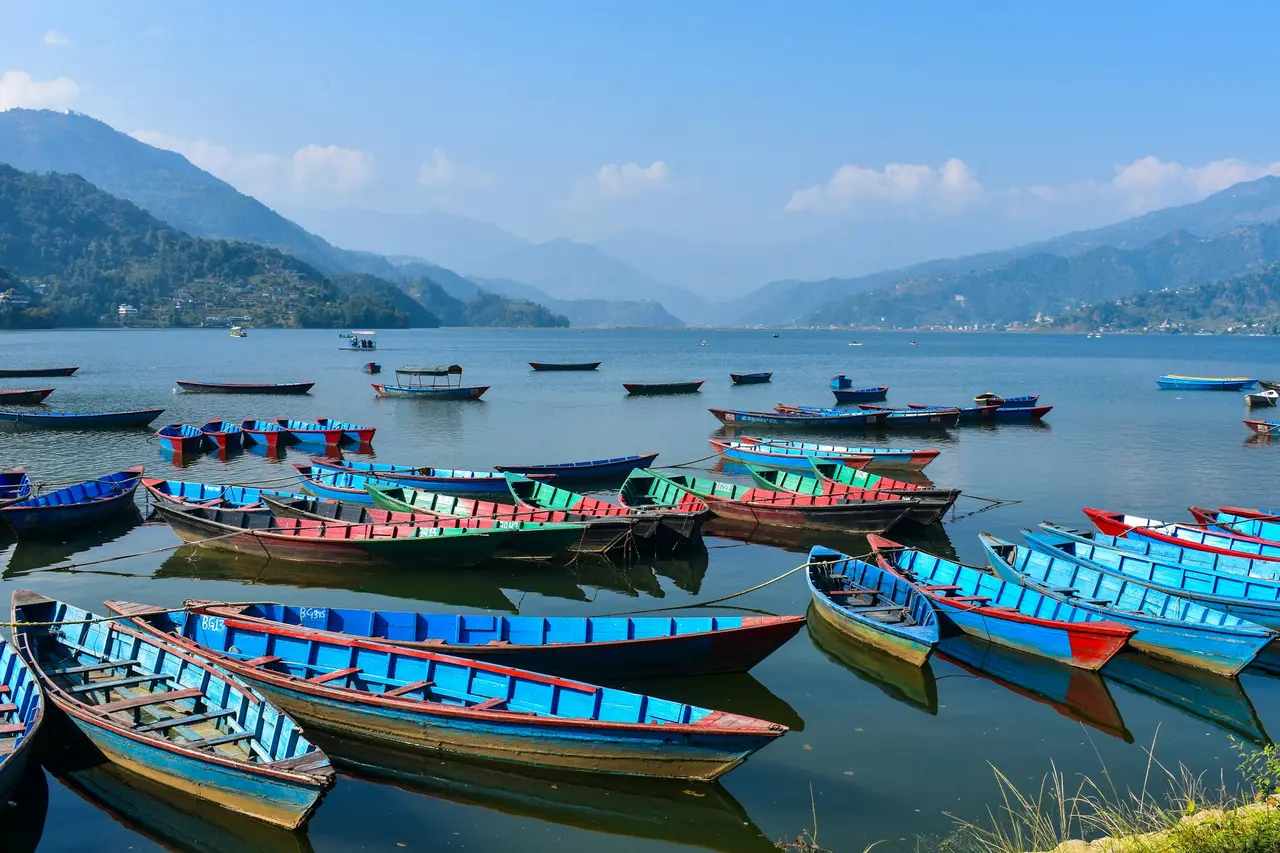
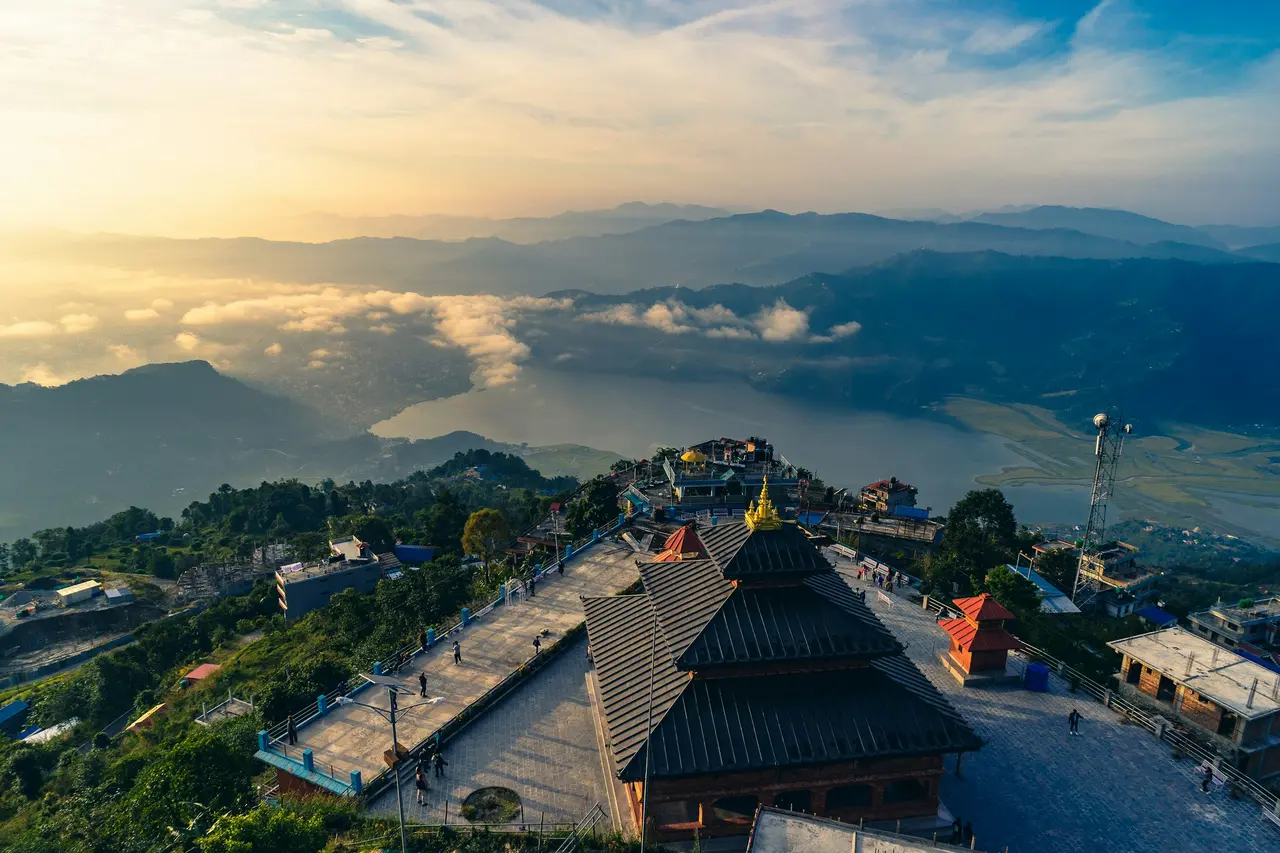
Pokhara pairs a reliable daily thermal cycle with one of the shortest, most scenic launch-to-landing runs of any paragliding site in the world, and that combination is what earns the reputation. Sarangkot, the main launch point, sits at roughly 1,592 m; Phewa Lake, the landing zone, sits at around 827 m — a vertical drop of about 765 m covered not in a straight glide but stretched across 25 minutes or more of thermal and ridge lift, which is what turns a short hop into a proper flight.
Three things make the geography unusually forgiving. First, launch and landing are a 20–30 minute drive apart, so there is no trek in to reach take-off, unlike many mountain paragliding sites where reaching launch is itself a half-day job. Second, the landing zone is a wide, flat lakeside field next to open water, giving a pilot room to abort an approach and a soft fallback if a flare goes wrong. Third, the Annapurna range — Machhapuchhre, Annapurna South and, on clear days, Dhaulagiri — fills the northern skyline for the whole flight. Warm air rising off Phewa Lake meets cooler ridge air along Sarangkot's spine most mornings outside monsoon, producing the dependable lift that keeps flights airborne rather than sinking straight to the lake.
 [PHOTO]
The tandem flight, minute by minute
The flight itself runs about 25–40 minutes door to door once you are strapped in, bookended by a drive up and a drive back that add another hour or so to the morning. Most operators collect passengers from Lakeside hotels between 8:00 and 9:30 am and drive 20–30 minutes up the switchback road to Sarangkot or one of the nearby launch points, where a pilot fits your harness over your own clothes, clips it to theirs, and gives a short briefing: run hard downhill on the pilot's count, keep running until your feet leave the ground, then sit back into the seat.
Launch itself takes seconds — a short run down the grass slope, the wing fills with air overhead, and ground falls away with a suddenness that surprises almost everyone the first time. The first few minutes are the steepest sensation of the flight, since you are still low enough to see individual rooftops and terraces before the pilot starts working ridge lift to climb. Once in the thermal cycle, the flight settles into long, curving passes along the ridge and out over the valley, with Pokhara's lakeside sprawl, the terraced hillsides and the Annapurna skyline all visible at once. Pilots vary the pace deliberately: gentle banked turns for nervous flyers, tighter spirals on request for anyone who wants more sensation.
 [GEN]
The descent into Phewa Lake's landing field is a controlled spiral that drops altitude fast in the final two or three minutes, followed by a slow final approach into the wind and a run-out landing on grass a short walk from the lakeshore. Ground crew usually help gather the wing immediately, since on a busy morning a dozen or more tandem pairs can land within the same hour.
Prices and flight lengths
A standard tandem flight runs USD 70–110 and includes the pilot, harness, helmet and reserve parachute; what varies between operators at a given price is usually flight length and how aggressively they chase thermals, not core safety equipment. "30 minutes," as advertised, is a target rather than a guarantee — actual airtime depends on that morning's thermal activity, and a quiet-air day can mean a shorter, more direct glide even from a reputable pilot.
| Package | What's included | Typical price (USD) |
|---|---|---|
| Standard tandem flight | 25–35 min flight, pilot, harness, reserve chute | 70–90 |
| Extended thermal flight | 35–45 min, more deliberate altitude gain | 90–130 |
| Photo package | 10–20 stills shot by the pilot on a handheld camera | 15–20 |
| Video package | Edited action-camera footage, sometimes drone-assisted | 25–40 |
| Cross-country tandem | 1 hour or more, distance flight, weather-dependent | 150–250 |
Photo and video add-ons carry a real markup relative to the marginal cost of shooting them, since the pilot films during a flight they are running anyway; treat them as a discretionary souvenir, and confirm before you fly whether footage is delivered by download link or physical transfer, since Pokhara's wifi is not always reliable enough for a large video file the same afternoon.
Choosing an operator
The single most useful filter is the pilot's individual tandem rating and logged flight count, not the company name or how polished its office looks, since Pokhara has more than fifty registered paragliding operators of uneven quality flying from the same launch site. Ask directly: what tandem rating do you hold and how many tandem flights this season; when was this wing last inspected; is the reserve parachute in date and when repacked; and what wind speed makes you cancel a flight outright. A pilot who answers specifically is more trustworthy than one who answers with reassurance alone.
Equipment age matters more than it looks from the ground: tandem wings are typically retired well before they look visibly worn, and a company that cannot say roughly how old its wings are or when they were last serviced likely does not track it closely. Liability insurance is worth asking about directly too, and separately, check your own travel insurance wording — many standard policies exclude aerial sports entirely or cover them only at an extra-cost tier, worth knowing before you are airborne rather than after an injury.
 [PHOTO]
Best season and time of day
November to April is Pokhara's reliable paragliding window, with October to December and February to March offering the clearest skies and steadiest thermals. The June to September monsoon regularly grounds flights entirely, since storm cells, low cloud and unpredictable wind shifts make tandem flying genuinely unsafe rather than merely uncomfortable, and most operators simply stop flying for extended stretches during the wettest weeks.
| Months | Conditions | Flyability |
|---|---|---|
| Oct–Dec | Clear post-monsoon skies, stable thermals | Excellent |
| Jan–Feb | Cold, clear air; occasional morning fog delays launch | Good |
| Mar–Apr | Warm, hazier visibility, still dependable lift | Good |
| May | Pre-monsoon heat and haze | Fair, mornings only |
| Jun–Sep | Monsoon rain, thunderstorms, low cloud | Poor, frequently grounded |
If you are stacking activities into one Pokhara stop, rafting in Nepal and bungee jumping in Nepal follow a similar seasonal pattern — best from October to April, patchy or closed through the monsoon.
Within a flyable day, mid-morning to early afternoon (roughly 10:00 am to 2:00–3:00 pm) produces the strongest thermal lift and the longest flights, since that is when the sun has warmed the lake and valley floor enough to generate rising air. Early morning and late afternoon flights are calmer and smoother — sometimes called "glass-off" conditions — which suits nervous flyers who want a gentle ride over a longer, bumpier thermal session, at the cost of somewhat shorter airtime.
Cross-country and pilot courses
Pokhara is one of the more consistent cross-country paragliding sites in the world, because the ridge running the length of the valley provides connected lift along the Annapurna foothills rather than the single isolated thermal most tandem sites offer. Experienced solo pilots regularly fly well beyond the immediate valley on strong days, and the site draws a genuine community of visiting cross-country pilots each season for this reason — specific distance-record figures vary by source, so ask a local school for current numbers rather than relying on marketing claims.
That reliability also makes Pokhara a popular place to learn to fly independently. Several schools around Lakeside and Sarangkot run beginner-to-novice courses, typically seven to ten days, covering ground handling, controlled solo launches and basic thermal theory before a student flies unsupervised. A tandem flight is a reasonable way to test genuine interest before committing to a course and the separate cost of a solo wing, harness and reserve setup.
Parahawking
Parahawking pairs a tandem paragliding flight with a trained bird of prey — typically an Egyptian vulture or a Harris's hawk — that flies alongside the glider and lands directly on the passenger's gloved arm mid-flight before launching off again. The activity began in Pokhara in the early 2000s, originally developed alongside a raptor rehabilitation programme responding to the sharp decline of South Asian vulture populations from veterinary drug residue in livestock carcasses, which gives it a genuine conservation angle beyond the novelty.
It is a real, unusual experience found in this combined form almost nowhere else, and it carries a price premium over a standard tandem flight given the specialised bird training involved. As with any operator, ask about the birds' welfare, training method and how long the programme has run, not only about the pilot's flying credentials.
FAQ
How much is paragliding in Pokhara? Typically USD 70–110 for a standard tandem flight of 25–40 minutes, covering the pilot, harness and safety gear. Photo and video packages are priced separately, usually USD 15–40 depending on whether it is stills or edited footage, and longer thermal or cross-country flights cost noticeably more.
How long is the flight? Most tandem flights from Sarangkot last 25 to 40 minutes, depending on how much lift the pilot finds along the ridge and over the lake basin that morning. Extended thermal flights that deliberately chase lift for longer can run 40–45 minutes or more, usually at a higher price than the standard package.
Is paragliding in Pokhara safe? It carries real but manageable risk, and safety depends far more on the individual pilot than on the destination in general. A pilot with a verified tandem rating, a recently inspected wing, an in-date reserve parachute and a clear stated no-fly wind threshold is a meaningfully safer choice than one selected on price or company signage alone.
When is the best season? November to April offers the most reliable flying, with October to December and February to March giving the clearest skies and steadiest thermals. The June to September monsoon regularly grounds flights entirely due to storms, low cloud and unpredictable wind shifts.
What a Sarangkot morning actually costs
The pilot's fee for a standard flight — USD 70–110 — does not change whether you book solo or as part of a group, because a tandem flight is priced per flight, not shared across a party the way a trekking guide's day rate is. Where group booking genuinely helps is everything around the flight: a shared jeep transfer up to Sarangkot runs roughly USD 8 a head booked solo but drops to about USD 2–3 a head once four or five people split the same vehicle, and a NepGem Pokhara add-on day bundles that transfer with pickup and drop-off so the saving is automatic rather than something you have to negotiate at the roadside yourself.
If you are finishing an Annapurna trek and want Pokhara sorted without arranging pilots and jeeps separately, joining a departure that already has other travellers on it gets you that shared-transfer saving without waiting on a group to form around you specifically, and if your dates are fixed, hiring a local guide directly for the day gets someone who knows which operators currently have well-maintained wings, not just which office is closest to your hotel.


