

Nagarkot, Dhulikhel, Bandipur: Nepal's Hill Towns
यो कथा अहिलेलाई अङ्ग्रेजीमा मात्र उपलब्ध छ।
No trekking boots required: three road-accessible hill towns near Kathmandu and Pokhara deliver genuine Himalayan panoramas in a day or two.
NepGem टोली · स्थानीय गाइड र यात्रा योजनाकार
· ११ मिनेट पढाइ

Not every good Himalayan view in Nepal requires a trekking permit or a multi-day itinerary. Nagarkot, Dhulikhel and Bandipur are all reachable by road in a few hours from Kathmandu or Pokhara, and each delivers a genuine mountain panorama without a single day of walking required. This guide, a companion to the wider Kathmandu travel guide, compares the three honestly: what each actually shows you, how crowded each gets, and which one deserves your limited time if you can only pick one.
Mountain views without walking
All three towns exist for the same basic reason: elevation and an unobstructed line of sight north to the Himalaya, reachable without the multi-day commitment a proper trek demands. Nagarkot, roughly 32 km east of Kathmandu at about 2,175 m, is the valley's classic sunrise viewpoint, looking out over the Langtang and Ganesh Himal ranges with a sliver of Everest visible far to the east on the clearest days. Dhulikhel, a similar distance east of Kathmandu but lower at around 1,550 m, is a working Newar town in its own right with a viewpoint over the same Langtang range and Dorje Lapka, plus its own old quarter to explore. Bandipur, much further west at roughly 1,030 m on the road between Kathmandu and Pokhara, trades a slightly lower vantage point for the best-preserved townscape of the three, a car-free Newar main street looking out over the Annapurna, Manaslu and Himalchuli ranges.
None of the three requires a permit, a guide, or specialist gear, and none demands more than a comfortable half-day of walking even if you do choose to add a short hike. That accessibility is exactly the trade-off: expect other visitors, road noise and hotel infrastructure in a way a genuine trekking route above Lukla or Besisahar simply does not have, and treat these three as a different kind of trip rather than a shortcut to the same experience.
All three also share a practical role in a longer Nepal itinerary beyond the view itself: each works well either as a gentle first stop straight off an international flight, before jumping into Kathmandu's traffic and altitude of a different kind entirely, or as a decompression day at the end of a trek, somewhere to sit with a mountain view and a cold drink rather than heading straight back into Kathmandu's noise. Visitors travelling with children or older relatives who cannot manage a trek often use one of these three towns as the trip's entire mountain-view component, which is a reasonable choice rather than a compromise, provided expectations about weather and crowds are set correctly beforehand.
Nagarkot
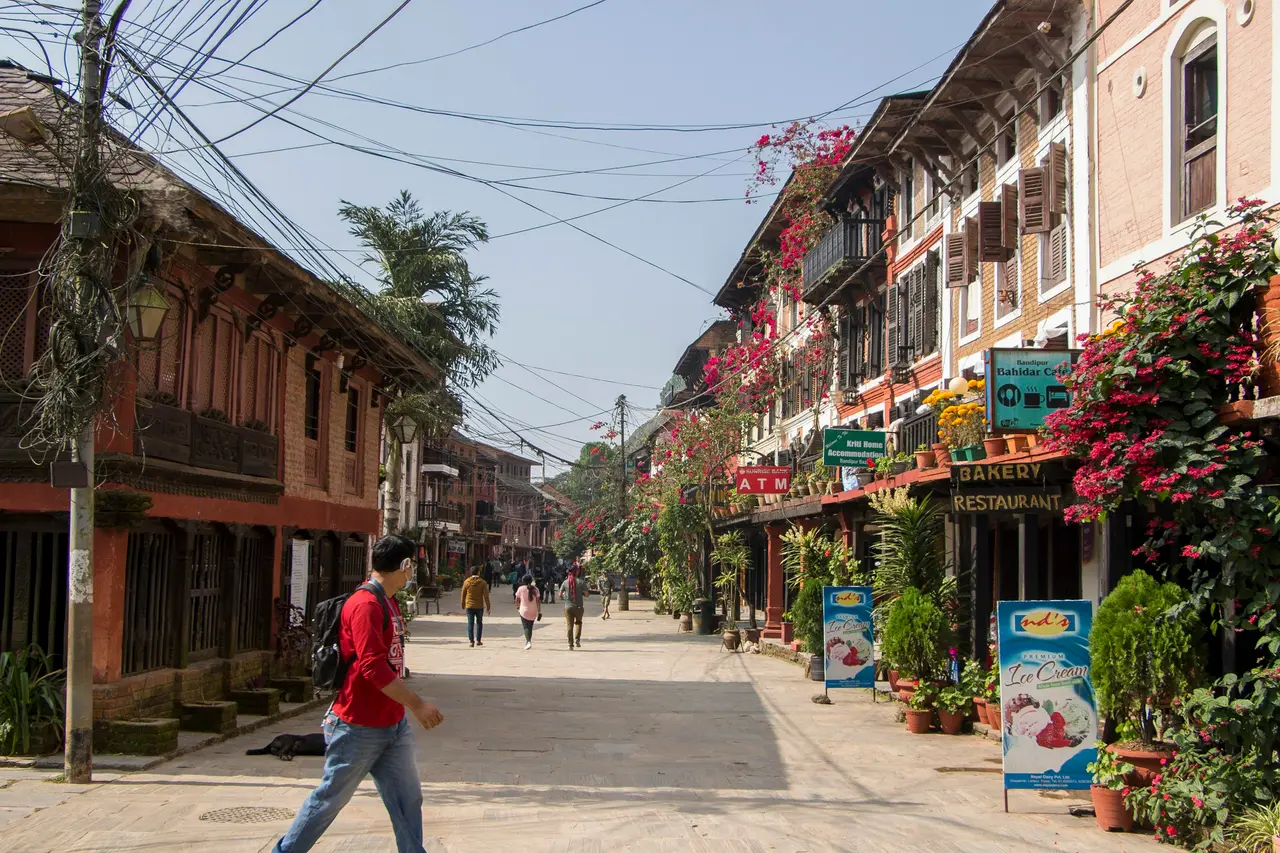
Nagarkot is Kathmandu Valley's best-known sunrise viewpoint, roughly 90 minutes to two hours by road from the city depending on traffic, and it earns that reputation on clear mornings: a wide arc of the Langtang and Ganesh Himal ranges fills the northern horizon, and on the clearest winter days a distant sliver of Everest, roughly 140 km away, is visible to the east. Most visitors stay one night specifically to catch both a sunset and the following sunrise, since a same-day round trip from Kathmandu risks missing both if traffic or weather does not cooperate on the one attempt available.
Accommodation ranges from simple guesthouses to hillside resorts built specifically to face the view, and a short walk from most of them reaches the main viewing tower near the village centre, the standard sunrise gathering point. Visibility is genuinely weather-dependent rather than guaranteed: the clearest conditions typically fall in the post-monsoon months of October and November and again in the dry pre-monsoon window of February and March, while the monsoon months and the haziest pre-monsoon weeks can reduce the view to low hills and cloud with no mountains visible at all. Treat Nagarkot as a good bet rather than a certainty, and build in a second night if your schedule allows it.
Dhulikhel
Dhulikhel sits on the old Arniko Highway toward the Tibet border, roughly 30 km east of Kathmandu and a comparable driving time to Nagarkot, but it offers something Nagarkot does not: a genuine old Newar town centre alongside the mountain view, rather than a viewpoint built up primarily for tourism. Its historic core holds temples including the Harisiddhi Bhagwati temple, brick courtyards and traditional Newar houses that see far fewer visitors than Bhaktapur's or Patan's equivalent old quarters, covered separately in the guide to Bhaktapur and Patan.
The view itself, from a small park and viewpoint above the town, takes in the Langtang range and Dorje Lapka, with a similar weather dependency to Nagarkot; clear mornings in the dry seasons give the best results. Dhulikhel's more significant draw for many visitors is its role as the gateway to Namobuddha, a major Buddhist pilgrimage site roughly 10 km away, built around the Jataka tale of a prince who offered his body to a starving tigress, and now home to a substantial monastery and stupa complex that draws pilgrims from across the Himalayan Buddhist world. Combining Dhulikhel's old town, its viewpoint, and a Namobuddha visit fills a comfortable full day.
Bandipur
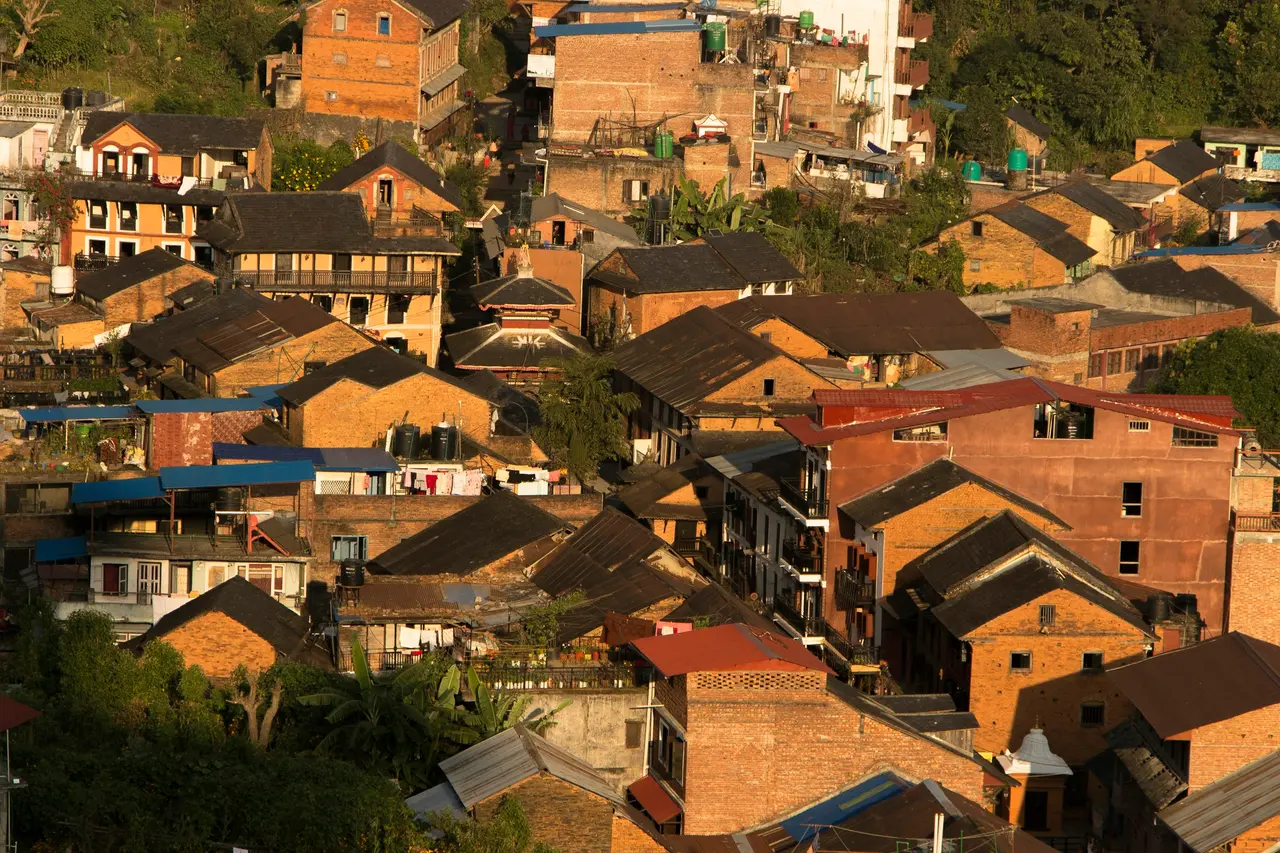
Bandipur is the best of the three and the least visited, and both facts trace back to the same event: the construction of the Prithvi Highway between Kathmandu and Pokhara in the 1960s and 1970s bypassed Bandipur entirely, cutting off the trade route that had made the town a prosperous Newar and Magar trading post for generations. The highway's economic bypass, which would have devastated most towns, instead preserved Bandipur almost by accident: with no through-traffic and no economic pressure to modernise, its car-free main street, brick townhouses with carved wooden windows, and hilltop layout survived largely intact while towns directly on the new highway rebuilt around motor traffic. Bandipur's rediscovery as a heritage destination from the 1990s onward has been deliberate and comparatively careful, with restoration work favouring traditional materials over concrete infill.
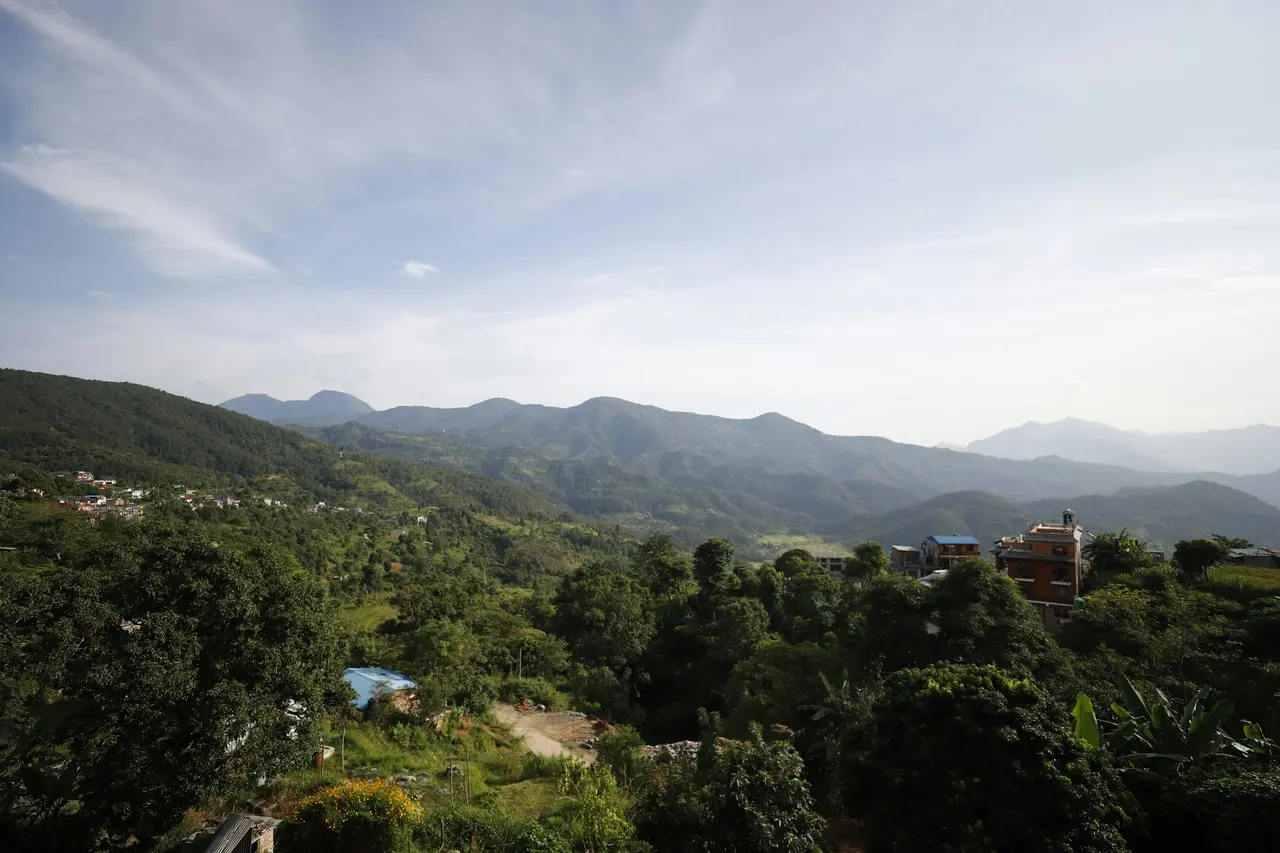
The result is a genuinely walkable, car-free old town centre with panoramic Himalayan views that most visitors do not associate with Bandipur until they arrive: from Tundikhel, a ridge-top clearing just above the main street, the Annapurna range, Manaslu, Himalchuli and Ganesh Himal are all visible on a clear day, a wider and arguably more impressive sweep of peaks than either Nagarkot or Dhulikhel offers. Below the town, the Siddha Cave, one of the largest cave systems in Nepal, is a popular short excursion for visitors willing to add a couple of hours of easy walking and a bit of scrambling. Bandipur's distance from Kathmandu, roughly 143 km and most of a day's drive, is the trade-off for all of this: it demands a genuine overnight commitment rather than a quick side trip, which is precisely why it sees a fraction of Nagarkot's visitor numbers despite arguably deserving more.
Which to choose
If you have half a day and want the highest odds of a mountain view with minimal planning, choose Nagarkot: it is the closest to Kathmandu, has the most tourist infrastructure built specifically around the sunrise experience, and requires the least commitment. If you want a genuine old town alongside the view and a pilgrimage site within reach, choose Dhulikhel. If you have a full extra day and value atmosphere and a wider mountain panorama over sheer convenience, choose Bandipur — it rewards the longer drive more than either of the other two rewards their shorter one.
| Town | Distance from Kathmandu | Elevation | Best for |
|---|---|---|---|
| Nagarkot | ~32 km / 1.5–2 hrs | ~2,175 m | Quickest, most reliable sunrise trip |
| Dhulikhel | ~30 km / 1.5–2 hrs | ~1,550 m | Old town plus a Namobuddha pilgrimage add-on |
| Bandipur | ~143 km / 4–5 hrs | ~1,030 m | Best atmosphere and widest mountain panorama |
Getting to each
Nagarkot and Dhulikhel are both straightforward taxi or private-vehicle trips from Kathmandu, typically 90 minutes to two hours depending on traffic on the Kathmandu–Bhaktapur road corridor; local buses also run to both but add significant time and are a less practical option for a short overnight trip. A popular combined route pairs either town with a stop in Bhaktapur on the way out or back, since Bhaktapur sits roughly on the same eastward road corridor and adds only a modest detour.
Bandipur requires more planning: it sits just off the Prithvi Highway roughly two-thirds of the way from Kathmandu to Pokhara, and the standard approach is a private vehicle or tourist bus along the highway to the Bandipur turnoff, followed by a short climb up a side road to the car-free town centre itself, where vehicles stop at a car park below the main street. Travellers already moving between Kathmandu and Pokhara by road can add Bandipur as a one- or two-night break in the journey without a dedicated return trip, which is the most time-efficient way to include it rather than treating it as a separate out-and-back excursion from Kathmandu.
A private taxi or jeep for any of the three routes costs considerably more than a public bus but buys flexibility on departure time and stops along the way, a meaningful advantage for Nagarkot or Dhulikhel specifically if you are timing arrival for sunset or an early return for sunrise elsewhere. Tourist buses running the Kathmandu–Pokhara highway stop at or near the Bandipur turnoff on request, making a one-way bus leg combined with a return taxi, or vice versa, a workable way to include Bandipur without doubling back on the same road twice.
Short walks from each
Nagarkot to Changu Narayan is the best-known short hike from any of the three towns: a roughly four-hour ridge walk descending through pine forest and terraced farmland to Changu Narayan temple, the Kathmandu Valley's oldest surviving temple site, and one leg of the wider Kathmandu Valley rim trek that links several valley-rim viewpoints together for travellers with more than a single day to spend. Dhulikhel's equivalent is the walk to Namobuddha, four to five hours each way along a well-marked trail through hill villages and terraced fields, one of the more popular routes covered in the broader roundup of day hikes near Kathmandu; many travellers walk one direction and arrange a vehicle back rather than doing the full return on foot.
Bandipur's short walks stay closer to town: a 20–30 minute climb to Tundikhel for the panoramic viewpoint, a slightly longer walk down to the Siddha Cave with a local guide for the underground sections, and a quieter option to Ramkot village, a short walk along the ridge that gives a good look at everyday Magar and Newar farming life away from the main street's guesthouses and cafés.
FAQ
Where can I see the Himalaya without trekking? Nagarkot, Dhulikhel and Bandipur all give genuine Himalayan panoramas reachable entirely by road, with no permit, guide or multi-day walk required. Each looks toward a different stretch of the range, and visibility depends on season and weather rather than which town you pick.
Is Nagarkot worth it? Yes, if you manage expectations: it is the closest and most convenient of the three, with the highest odds of a clear sunrise given its tourist infrastructure, but visibility is weather-dependent and not guaranteed on any single night. An overnight stay, rather than a rushed same-day visit, meaningfully improves your odds.
How do you get to Bandipur? By private vehicle or tourist bus along the Prithvi Highway between Kathmandu and Pokhara, roughly 4–5 hours from Kathmandu, followed by a short climb up a side road to the car-free town centre. It pairs well as an overnight stop for travellers already moving between the two cities.
Which has the best sunrise? Nagarkot has the most reliable sunrise infrastructure and the closest access from Kathmandu, but Bandipur's wider panorama, taking in the Annapurna, Manaslu and Ganesh Himal ranges together, is arguably the more impressive view on a clear morning for travellers willing to make the longer trip.
Pair the easy view with the guide who does the harder trek
Nagarkot, Dhulikhel and Bandipur are genuinely safe, well-signposted places to explore without a guide, which is exactly why the real judgement call in a Nepal trip sits elsewhere: whichever guide or agency you trust once you leave these hill towns for an actual multi-day trek. A hotel viewpoint tower cannot check a trekking guide's licence for you, and a highway rest-stop flyer cannot show you an altitude record. NepGem's guides carry a visible licence number, a recorded altitude history and real trekker reviews, all checkable before you pay a deposit, whether you book a curated group departure, join one already running, or hire that specific guide directly for your own dates. Spend your easy days at these three viewpoints; spend the five minutes it takes to check a guide's credentials before you commit to the trail that follows.


