

Nepal's UNESCO World Heritage Sites: All Four
यो कथा अहिलेलाई अङ्ग्रेजीमा मात्र उपलब्ध छ।
Four UNESCO properties, ten protected zones between them — what Kathmandu Valley, Lumbini, Chitwan and Sagarmatha each protect, and how to see all four.
NepGem टोली · स्थानीय गाइड र यात्रा योजनाकार
· १४ मिनेट पढाइ

Nepal holds four properties on UNESCO's World Heritage List: the Kathmandu Valley, Lumbini, Chitwan National Park and Sagarmatha National Park. That number gets reported as "seven sites" almost as often as it gets reported correctly, because the Kathmandu Valley is a single inscribed property built from seven separate monument zones scattered across three old royal cities — a distinction worth getting right before you plan a trip around it. This guide sets out what each of the four actually protects, roughly what it costs to see them, and how they fit into one overland route, alongside the wider Kathmandu travel guide that covers the valley itself in full.
Four sites, ten monument zones
Nepal's UNESCO record breaks down cleanly once the Kathmandu Valley property is understood correctly: it is one inscription, made in 1979, covering seven monument zones rather than seven separate World Heritage Sites. Add Lumbini (inscribed 1997), Chitwan National Park (inscribed 1984) and Sagarmatha National Park (inscribed 1979, the same year as Kathmandu Valley), and Nepal's national count is four properties comprising ten protected zones in total — seven inside the Kathmandu Valley property, plus Lumbini, Chitwan and Sagarmatha standing as single-zone properties each.
| Property | Inscribed | Zones | Protects |
|---|---|---|---|
| Kathmandu Valley | 1979 | 7 | Newar palace squares, temples, stupas |
| Sagarmatha National Park | 1979 | 1 | Everest, high Khumbu Himalaya, Sherpa homeland |
| Lumbini | 1997 | 1 | Birthplace of the Buddha |
| Chitwan National Park | 1984 | 1 | Terai lowland wildlife |
Kathmandu Valley briefly appeared on UNESCO's List of World Heritage in Danger, from 2003 to 2007, after concerns that reconstruction work inside several monument zones was compromising their historic authenticity; it was removed once conservation guidelines were tightened, though the same tension between living, working heritage sites and strict preservation rules still shapes how each zone is managed. None of the four properties sells a single combined ticket. Each is paid for separately, and inside Kathmandu Valley specifically, several of the seven zones are ticketed individually rather than bundled into one valley-wide pass.
Kathmandu Valley
The Kathmandu Valley property is one UNESCO inscription made up of seven monument zones spread across the three former royal cities of Kathmandu, Patan and Bhaktapur, plus four further religious sites — meaning a single "Kathmandu Valley UNESCO" day could mean one square or all seven, depending on how much time you give it.
The three Durbar (palace) squares anchor the property. Hanuman Dhoka Durbar Square, in Kathmandu's old city centre, holds the former royal palace complex, the Kumari Ghar residence of the living goddess, and the Taleju Temple; parts of the complex were damaged in the 2015 Gorkha earthquake and restoration work continues in places. Patan Durbar Square, just across the Bagmati River, is more compact but densely carved, anchored by the stone Krishna Mandir temple and the Patan Museum inside the old palace wing. Bhaktapur Durbar Square, roughly 13 km east, is the least altered of the three, with the 55-Window Palace, the Golden Gate and the five-tiered Nyatapola temple; Bhaktapur and Patan are covered in full separately, including entry fees and how long to give each.
The remaining four zones sit outside the three squares. Swayambhunath, a hilltop stupa on the valley's western edge nicknamed the Monkey Temple for its resident macaques, is reached by roughly 365 stone steps and gives one of the best panoramic views over Kathmandu. Boudhanath, on the valley's eastern side, is one of the largest stupas in the world and the spiritual centre of Kathmandu's Tibetan Buddhist community; its kora, the circular pilgrim walkway ringing the stupa's base, is lined with monasteries, prayer-wheel walls and Tibetan shops. Pashupatinath, on the banks of the Bagmati, is Nepal's most sacred Hindu temple to Shiva and hosts open-air cremation ghats in daily use; non-Hindus cannot enter the inner temple compound but can view the ghats and the wider complex from across the river. Changu Narayan, on a hilltop northeast of Bhaktapur, is the valley's oldest surviving temple site, with a stone inscription dated to 464 CE, and sees a fraction of the visitors the other six zones do, making it the quietest stop on the list.
Entry fees vary by zone and change periodically; as of the 2026 season, expect a modest per-zone fee in Nepali rupees at Durbar squares, Swayambhunath and Pashupatinath, payable in cash at the gate — verify the current figure before you travel, since several zones have revised pricing more than once in recent years. Boudhanath and Changu Narayan have historically charged little or nothing beyond a small entry contribution.
Lumbini
Lumbini, in Nepal's southern Terai near the Indian border, is the archaeologically verified birthplace of Siddhartha Gautama, the historical Buddha, inscribed by UNESCO in 1997 on the strength of the Ashoka Pillar's inscription, dated to around 249 BCE, which names the location directly.
The Maya Devi Temple marks the exact site, enclosing a marker stone and a nativity sculpture panel above the excavated brick foundations of successive earlier shrines. Immediately beside it, the Puskarini pond is traditionally where Buddha's mother bathed before the birth and where the infant was first washed. The Ashoka Pillar itself, erected by the Mauryan emperor after his own pilgrimage to the site, carries a Brahmi-script inscription recording his visit and confirming Lumbini as the birthplace — among the oldest surviving dated inscriptions in South Asia. A walled Sacred Garden surrounds the core, planted with Bodhi trees and threaded with prayer flags left by pilgrims.
Beyond the sacred core, the wider Lumbini Development Trust master plan, designed by Japanese architect Kenzo Tange in the 1970s, lays the site out along a roughly 3 km axis split into two monastic zones: the eastern half reserved for Theravada Buddhist countries, including Sri Lanka, Myanmar, Thailand and Cambodia, and the western half for Mahayana and Vajrayana traditions, including Nepal, Tibet, China, Japan, Korea and Vietnam. Each country has built its own national monastery in its own architectural style, so a single walk through the monastic zones covers temple architecture from a dozen Buddhist countries without leaving the site. The Great Lumbini World Peace Pagoda, built by Japanese Buddhist organisations, sits at the plan's northern end and is worth timing for late afternoon light.
Lumbini sits in the same flat, agricultural Terai belt as Janakpur and the wider Mithila region further east, and the two make an interesting cultural contrast within a single lowland trip. The nearest airport is Gautam Buddha International at Bhairahawa, roughly 22 km away, which opened for limited international service in 2022; the alternative is a 7–8 hour road journey from Kathmandu via Pokhara or the east–west Terai highway. Given the distance from Kathmandu, most visitors overnight in Lumbini Bazaar or Bhairahawa rather than attempting a same-day round trip.
Chitwan National Park
Chitwan National Park, in the Terai lowlands of south-central Nepal, was the country's first national park, gazetted in 1973, and its first UNESCO natural heritage listing, inscribed in 1984, protecting one of the last strongholds of the greater one-horned rhinoceros alongside Bengal tiger, gharial crocodile and more than 500 recorded bird species.
The core park covers roughly 932 sq km of sal forest, tall grassland and river floodplain along the Rapti, Reu and Narayani rivers; a buffer zone added in 1996 extends community-managed land a further 750 sq km around the park's edges, giving local settlements a direct stake in conservation revenue. Sauraha, on the park's northern boundary, is the main gateway town, roughly 5–6 hours by road from Kathmandu or a short domestic flight to nearby Bharatpur. Standard activities include jeep safari through the grassland, dugout canoe trips along the Rapti where gharial and mugger crocodiles bask on the banks, guided walking safari on marked trails, and watchtower viewing over waterholes at dawn and dusk.
Chitwan's rhino population is a genuine conservation success story: intensive anti-poaching enforcement since the mid-2000s has helped the greater one-horned rhinoceros recover from a low point of a few hundred animals to a population now numbering in the several hundreds within Chitwan alone, among the largest concentrations of the species anywhere in the world. Sightings of rhino and deer species are close to guaranteed on a half-day safari; tiger sightings are possible but genuinely uncommon, since Chitwan's tigers are more elusive and its dense forest cover works against visibility compared with drier parks elsewhere.
Sagarmatha National Park
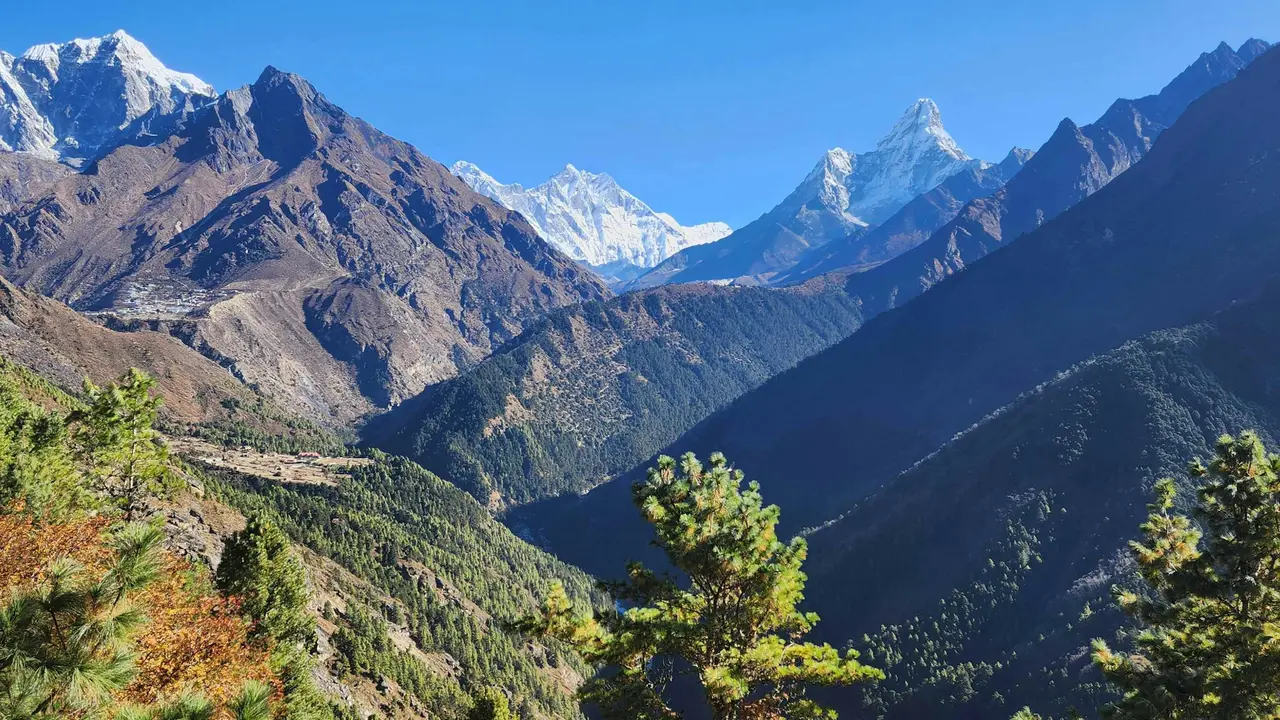
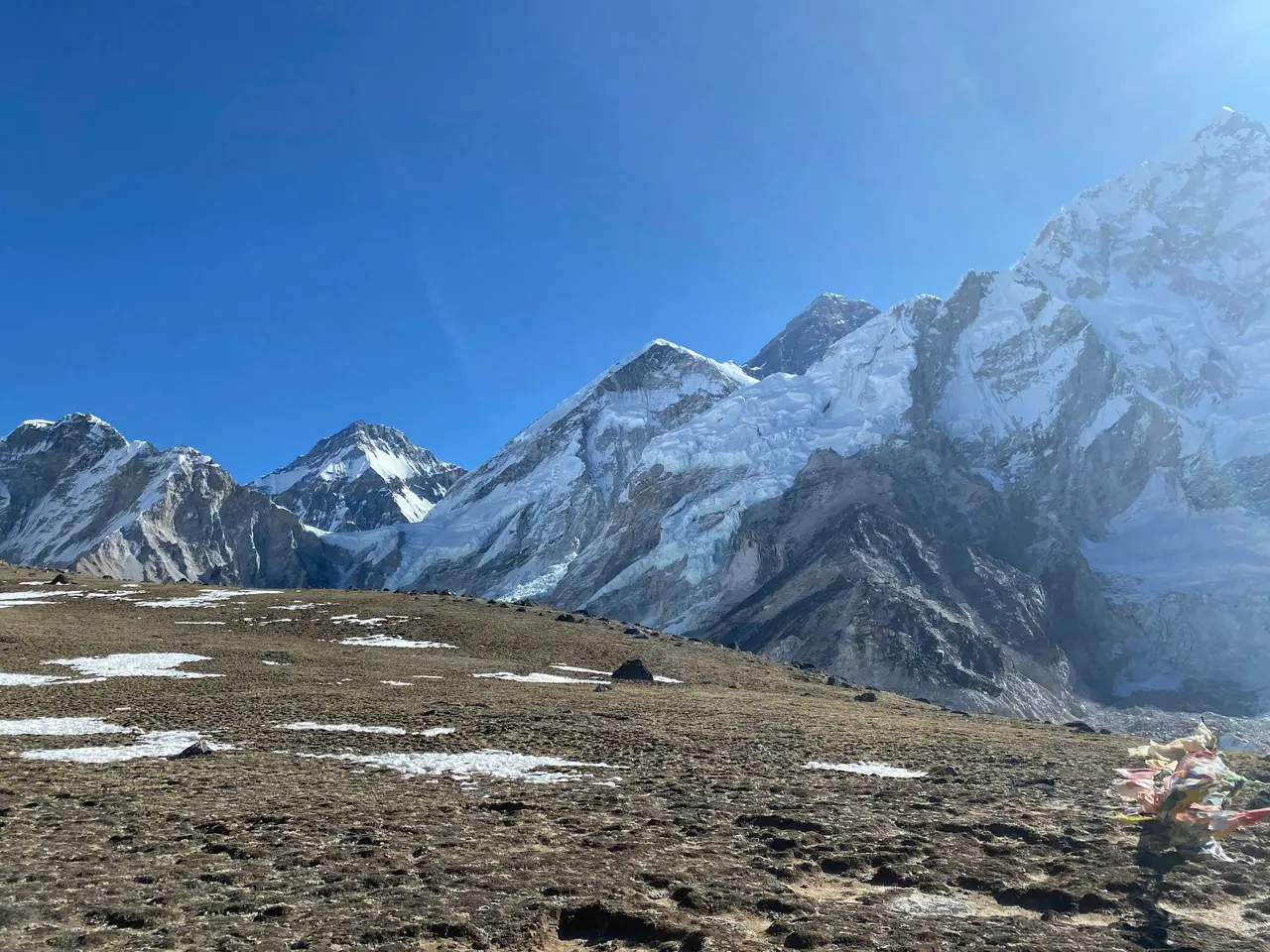
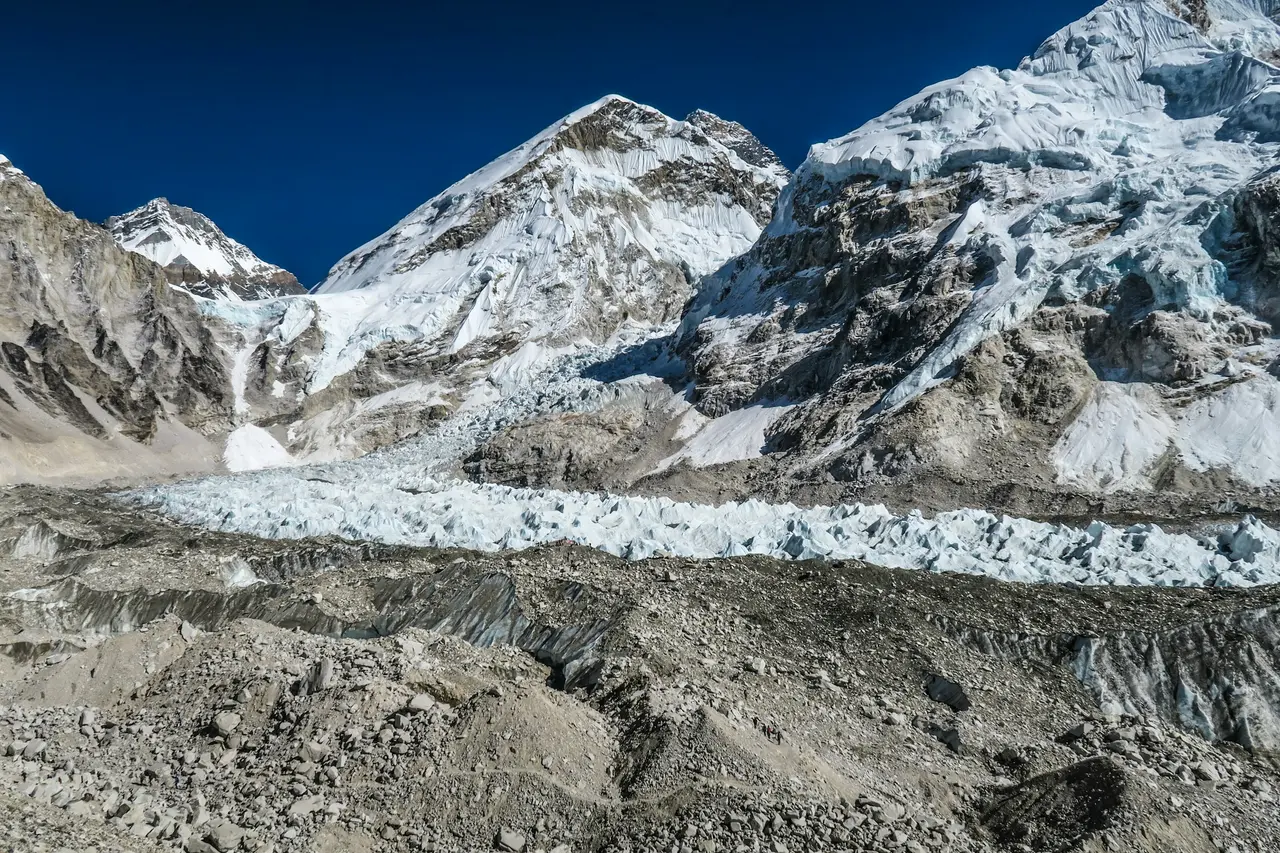
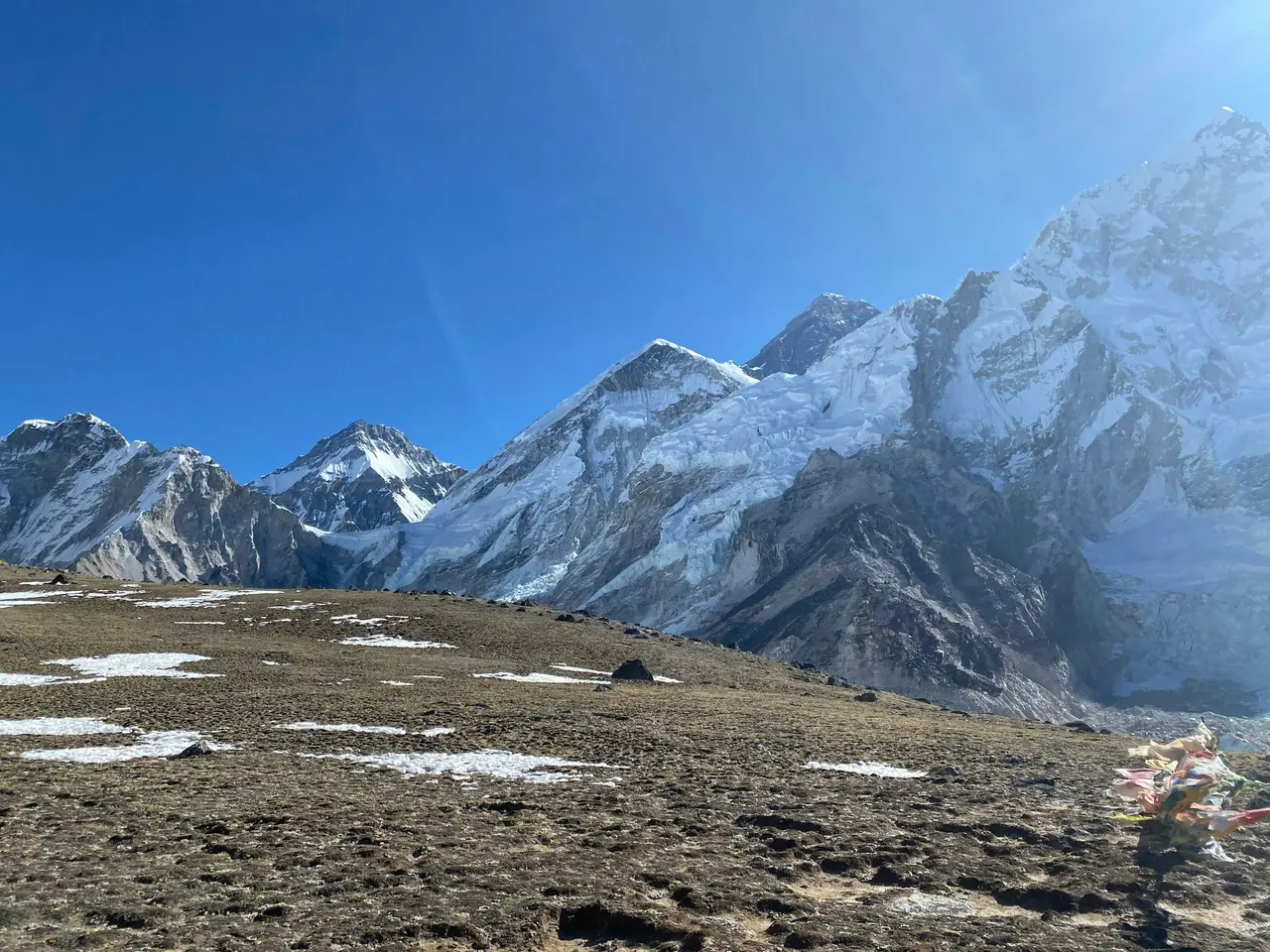
Sagarmatha National Park, gazetted in 1976 and inscribed by UNESCO in 1979, protects 1,148 sq km of the high Khumbu Himalaya in north-eastern Nepal, including Mount Everest itself at 8,848.86 m — which is why the answer to "is Everest a UNESCO site" is yes, but only as part of this park's inscription, not as a standalone World Heritage listing of its own.
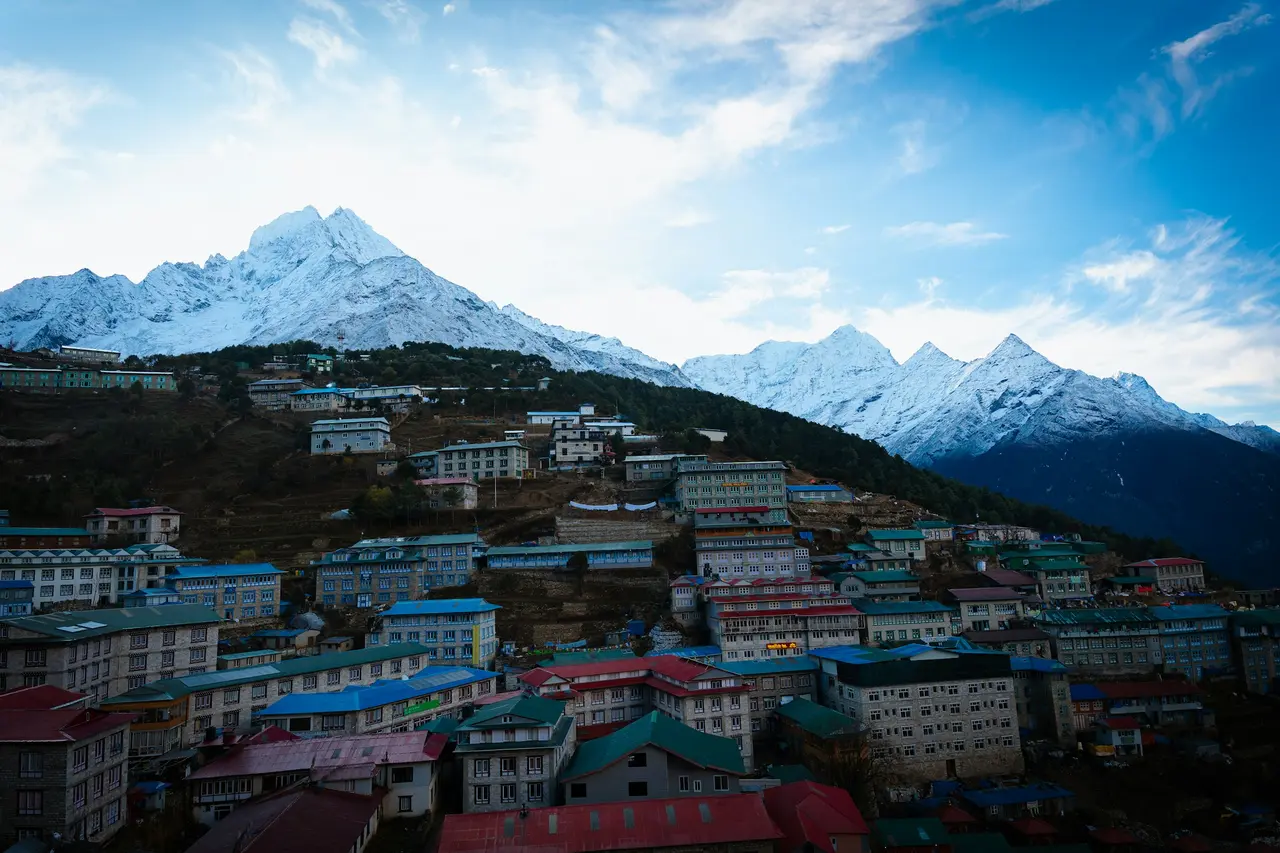
"Sagarmatha" is the Nepali name for Everest, meaning roughly "forehead touching the sky," coined in the 1960s as a Nepali-language alternative to the Tibetan name Chomolungma and the colonial-era English name. The park protects far more than the summit alone: Lhotse, Nuptse, Cho Oyu and Ama Dablam all sit within its boundary, alongside the traditional homeland of the Sherpa people, whose villages, including Namche Bazaar, Khumjung and Pangboche, remain inhabited, farmed and lived in rather than emptied out for conservation, which makes Sagarmatha unusual among strict nature reserves.
Unlike the other three properties, Sagarmatha National Park cannot be reached by road or a same-day flight visit. Entry requires a flight to Lukla followed by a walk of one to two days to reach the park's Monjo entry gate, and most visitors continue on to Namche Bazaar and beyond as part of a longer trek. A scenic mountain flight from Kathmandu passes near Everest at altitude without landing or entering the park on foot, so watching the mountain through a plane window is not the same as visiting the property; if seeing Sagarmatha National Park matters to you specifically, budget for an actual trekking itinerary rather than a flight.
As of the 2026 season, the park entry fee for foreign nationals is NPR 3,000 (about USD 23), and a separate Khumbu Pasang Lhamu Rural Municipality fee of roughly NPR 2,000 (about USD 15) is collected near Monjo — verify both before you travel, since park and municipal fees are periodically revised, and both are paid in cash at the physical checkpoint rather than online.
The tentative list
UNESCO's Tentative List is the formal shortlist a country submits before it can nominate a site for full World Heritage inscription, and Nepal's current list carries several candidates beyond the four properties already inscribed. Being on the list is not a guarantee: nomination-to-inscription timelines commonly run into decades, and plenty of tentative-list entries worldwide never advance further.
Tilaurakot, roughly 27 km from Lumbini, holds the archaeological remains of ancient Kapilvastu, widely believed to be the palace city where Siddhartha Gautama spent his first 29 years before renouncing royal life; excavation work continues, and the site sees far fewer visitors than Lumbini itself despite the direct historical connection. Panauti, a compact and little-visited medieval Newar town roughly 32 km southeast of Kathmandu at the confluence of the Roshi and Punyamati rivers, holds the Indreshwar Mahadev temple, among the oldest surviving temple structures in Nepal, with a fraction of the foot traffic of the three Kathmandu Valley Durbar squares. The Mustang sky caves, thousands of hand-dug caves cut into the cliffs of Upper Mustang, contain human remains, manuscripts and murals that archaeologists estimate at 2,000 to 3,000 years old in places; most are still being studied and are not generally open to casual visitors.
None of these three carries World Heritage status today. Treat a visit to any of them as an addition for travellers with a specific interest in Nepal's archaeology or Newar architecture, not as a substitute for the four properties that are already inscribed.
Visiting all four
All four properties can be combined into one overland trip, but only if the itinerary accepts that reaching Sagarmatha National Park means an actual multi-day trek rather than a day visit; a realistic combined route runs 12 days at a brisk pace, or 14–16 days at a more comfortable one.
A workable 12-day version: days 1–3 cover the Kathmandu Valley (day 1 Kathmandu Durbar Square, Swayambhunath and Boudhanath; day 2 Pashupatinath and Changu Narayan; day 3 Patan and Bhaktapur). Day 4 is a travel day south to Sauraha for Chitwan, by road or a short flight to Bharatpur, with days 4–6 giving two full days of jeep, canoe and walking safari. Day 7 moves west to Lumbini via Bhairahawa, with day 8 spent in the sacred garden and monastic zone. Day 9 returns to Kathmandu. Day 10 flies Kathmandu–Lukla and walks to Phakding and Monjo, crossing into Sagarmatha National Park's boundary; day 11 continues to Namche Bazaar, well inside the park; day 12 flies back from Lukla to Kathmandu. Travellers extending the same trip toward Pokhara sometimes add paragliding in Pokhara as an easy adventure day between the Kathmandu Valley and Chitwan legs.
Be honest with yourself about what this route does and does not achieve. It reaches inside Sagarmatha National Park and as far as its Sherpa capital, Namche Bazaar, which satisfies the UNESCO checklist. It does not reach Everest Base Camp itself, which needs its own dedicated 12-day-plus trek covered separately. Ticking all four properties in 12 days is realistic; doing that and reaching Everest Base Camp in the same trip is not.
FAQ
How many UNESCO sites does Nepal have? Four — the Kathmandu Valley, Lumbini, Chitwan National Park and Sagarmatha National Park. The confusion comes from Kathmandu Valley being one inscription covering seven separate monument zones, which some sources miscount as seven individual sites. Counted correctly by inscription rather than by zone, Nepal's national total is four World Heritage properties.
Is Everest a UNESCO site? Yes, but only as part of Sagarmatha National Park's 1979 inscription, not as a standalone listing. The park covers 1,148 sq km of the high Khumbu Himalaya, including Everest's summit at 8,848.86 m, several neighbouring 6,000–8,000 m peaks, and the inhabited Sherpa villages within its boundary.
Why is Kathmandu Valley one site? UNESCO inscribed the Kathmandu Valley as a single property in 1979 because its seven monument zones — three Durbar squares, two stupas and two temples — together represent one continuous Newar architectural and religious tradition across the valley, rather than seven unrelated attractions that happen to sit near each other.
Can you visit all four in one trip? Yes, in roughly 12 to 16 days overland, but only if the itinerary includes an actual trek into Sagarmatha National Park rather than a scenic flight past Everest. Kathmandu Valley, Lumbini and Chitwan can all be reached by road; Sagarmatha cannot, and that is the one leg that needs real trekking days.
The one site you can't reach without trekking days
Three of Nepal's four UNESCO properties are a driver's problem: Kathmandu Valley, Lumbini and Chitwan all sit on roads a jeep or a short domestic flight can reach in a single day. Sagarmatha National Park is different — the only way into Everest's high Khumbu homeland is on foot, over a minimum of several trekking days above Lukla, and that is precisely the leg where travelling solo gets both lonelier and more expensive. A shared guide fee, shared jeep transfers to Ramechhap or Lukla, and shared permit paperwork all split across a group instead of one traveller carrying the full fixed cost alone. Tick off the valley, Lumbini and Chitwan on your own schedule, arriving and leaving whenever suits you, then join a NepGem departure that already has people booked into the Khumbu for the fourth leg — you trek the same trail into the same national park, at a lower per-person cost than booking the trek alone.


