

Helambu Trek: The Trek You Can Start on a Bus
Helambu starts an hour from Kathmandu by local bus, tops out under 3,650 m, and runs through Yolmo Sherpa villages that almost nobody visits.
NepGem team · Local guides and trip planners
· 10 min read

Co-authored with a NepGem licensed trekking guide (licence no. on file) · Last verified: September 2026
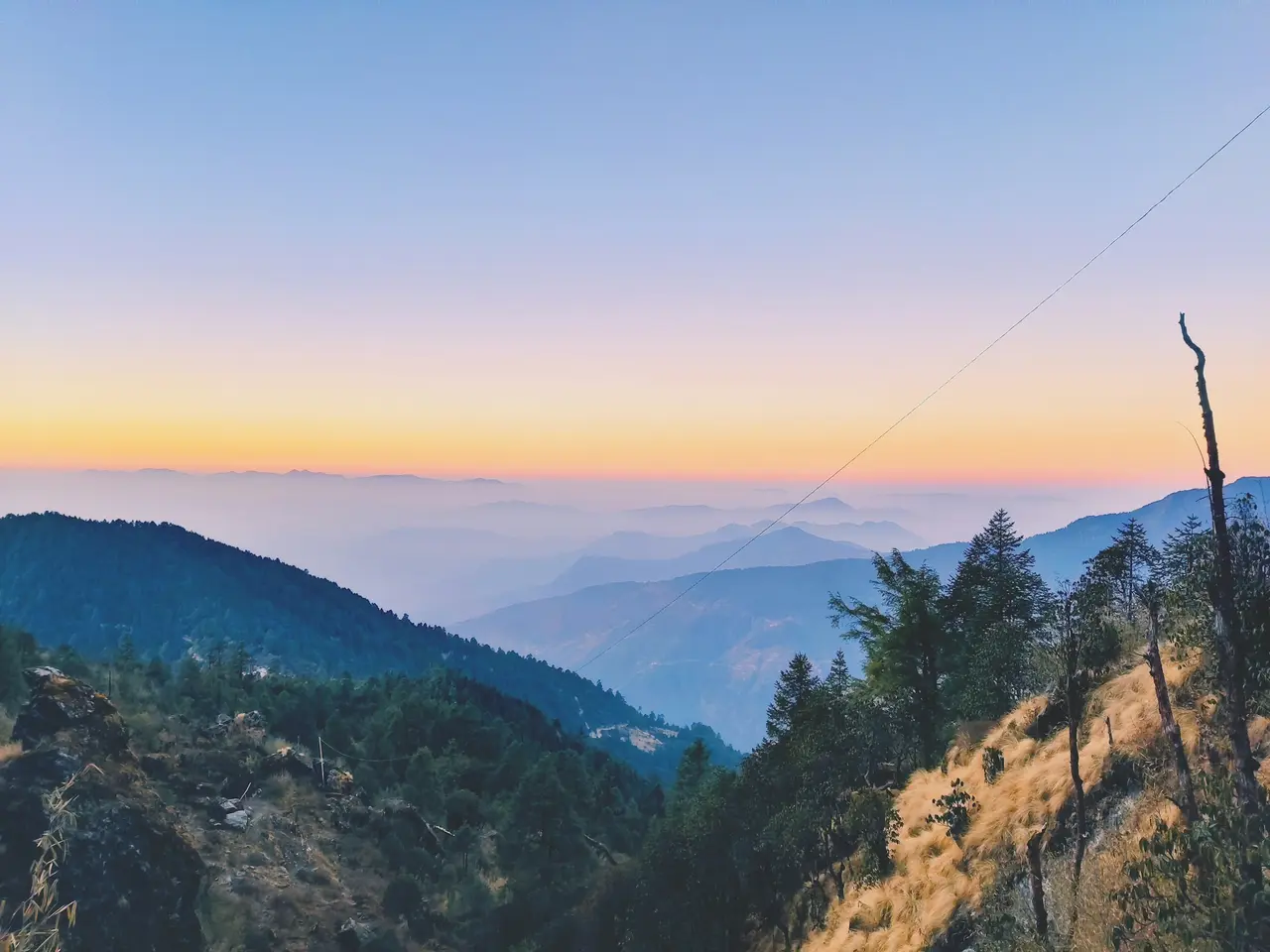
Helambu is the trek you can start the same morning you decide to go. The trailhead at Sundarijal is a local bus ride from Kathmandu's Ratna Park, there is no flight to cancel, no altitude above 3,650 m, and no jeep day eating into your itinerary before the walking even begins. That makes it the practical answer for a trekker with five days rather than two weeks, and a natural pairing with the langtang valley trek or tamang heritage trail for anyone stitching together a longer Nepal itinerary from the capital. What Helambu is not is a scaled-down Everest or Annapurna — its Sherpa villages, its Buddhist gompas, and its terraced hillsides read entirely differently from the high glacier valleys most trekkers picture when they hear the word "Sherpa."
 [GEN]
The lowest-hassle trek in Nepal
Helambu removes the three logistics headaches that complicate most Nepal treks: a mountain flight, a full-day jeep transfer, and altitude above 4,000 m. The trailhead at Sundarijal sits about 15 km and roughly an hour from central Kathmandu by local bus or taxi, on the same road used for Shivapuri Nagarjun National Park day hikes, and the trek's highest point tops out at approximately 3,650 m near Tharepati — high enough to feel like a real mountain trek, low enough that altitude sickness is a minor rather than central risk.
This combination makes Helambu the trek NepGem recommends most often to travellers who arrive in Kathmandu with a flight home in ten days and want five of them walking rather than waiting out a delayed Lukla flight or a landslide-closed jeep road. It is also one of the few Nepal treks genuinely well suited to a late add-on: because there is no flight to book weeks in advance and no restricted-area permit requiring lead time, a Helambu departure can be arranged and joined with days of notice rather than months. Travellers who want a bigger regional loop often pair it with the gosaikunda trek, which shares the same Langtang National Park boundary and can be linked over the Laurebina Pass; those with only a day or two spare should look instead at the shorter day hikes near Kathmandu.
Day-by-day: 5 days Sundarijal → Chisapani → Tarke Ghyang
The standard Helambu itinerary runs as a one-way traverse rather than an out-and-back loop, starting at Sundarijal on Kathmandu's northern rim and finishing at Melamchi Pul Bazaar, from where a jeep or bus returns to the city.
| Day | Route | Distance/time | Overnight altitude |
|---|---|---|---|
| 1 | Sundarijal → Chisapani | 4–5 hrs, climbing through Shivapuri Nagarjun National Park forest | 2,215 m |
| 2 | Chisapani → Kutumsang | 6 hrs along a ridge with Langtang and Jugal Himal views | 2,470 m |
| 3 | Kutumsang → Tharepati | 5–6 hrs, the trek's highest point | 3,650 m |
| 4 | Tharepati → Melamchigaon → Tarke Ghyang | 7 hrs, descending through forest then climbing into the Yolmo heartland | 2,600 m |
| 5 | Tarke Ghyang → Melamchi Pul Bazaar → Kathmandu | 4 hrs walk, then 3 hr drive | — |
Day 2's ridge walk between Chisapani and Kutumsang is the trek's best value-for-effort stretch: six hours of gentle up-and-down through rhododendron forest with sustained views north to the Langtang range and Jugal Himal, on a trail wide enough and well-enough marked that route-finding is straightforward without a guide's constant input. Day 3 to Tharepati is the only section that asks anything altitude-wise, gaining over 1,000 m from Kutumsang, though the elevation stays low enough that the standard warning signs of altitude sickness — headache, nausea, disturbed sleep — are uncommon rather than expected. Day 4 is the longest day and the cultural payoff: Melamchigaon and Tarke Ghyang are both substantial Yolmo Sherpa settlements with centuries-old gompas, stone houses roofed in slate, and a settled, agricultural feel entirely unlike a high-mountain trekking village built around teahouse tourism.
Helambu Sherpas: not Khumbu Sherpas
The Sherpa people of Helambu, more accurately called Yolmo or Hyolmo, are ethnically and linguistically distinct from the Sherpas of the Khumbu region around Everest, despite sharing the "Sherpa" label that outsiders apply to both. The Yolmo speak their own language, related to but not mutually intelligible with the Sherpa spoken in the Khumbu, and trace their migration into Nepal from the Kyirong area of Tibet along a different historical route and timeline than the Khumbu Sherpas, who migrated from the Kham region further east.
The distinction shows in daily life as much as in linguistics. Helambu villages like Tarke Ghyang and Sermathang are built around settled agriculture — potatoes, buckwheat, apples — rather than the trekking-and-mountaineering economy that has reshaped Khumbu villages like Namche Bazaar and Lukla over the past seventy years. Yolmo Buddhism follows the Nyingma school with strong shamanic elements folded in, visible in the gompas' decoration and in local ritual practice, and Yolmo dress and textile patterns differ from Khumbu Sherpa dress in ways a trained eye — or a guide from the region — will point out immediately. It is a genuinely under-covered distinction: most trekking blogs use "Sherpa village" as a single undifferentiated label for anywhere with the word in its name, which flattens a real and locally important cultural difference that Helambu trekkers are well placed to actually see.
Tarke Ghyang, the largest Yolmo village on the route, holds one of the oldest gompas in the Helambu region, rebuilt after the 2015 earthquake damaged much of its original structure, and remains an active monastic site rather than a preserved relic — expect to see monks in daily practice rather than a museum-style visit. Sermathang, further along the ridge toward Melamchi, hosts a smaller but equally active gompa and a village layout that still reflects the older Yolmo pattern of houses clustered tightly around a central religious building, distinct from the linear, road-facing layout of newer settlements lower down the valley. A guide from the Helambu region, rather than a general Kathmandu-based guide, is genuinely useful here — able to explain what is being performed inside a gompa on any given day, rather than simply pointing at the building from outside.
Winter trekking: why Helambu is the December answer
Helambu is one of the strongest winter trekking options in Nepal precisely because its low ceiling — 3,650 m at Tharepati — sits well below the altitude where December and January snow closes routes elsewhere. Treks that top 5,000 m, like the Everest passes or Annapurna Circuit's Thorong La, become unreliable or fully closed in deep winter; Helambu's highest point rarely accumulates snow heavy enough to block the trail for more than a day or two at a time.
The practical case for a December Helambu departure goes beyond snow avoidance. There is no flight risk, so a trekker on a tight schedule around the holidays is not exposed to the multi-day Lukla backlogs that strand Everest-bound trekkers every winter. Days are shorter and colder at altitude, but the trek's lower overall elevation means night-time temperatures at Tharepati, while cold, are milder than the sub-zero conditions routine at similar altitudes near Everest or Annapurna in the same season. The trade-off is genuine: winter is Helambu's quietest season, teahouses run a skeleton service, and a handful of the smaller lodges between Kutumsang and Tharepati close outright, so confirming accommodation ahead of a winter departure matters more than it does in October. For a fuller month-by-month comparison across every major route, see best time to trek Nepal by month — Helambu is one of only a few treks that guide recommends without hesitation in December and January.
Cost
A five-day Helambu trek costs from roughly USD 320 travelling solo, dropping toward USD 175 per person once a group of six shares the fixed costs — among the lowest solo-to-shared cost gaps of any trek in the NepGem catalogue, because there is no flight or long jeep transfer inflating the shared pool. As of the 2026 season, Sundarijal's entry into Shivapuri Nagarjun National Park costs a modest posted fee for foreign nationals, and the trail's later stretch through Langtang National Park territory near Tharepati adds a further park permit at NPR 3,000 (approximately USD 23) plus a TIMS card at NPR 2,000 (approximately USD 15) — both non-shareable per-person fees.
| Cost item | Amount | Shared or per-person |
|---|---|---|
| Shivapuri Nagarjun NP entry | Modest posted fee | Per person |
| Langtang National Park permit | NPR 3,000 (~USD 23) | Per person |
| TIMS card | NPR 2,000 (~USD 15) | Per person |
| Licensed guide, 5 days | ~USD 25/day | Shared across group |
| Sundarijal transfer + Melamchi return jeep | ~USD 120 total | Shared across group |
| Lodging, 4 nights | ~USD 6–8/night | Per person |
| Food, 5 days | ~USD 12–18/day | Per person |
Because the shared pool here is small relative to permits and daily costs, the per-person saving from joining a group is real but proportionally modest compared with a flight-dependent trek like Everest Base Camp — Helambu's value case is speed and simplicity, not the steepest possible group discount.
Helambu Trek: price by group sizeFAQ
How high is the Helambu trek? The Helambu trek tops out at approximately 3,650 m near Tharepati, its highest overnight point, which is a genuinely low ceiling by Nepal trekking standards. That keeps altitude sickness risk minor rather than a central planning concern, unlike treks that push above 4,500–5,000 m, where acclimatisation days and symptom monitoring become mandatory.
Can you do Helambu in winter? Yes — Helambu is one of the better winter trekking options in Nepal because its low maximum altitude avoids the heavy snow that closes higher routes above 5,000 m. There is no flight to cancel and no high pass to get snowed shut, though a handful of smaller lodges between Kutumsang and Tharepati run reduced service or close during the quietest winter weeks.
Do you need a permit? Yes — Helambu crosses both Shivapuri Nagarjun National Park near Sundarijal and Langtang National Park territory near Tharepati, each requiring its own entry fee, plus a TIMS card for the whole trek. As of the 2026 season the Langtang National Park fee is NPR 3,000 (about USD 23) and TIMS is NPR 2,000 (about USD 15) — verify current rates before travelling.
How far is the trailhead from Kathmandu? Sundarijal, the Helambu trailhead, is about 15 km from central Kathmandu and roughly an hour away by local bus or taxi, with no flight or long jeep transfer required. That makes Helambu one of the fastest treks in Nepal to actually start once you decide to go.
Trek it with people already on the trail
A five-day trek with no flight to book and no restricted-area lead time is exactly the kind of trip a solo traveller can decide on a few days out — and exactly the kind of trip that is cheapest done alongside people already booked rather than paying an agency's flat solo rate. NepGem lets you arrive solo and join a departure that already has people on it: the guide fee and the Sundarijal-to-Melamchi transfer split across whoever else is confirmed on the same dates, so a departure with three other trekkers already committed lowers your share immediately. You see the licensed guide assigned, the number of people already booked, and the exact departure date before you commit — no agency minimum group size, no waiting for a tour operator's fixed calendar slot to fill.


